
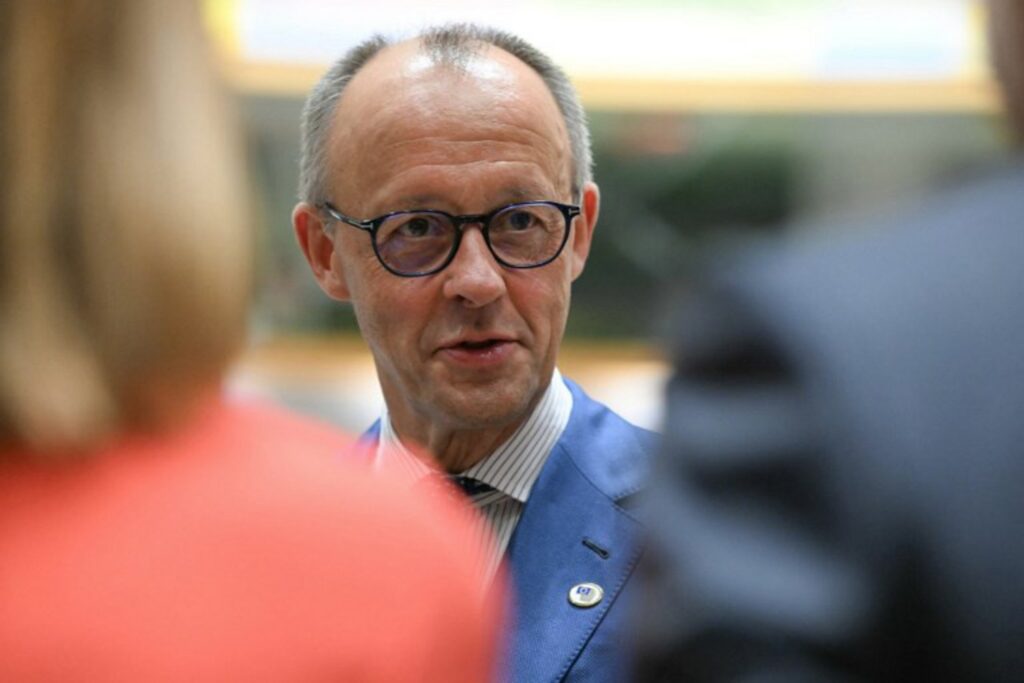
Efforts made by European Council President António Costa to Russia regarding potential negotiations to end the war in Ukraine has caused unease among some European Union leaders, including German Chancellor Friedrich Merz.
Costa’s team confirmed on Thursday evening that brief contacts were initiated to "open communication channels," stressing that the aim was not to start negotiations but to prepare for them if conditions align.
Costa has positioned himself to represent the EU in any eventual talks.
During a European summit discussion on Thursday evening, Merz reportedly emphasised that Costa is the EU’s representative, but not a mediator, according to sources from German news agency dpa. French President Emmanuel Macron is also said to have expressed dissatisfaction with Costa’s approach.
In German government circles, Costa’s initiative was labelled as "uncoordinated" and "unprofessional", with claims that the EU’s 27 Member States were informed only retroactively.
Officials argue that the preferred format for future negotiations would be the “E3” group comprising Germany, France, and the UK. Merz, Macron, and British Prime Minister Keir Starmer had jointly launched efforts to revive diplomatic talks less than two weeks ago.
Not all leaders criticised Costa’s actions. Belgian Prime Minister Bart De Wever backed his initiative, maintaining that negotiations on EU-specific matters must be handled by an official EU representative.
For intergovernmental issues, however, De Wever suggested the France-Germany-UK trio might be suitable.
