
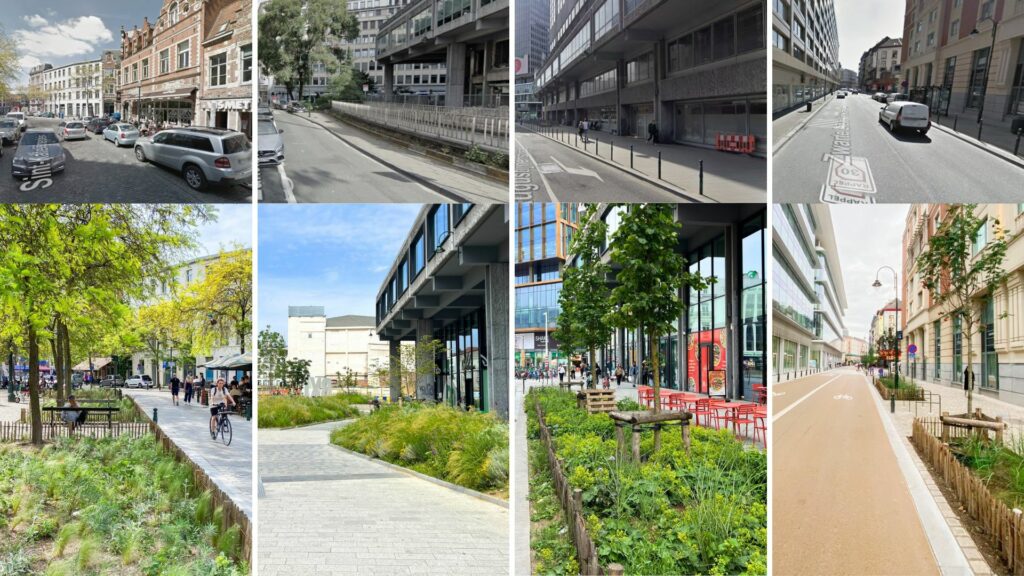
In the middle of Brussels' concrete jungle, the area around the Brucity administrative centre is being revamped as part of an effort to turn the city centre into a "high-quality" public space that is accessible to everyone.
The project is part of the city's "ambitious urban vision": transforming the centre by creating better connections between streets, small squares and larger public spaces.
"The Brucity area reflects our vision of an accessible, welcoming and peaceful city centre, where public space serves the residents first and foremost," said Anaïs Maes (Vooruit), Brussels City councillor for urban planning and public space.
"By strengthening the links between neighbourhoods, planting more trees and plants, and encouraging active travel, we are continuing the transformation of the heart of Brussels into a place where everyone can meet and live," she added.
Step by step
Ten years ago, the City of Brussels decided to pedestrianise its central avenues, such as the Boulevard Anspach – a decision that fundamentally changed the centre of the city from a busy road for motorised traffic to an area where pedestrians and urban life were given priority.
Since then, various streets and avenues in the city centre have been gradually redeveloped, including Boulevard Adolphe Max, Boulevard Émile Jacqmain, Rue Neuve, Rue Sainte-Catherine and its surroundings, Place du Samedi and Place Joseph Plateau.
New green spaces have also been added, which today help to define the cityscape. "Step by step, a more pleasant city centre is taking shape, with public spaces that invite people to linger, meet one another and unwind," Maes said.
At the same time, she stressed, these interventions improve mobility and accessibility for all users.
According to the authorities, the Brucity administrative centre symbolises this new form of urban development, as it was designed as an "open, transparent and accessible building".
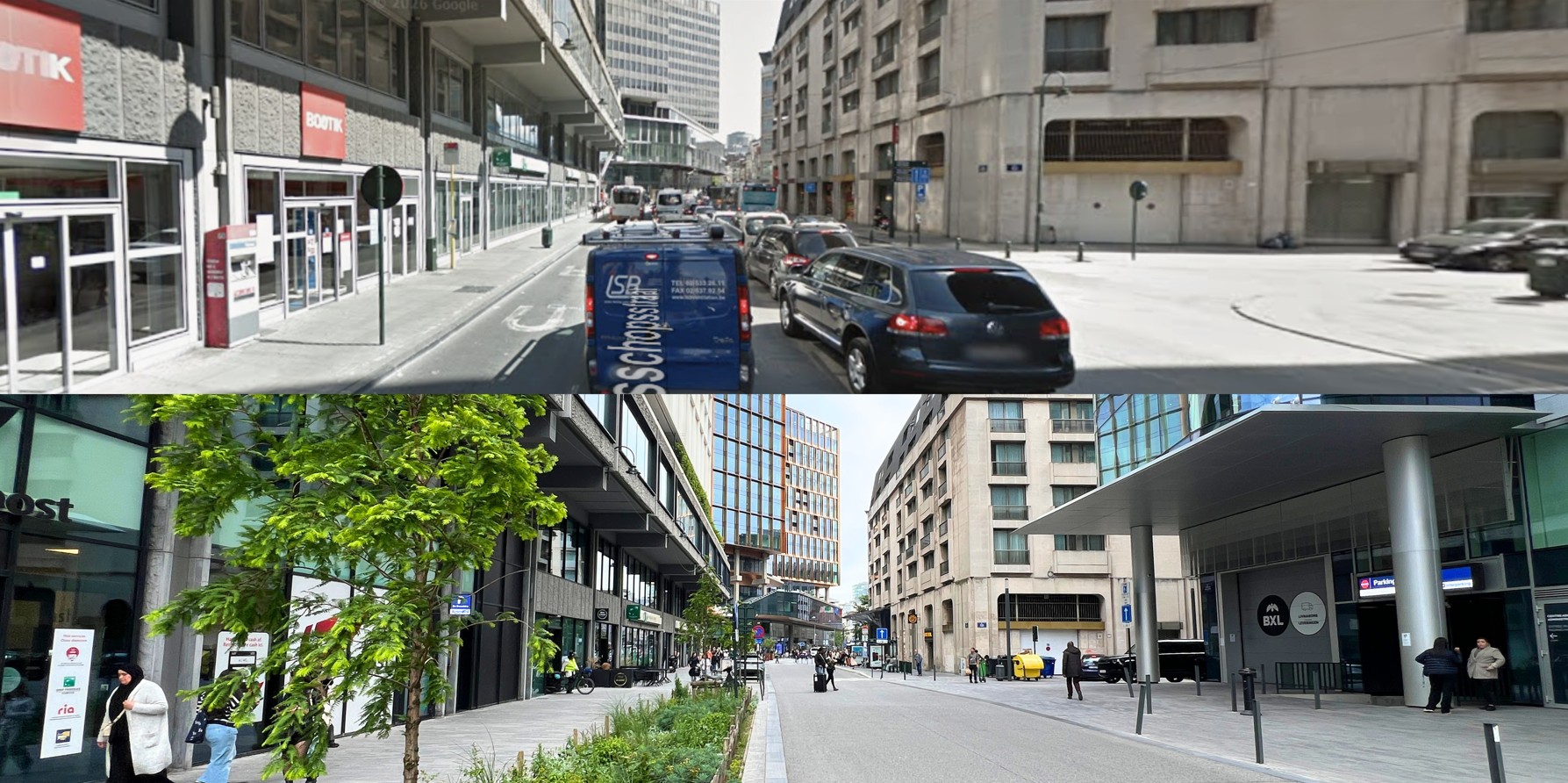
The situation before and after the redevelopment of Rue de l’Évêque. Credit: Cabinet of Anaïs Maes
Its publicly accessible roof terrace offers a 360° view over Brussels, while the ground floor creates a public thoroughfare in the heart of the neighbourhood.
The recent redevelopment of the surrounding area is fully in line with this open vision, she stressed.
"The public space has been completely redesigned to encourage walking and cycling, improve connections with the surrounding streets and squares, and create new spaces for relaxation and greenery," the councillor explained.
New trees and planting provide more shade and biodiversity in the centre, while benches invite people to pause for a moment. The additional cycle racks make sustainable travel more attractive, and the redesigned, single-level streets ensure clearer and safer circulation for all road users.
Maes stressed that the project demonstrates the city's ambition to build a more sustainable, climate-resilient and people-centred city, where every redevelopment contributes to a better quality of life.
