Around 300 to 400 people formed a human chain outside the Klein Kasteeltje in Brussels on Saturday morning to mark World Refugee Day, according to organisers.
The event, attended by Archbishop Luc Terlinden, highlighted solidarity with refugees. “This is a way to show our support for the women, men, and children forced to flee,” he said.
The action was organised by several groups, including House of Compassion, Vluchtelingenwerk Vlaanderen, BelRefugees, Umbrella Refugee Committee, and Vriendschap Zonder Grenzen. Geneviève Frère, coordinator of House of Compassion, described the event as a success.
Participants encircled nearly two-thirds of the Klein Kasteeltje. Many carried posters dating back to 40 years ago, when the former barracks were converted into a reception centre. The posters featured five children and read: “We are in danger; we are not dangerous.” Attendees said the message remains relevant today.
Refugees also joined the demonstration, with some sharing personal testimonies with the crowd.
Organisers stressed that the action was not aimed at any specific institution but sought to raise awareness of Belgium’s asylum policy. They emphasised the importance of protecting human rights and dignity, regardless of immigration status.
“We know migration policy is becoming harsher,” said Julie Pire of the BelRefugees platform. “That’s why it’s crucial to be here today, to support refugees and help them feel accepted.”
Archbishop Terlinden raised concerns about recent European legislation. “There are worrying aspects in the regulations recently approved,” he said. “I urge policymakers to adopt measures based on trust.”
The human chain was adorned with red threads featuring newspaper articles about refugee treatment in Belgium. These were later swapped for green threads bearing messages of hope and solidarity.
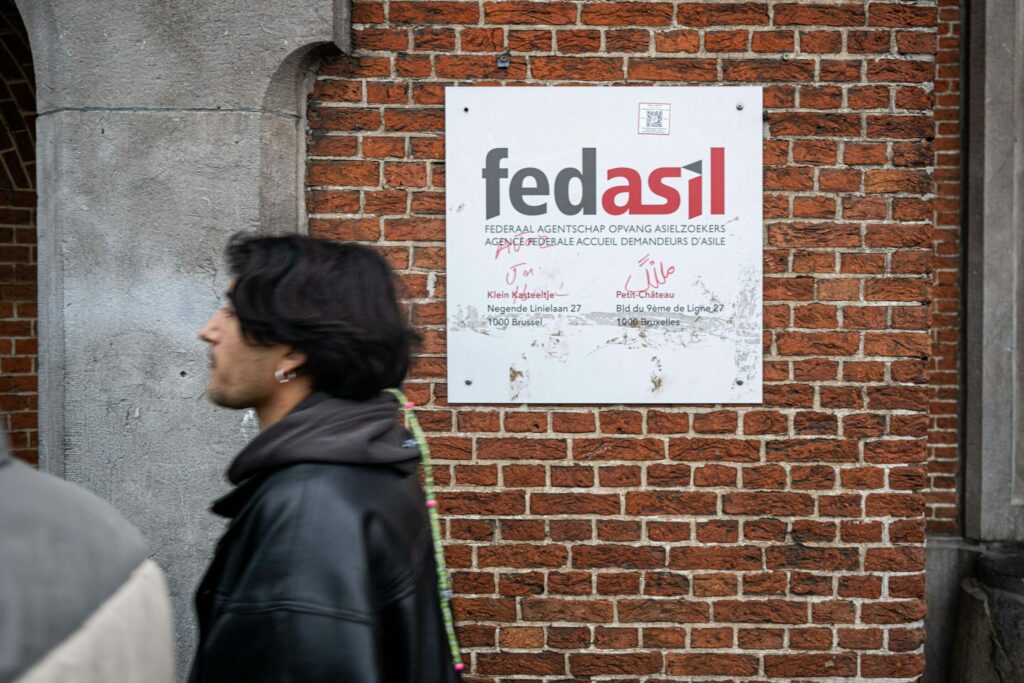
Separately, Fedasil, the federal agency for asylum seekers, celebrated the 40th anniversary of the Klein Kasteeltje on Saturday afternoon. The programme included a photo exhibition, roundtable discussions, live music, performances, information stands, and guided tours, aiming to foster new perspectives on people seeking refuge.
