

I voted Remain 10 years ago. In Brussels, my home for the last six of those, I often joke that I began to appreciate Brexit when it gave me a career. But as I reflect on the last decade, I understand Brexit has defined much more than my working life.
I’m from that crop of Brits, born in the late 1990s, whose earliest political fascinations were in predicting how much damage Brexit would inflict in its unquantifiable half-life. That curiosity eventually led me to the EU capital, where I devoted a policy and – later – journalism career to trying to understand Britain’s relationship with Europe.
I’ve found plenty of answers on the politics. But I remain stumped by a more human question: how do ‘Britishness’ and ‘Europeanness’ fit together, if at all?
Imagined communities
My initial inquiries were made as a zealous student, in the referendum’s immediate aftermath. All university theses I’ve read on Brexit’s causes – including my own – will quickly bring up the leading scholar on nationalism, Benedict Anderson. Most will draw on his 1983 book Imagined Communities to show that more than half of the country was duped by the media into thinking it was less European than it was.
It typically goes like this: In consuming misleading tabloid media, one group ‘imagined’ themselves as part of a British ‘community’, exemplified by outdated values and traditions that were under threat – ostensibly from Brussels.
Meanwhile, another totally different group – including most of my generation – had ingested different narratives from different, less misleading media, making them part of a different, more cosmopolitan or even European ‘community’ that, by virtue of its roots in real news, not fake news, was more legitimate.
Some of this assessment still feels fair. We know concerted (state-sponsored) misinformation campaigns played a role in support of Leave. We know 52% is barely more than 48%, so those campaigns might have been important. And we know the British tabloids, all of whom backed Leave (The Mirror aside), regularly print utter tripe.
The performance of belonging
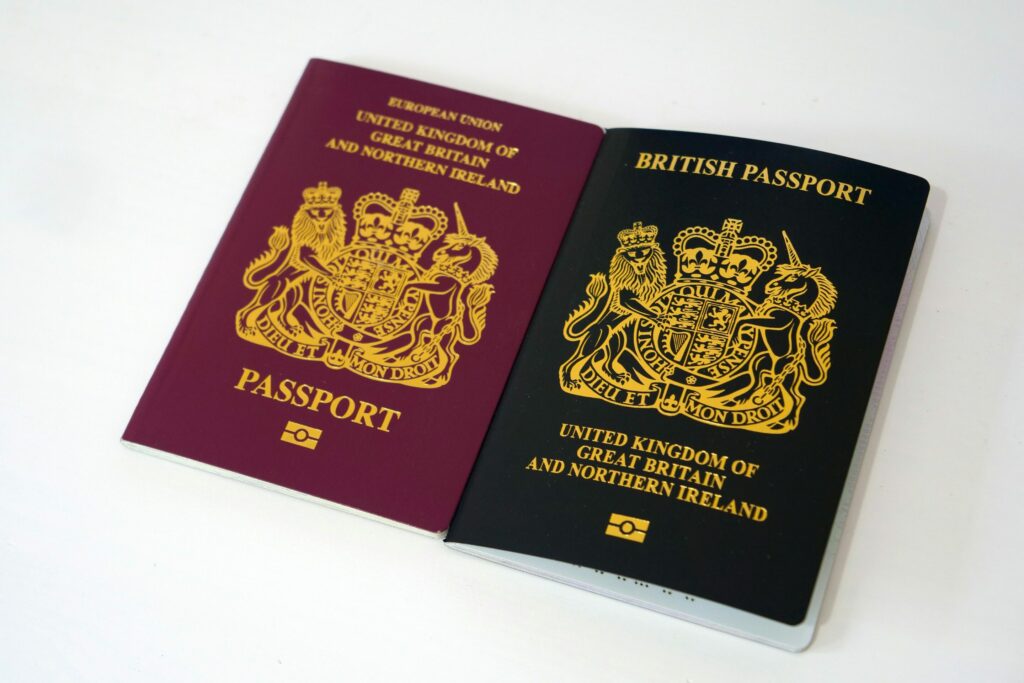
It was clinging to these truths, and to an Irish passport, that I left Britain for Brussels in 2020. I arrived here an oikophobe: hyper-engaged in politics, fixated on its most toxic minutiae, yet angrily blaming my compatriots for toxifying them so. They had reduced ‘British’ to a pejorative, etched onto a dark-blue backup passport and flung into a locked drawer. I was desperate to be something else: ‘European’.
Working in the Brussels bubble, where your Europeanness is being constantly assessed, I found early on that I best exhibited mine through bashing the Brits. I recall laughing along with officials who worked in Michel Barnier’s task force, taking turns sharing biting anecdotes about the insolence of their opposite numbers in Whitehall. Back then I’d barely met any British mandarins, and thus had no cause to join in the roasting – but it sounded just like those delusional, dense Brits I’d been so keen to disown.
Perhaps out of internalised guilt for my weekday ‘Europeanness’, my weekends would bring obsession with performatively ‘British’ pursuits. I binge watched The Crown and Downton Abbey despite being a republican and a leftie. I lined my cupboards with reserves of baked beans and brown sauce to make breakfasts I’d never previously enjoyed. I’d spill my pint getting rowdy at the football. And on Sunday night, I’d wonder if I’d get away with telling anybody at work about it all on Monday morning.
It all felt confused. I was engrossed in the most European place on earth, yet had no grasp of my ‘Europeanness’ beyond opposition to a disastrous Tory Brexit, and none of my ‘Britishness’ beyond self-flagellation or stereotype. Whenever I tried to be one or the other, I’d feel I came up short.
The same search
My identity is no less confusing today, really. But I have at least grown out of some of the assumptions underneath my contempt for those who were sure of theirs – and expressed it through support for Brexit a decade ago. One such assumption drips through my undergraduate misuse of Anderson:
Communities are imagined, symbols are invented, traditions are appropriated – so it cannot be rational to care so deeply about anthems, flags or Christmas. And it’s only Leavers who care about those things, so Leavers must be irrational and wrong.
While the World Cup has reminded me that God Save the King may be a lifeless composition, I don’t deplore those who love it today. It can’t be right to be so exclusivist, not least while I’m incapable of any positive articulation of my own identity.
I’ve always felt Britain voted the way it did a decade ago to try and rediscover its own sense of Britishness. I now think I left Britain soon after in search of the same.
Sadly, neither of us have found what we were looking for.
