
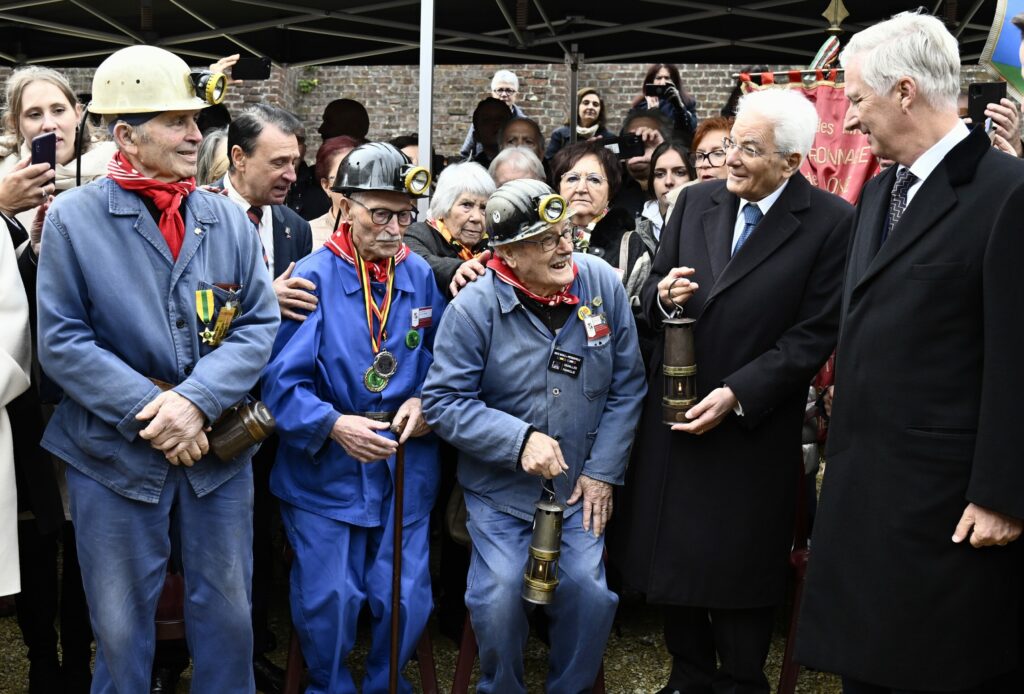
Tuesday, 23 June, marks the 80th anniversary of the 1946 Belgian-Italian agreement that initiated the largest wave of Italian immigration to Belgium.
After the Second World War, Belgium sought to revitalise its economy, with Prime Minister Achille Van Acker launching a "battle for coal" to exploit its energy resources.
Although its industrial infrastructure was relatively intact, Belgians were unwilling to work in mines, leading the country to turn first to German prisoners of war and later to foreign labour.
Meanwhile, post-war Italy was mired in poverty and struggling to rebuild its economy, with coal in short supply.
The Belgian-Italian migration agreement, signed on 23 June 1946 and commonly referred to as the "coal accord," stipulated that Belgium would supply Italy with coal at low prices—200 kilograms per miner per day—in exchange for 50,000 Italian workers sent to Belgian mines.
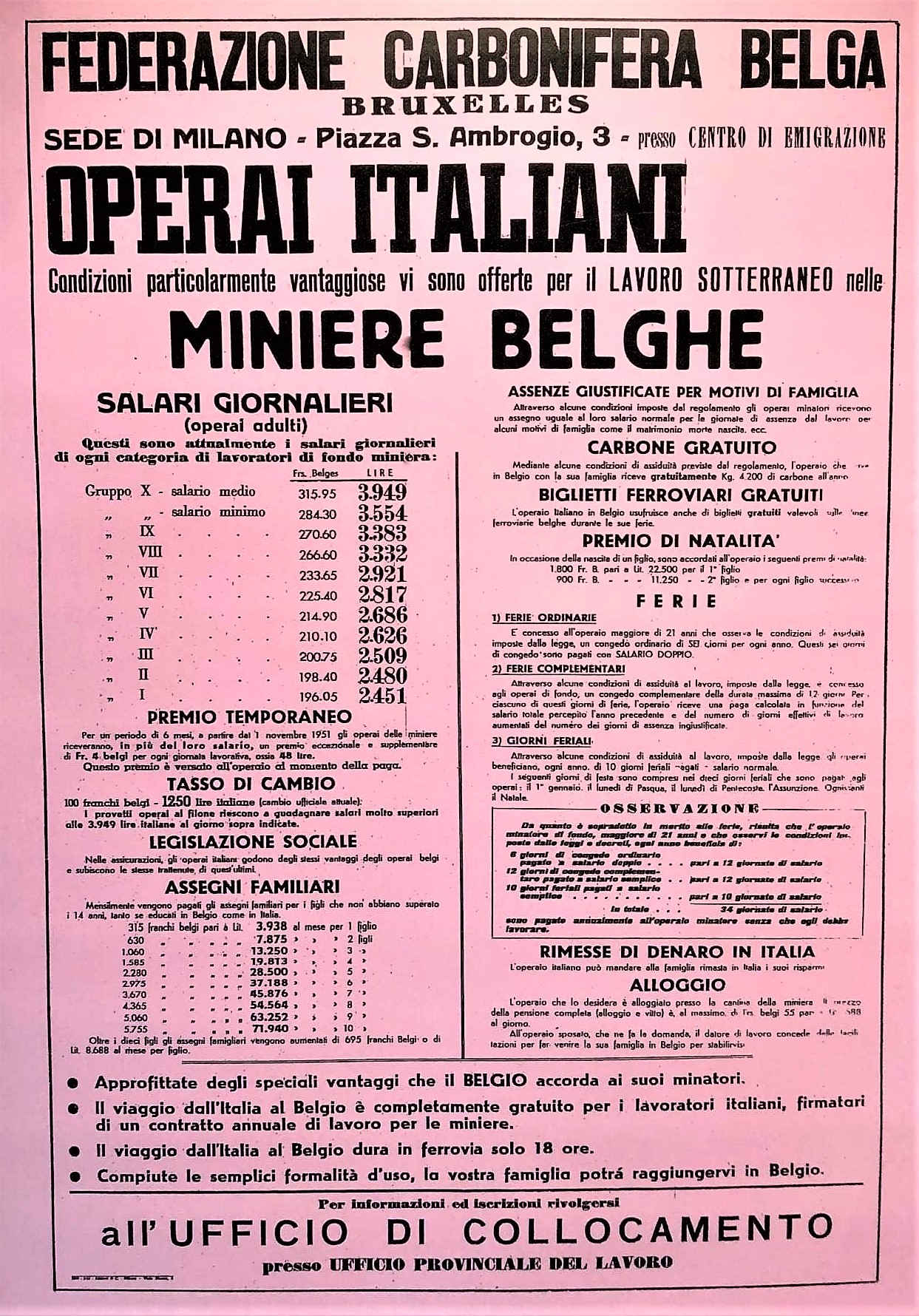
Advert poster of the Belgian coal mining federation Fédéchar for recruiting Italian miners pursuant to the Belgo-Italian migration accord of 1946
This agreement triggered the most significant wave of Italian immigration to Belgium, although Italians had been coming to the country since the 19th century.
Some had worked on railway construction projects, while political instability, particularly Mussolini’s rise to power, spurred others to emigrate. By the 1930s, around 30,000 Italians were living in Belgium, a number that would grow substantially after 1946.
Life in Belgium proved harsh for the Italian miners. Their housing conditions were poor, often in barracks that had previously housed prisoners of war, and they faced racism, exemplified by discriminatory signs such as “No dogs or Italians” in shop windows.
The work in the mines was gruelling, and some miners refused to return underground, risking arrest and deportation.
Gradually, miners were joined by their families and began settling in workers’ housing communities, with many Italians opting to remain in Belgium, while others chose to return to Italy after years of labour.
The tragedy at Bois du Cazier on 8 August 1956, where 262 people, including 136 Italians, died in a mining disaster in Marcinelle, became a pivotal moment for Italian immigration in Belgium.
The catastrophe highlighted the dire working conditions in Belgian mines, spurring Italy to demand stricter safety standards.
Subsequently, Belgium moved to recruit labour from other countries, signing agreements with Spain (1956), Greece (1957), Morocco (1964), and Turkey (1964).
Today, approximately 300,000 Italians live in Belgium, and nearly 2.5% of Belgium’s population has Italian ancestry, according to data from the Ministry for Foreign Affairs.
