The European Economic and Social Committee has adopted an information report and a resolution calling for a stronger role for trade unions, employers and civil society groups in shaping EU countries’ reform and investment plans, including a proposed European code for consultations.
The report was adopted at the EESC’s June plenary session and draws on views gathered from social partners and civil society organisations in all 27 EU Member States, the Committee announced in a statement on Tuesday.
It said the consultation involved 81 EESC members and more than 110 stakeholder representatives, including round-table discussions in five Member States.
The EESC said the report looked at how stakeholders assessed the implementation of 2025 country-specific recommendations, which are policy priorities issued to each member state under the European Semester, the EU’s annual cycle of economic and social policy coordination.
It also examined measures under the Recovery and Resilience Facility, the EU’s post-pandemic funding instrument, and national fiscal-structural plans.
The organisation said stakeholders broadly supported the 2025 recommendations but reported a gap between policy design and delivery, with uneven implementation across member states. Respondents also raised concerns about limited involvement of social partners and civil society groups, and what the EESC described as an imbalance between economic and fiscal priorities and social objectives.
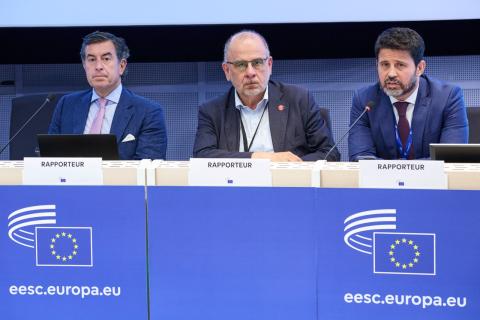
Rapporteur Andrea Mone said “social issues are often undervalued” in country-specific recommendations, while implementation was “inadequate, ineffective or, in some cases, absent altogether.”
Calls for a consultation ‘code’ and partnership checks
The EESC said many stakeholders reported that, although consultation mechanisms exist in most member states, participation often felt procedural and had limited influence over final decisions.
Respondents frequently stated they were consulted too late and received little feedback on how their contributions were used.
Rapporteur Gonçalo Lobo Xavier reiterated a call for “the establishment of a European code” setting out how consultations should be carried out within the European Semester and how national plans should be drafted and implemented.
He also called for a “mandatory assessment” of the “quality and impact” of partnerships, including whether stakeholder input influenced final policy decisions.
The consultation also covered proposals to more closely align the European Semester with the EU’s next multiannual financial framework, the EU’s long-term budget.
While many stakeholders supported a closer connection between EU funding and reform priorities, the EESC said concerns remained about centralisation and reduced democratic oversight.
Rapporteur Luca Jahier said linking the Semester and the next long-term budget could increase “European added value” only if “flexibility, multilevel governance and national ownership” were preserved.
He also said the EESC “firmly rejects the logic of punitive macroeconomic conditionality” and instead supports “positive incentives” with targeted support to address bottlenecks identified through the European Semester.
