
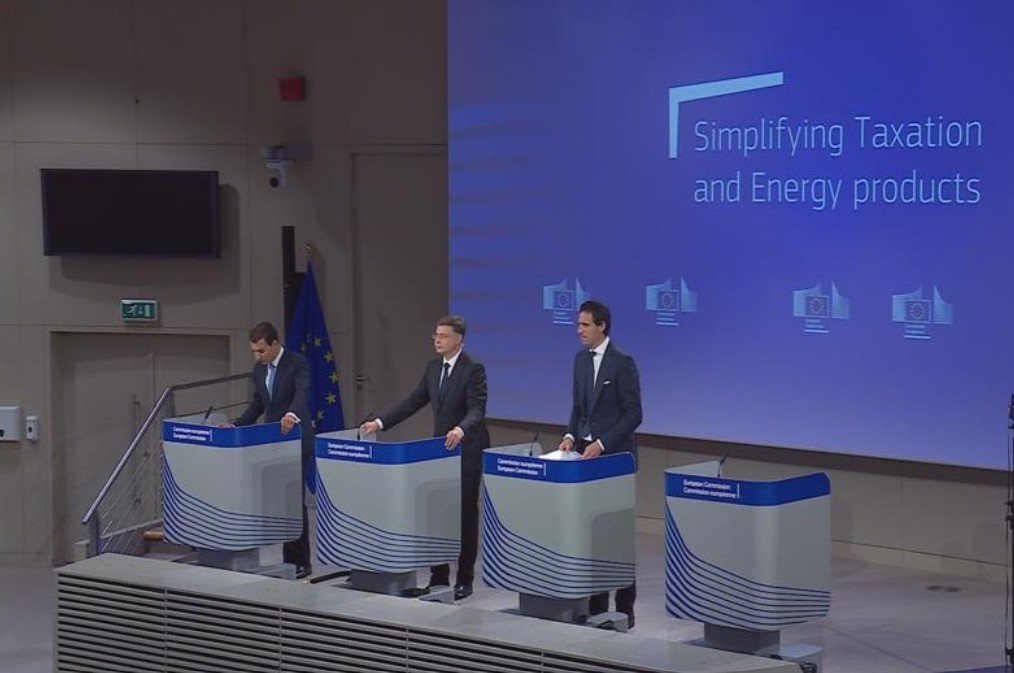
The European Commission has adopted a package of proposed changes to EU tax rules that it says would cut business compliance costs by almost €8 billion a year.
The package includes two proposals — a “Taxation Omnibus” and a recast of the Directive on Administrative Cooperation (DAC) — and will now be sent to the European Parliament for consultation and to EU member states in the Council for adoption, the Commission informed in a release on Wednesday.
It said the combined measures are expected to save businesses around €8 billion annually, including €3.3 billion in administrative costs.
One part of the Taxation Omnibus would introduce an exemption from withholding tax on cross-border payments of dividends, interest and royalties between companies in the EU, with the Commission putting the annual savings from this measure alone at about €5.3 billion.
Withholding tax is a levy taken at source on certain payments, often requiring businesses to complete paperwork to claim refunds when operating across borders.
The Omnibus would also change rules on interest deductions under the EU’s Anti-Tax Avoidance Directive (ATAD), including making a “de minimis” threshold mandatory, with compliance and administrative savings estimated at more than €500 million a year.
It would also remove overlapping provisions between Controlled Foreign Company (CFC) rules — which are designed to limit profit shifting to low-tax jurisdictions — and the global minimum corporate tax rules known as Pillar Two, reducing compliance costs by about €160 million a year.
Changes to tax co-operation rules
The second proposal would consolidate the Directive on Administrative Cooperation and its eight amendments into a single legal text, to make the framework “more user-friendly and coherent”, the Commission said.
It added the recast would remove some reporting obligations for multinational groups that fall under Pillar Two’s minimum 15% tax rate, cutting compliance costs by about €300 million.
It would also drop reporting requirements for some other cross-border tax arrangements that the Commission said provide “limited added value” for tax authorities, reducing reporting volumes by 35% and saving around €40 million a year.
Another change would raise the reporting threshold for online sales of goods, removing reporting obligations for more than 10 million private sellers — particularly those selling second-hand goods — and generating compliance cost savings of €678 million for digital platforms.
A new verification tool for taxpayer identification numbers would also be introduced to help tax authorities identify taxpayers included in reports.
The proposals would reduce overall compliance costs for European businesses by almost €8 billion per year, including €3.3 billion in annual administrative costs, Valdis Dombrovskis, the Commissioner for Economy and Productivity, said.
