
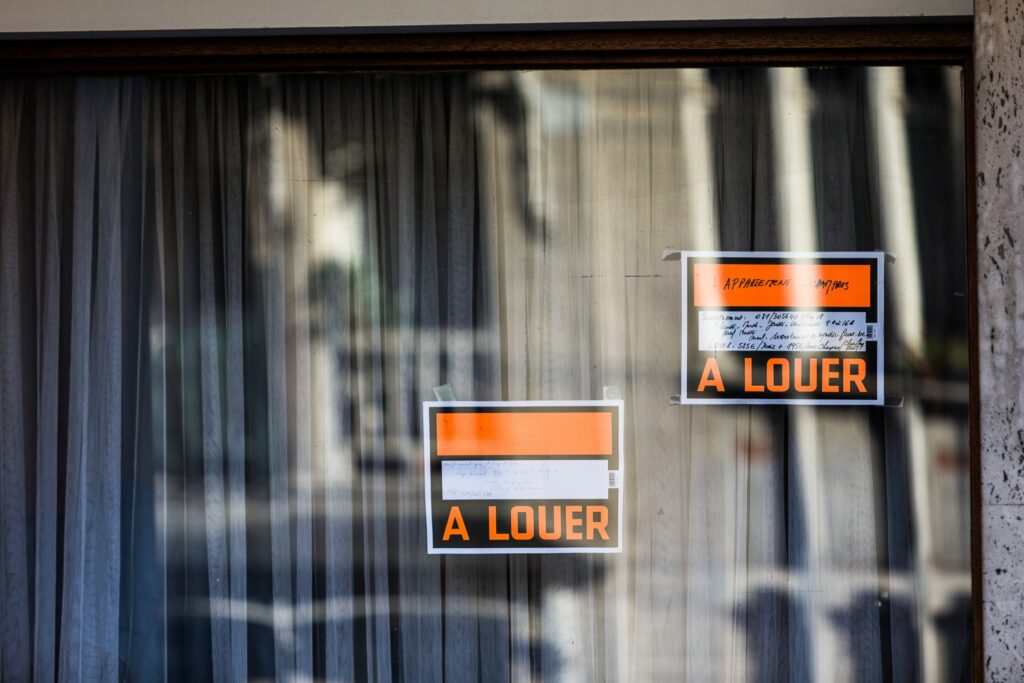
Finding reliable information on affordable rent in Brussels might soon become slightly more complicated.
This week, the National Union of Landlords and Co-owners (SNPC) updated their own "rent scale", despite the Brussels-Capital Region not having updated the official one.
Last week, the landlord's union decided to modify the so-called rent scale to determine the reference rent, following the decision by the Brussels State Secretary for Housing Karine Lalieux (PS) not to do so.
The reference rent is defined as "the median rent set out in the indicative rent scale for the property in question" by the Brussels Housing Code. Based on surveys of thousands of tenants, it is determined by the government of the Brussels-Capital Region, also referred to as the Brussels Government.
Through this law, landlords are required to state the reference rent in all tenancy agreements, in addition to the rent agreed between the landlord and the tenant. That way, tenants can ensure their rent is in line with the median rent asked for similar properties in the area.
Reference rents in Brussels can be found in the "rent scale" published by the regional administration.
'Out of date'?
According to the landlords of the SNPC, however, this official database is now "out of date", as it was based on tenancies in force in 2017, 2018 and 2020. Therefore, the landlords felt that there were now enough new tenancies on record to update the rent scale.
As a result, there are now two sources of information on rents in Brussels: the official scale at www.loyers.brussels and the SNPC's unofficial updated version.
The SNPC is advising its members to apply a multiplier to the reference rent to bring it up to date. They advise landlords in some municipalities to increase the reference rent by more than 20%: Woluwe-Saint-Lambert (21.55%), Uccle (20.15%) and Woluwe-Saint-Pierre (20.06%).
In the City of Brussels, they recommend adding 17.33% to the reference rent, in Schaerbeek 18.66%, in Ixelles 19.14%, and 11.80% in Etterbeek. They believe the reference rent should be increased by just 1.97% in Molenbeek, and not at all in Anderlecht.

View over Brussels from the Palais de Justice. Credit: The Brussels Times/Lauren Walker
Approached for comment by The Brussels Times, State Secretary for Housing Karine Lalieux (PS) stressed that the SNPC's claim that she does not want to update the scale is "untrue".
She stressed that the data used to calculate Brussels' official reference rents is based on 14,042 surveys carried out among tenants in 2017, 2018 and 2020 (as part of three Rent Observatories) and that the rents have been indexed annually since then.
"The scale is therefore indeed updated every year," Lalieux stressed, adding that she is "deeply committed" to the rent scale as a tool and to its development.
She wants the scale to be continuously assessed and updated, and said she hopes that it can move forward "within a reasonable timeframe", taking into account the specific challenges involved in data collection.
Undermining legal certainty
Importantly, she pointed out that "the law requires landlords to indicate the reference rent in all tenancy agreements, in addition to the actual agreed rent" – something that SNPC also stated in its own communication.
"By unilaterally establishing its own version of what it considers to be a reference rent, the SNPC undermines the legal certainty of its own members," Lalieux pointed out.
Landlords would, in fact, be in breach of the law if they were to include the SNCP's reference figures in the information provided or in their contracts, and not the official ones.
Failure to comply with these legal provisions in their contracts exposes the landlord to penalties. The Regional Inspection Service may also impose an administrative fine. "In the worst-case scenario, the tenant could seek the termination of the tenancy agreement, together with damages or compensation where applicable."
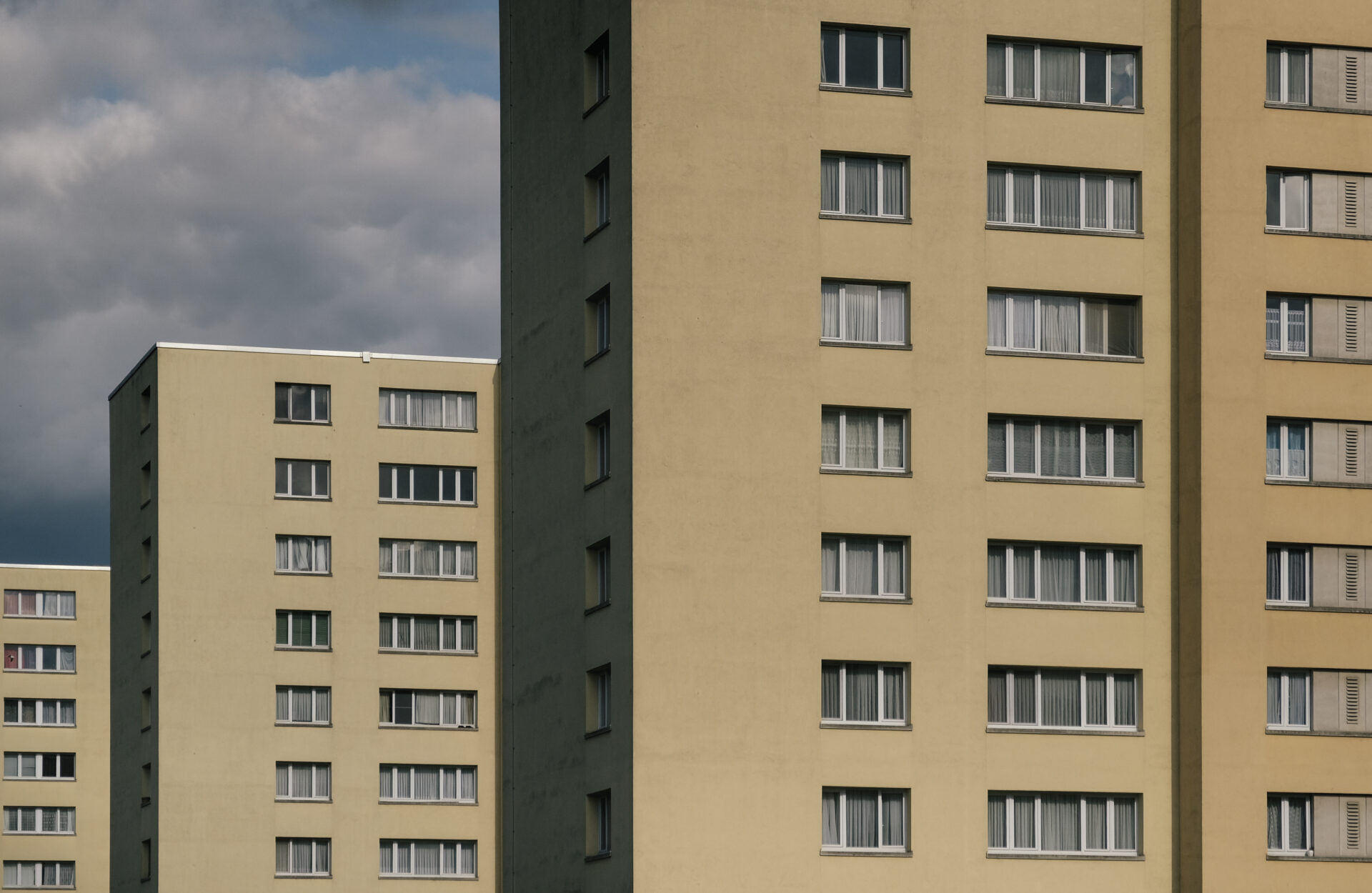
Social housing apartments. Credit: Dirk Waem / Belga
Meanwhile, the Brussels-based landlords' and property owners' association Badala, which advocates an ethical approach to rental income, opposes the initiative.
"The initiative follows a logic that is one of the causes of the affordable housing crisis," said the association, adding that the SNPC's own rent scale is increasing the scale set by the Brussels Region by 13.5%.
According to the association, "the rent scale must be drawn up with all Brussels residents in mind and be the result of independent research, consultation and collective deliberation. It is not a tool designed to benefit a single social actor, who thereby creates its own reality."
Badala believes that the rent scale is an independent benchmark for assessing whether current rents remain compatible with the objective of housing accessible to all, rather than a tool for mechanically replicating the highest prices observed on the market.
According to them, the SNPC is "normalising the continuous rise in rents, or even accelerating it".
Reflecting reality
Lalieux also stressed that the SNPC scale is based exclusively on data provided by its own members. However, a landlord in Brussels is under no obligation to join the SNPC.
As a result, the figures are de facto biased because the sample is not representative of the private rental market.
Additionally, Lalieux pointed out that the SNPC's rent scale applies at the municipal level, without taking into account the diversity within municipalities between their different neighbourhoods.
Brussels' official reference rent scale, on the other hand, is calculated at the neighbourhood level.

A square in Uccle. Credit: Belga / Paul Henri Verlooy
More specifically, properties located in more affluent neighbourhoods are over-represented in the records, according to Lalieux. Additionally, this database of tenancy records contains only new tenancies and omits a crucial part of the rental market by failing to take into account the rents already in force.
"Therefore, relying solely on this data would not result in a balanced approach to updating the rent scale," Lalieux said. According to her, incorporating this data without nuance would "inevitably" lead to an upward distortion of the average rent.
"The updating of the rent scale must reflect the reality experienced by all Brussels residents, taking all municipalities into account," Lalieux said.
