
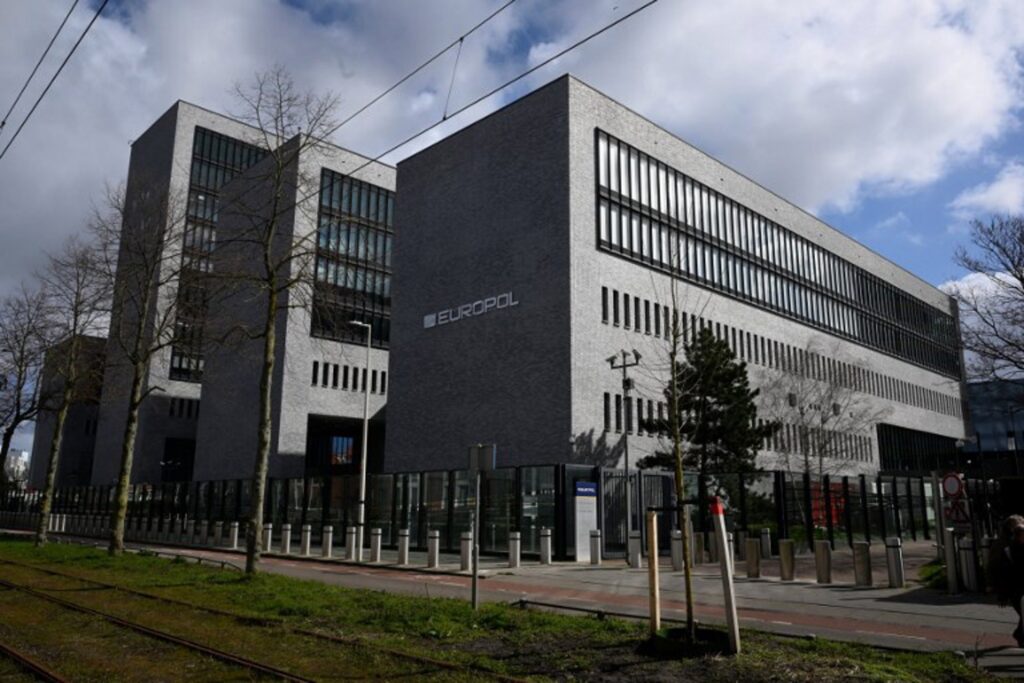
The European Commission has unveiled proposals to strengthen the mandates of Europol and Eurojust, with the aim of tackling increasingly sophisticated cross-border and digital crime.
Europol is set to become a technological hub and shared data space, facilitating real-time collaboration on cases of cybercrime, financial crime, human trafficking, drug trafficking, and terrorism.
It plans to deploy support offices directly within EU Member States.
Eurojust will be authorised to initiate cases independently and streamline its governance to focus on complex investigations. It will also take a more active role in addressing violations of EU sanctions and gender-based violence.
Both agencies, headquartered in The Hague, are expected to coordinate more seamlessly with the European Public Prosecutor’s Office, Frontex, and OLAF, the EU’s anti-fraud body.
The reform seeks to simplify evidence collection between Member States and improve the exchange of information with third countries.
Europol’s budget could be doubled to nearly €3 billion for the 2028–2034 period, enabling an increase in personnel to about 2,000 agents.
For Eurojust, the budget could rise by €100 million over seven years, allowing for the recruitment of around 80 additional staff, including contract workers, according to a senior EU official.
Europol reports helping to confiscate over €2.8 billion in criminal assets last year, including cryptocurrencies.
Eurojust says it assisted in freezing €1.2 billion in 2025 and seizing €31.4 billion worth of illicit drugs.
The Commission's proposals will now be subject to discussions and approval by EU lawmakers and Member States.
