

The debate about Europe's competitiveness often focuses on burdens, barriers and rules that should be removed. Construction offers a useful reality check.
The sector is central to Europe's ambitions on affordable housing, climate resilience, the energy transition and infrastructure investment. Yet construction faces labour shortages, stagnant productivity, criminal infiltration and some of the highest workplace accident rates in the European Union. Innovation remains too slow and digitalisation too limited. Quite frankly, today's construction sector is not up to the challenge.
The problem is not that construction is overregulated, but rather that some of the business practices that have become normal in the sector are undermining fair competition, responsibility and the quality of jobs. With the European Union revising its Public Procurement Directives, there is an opportunity to turn around a sector that is moving in the wrong direction.
Across Europe, construction sites tell stories about social dumping, bogus self-employment, labour exploitation, social security fraud, safety failures and fatal accidents where no responsibility can be placed. Construction is no ordinary sector.
It accounts for around 30% of all posted workers in the European Union and relies heavily on a mobile workforce. Workers, companies and subcontractors regularly move across borders, jurisdictions and legal systems. According to the European Labour Authority, these realities make enforcement particularly challenging and create opportunities for fraudulent operators to exploit gaps in oversight and responsibility.
When subcontracting enters the equation, responsibility becomes fragmented. Accountability becomes blurred and may disappear entirely.
While subcontracting was intended as a tool for specialised work, it increasingly became a business model in itself. For developers and main contractors, the model offers flexibility and allows risks, costs and responsibilities to be passed down the chain. But when something goes wrong, intermediaries and letterbox companies disappear, and main contractors hide behind their lawyers.
This was the case in Antwerp, where five construction workers lost their lives when a school building under construction collapsed in 2021. Friday June 19 2026 marked the fifth anniversary of the tragedy, yet responsibility has still not been established. Five years later, the affected families remain without answers, compensation or justice.

The week before the Antwerp commemoration, a Swedish court acquitted all those accused in connection with the Sundbyberg construction lift collapse, where five construction workers died in December 2023. Different countries. Different projects. The same question remains unanswered: how can so many workers lose their lives at work, and nobody be held responsible?
Somehow, we have allowed construction to turn into the Wild West and accepted standards that would be unthinkable in any other major industry. According to Europol, construction is among the business sectors most affected by criminal infiltration. Criminal networks use companies, subcontractors and letterbox structures to facilitate fraud, labour exploitation and money laundering.
Europol's warning should not be ignored. In her Political Guidelines for the new European Commission, Ursula von der Leyen committed to stepping up action against criminal infiltration of the legal economy. Construction should be an obvious place to start, and one of the simplest ways to cut off fraudulent operators is to deny them the opportunity to hide in complex subcontracting chains.
Construction accounts for around 9% of EU GDP, employs 18 million people and consists of approximately 3 million companies. Yet long and complex subcontracting chains create unfair competition for genuine construction companies from operators whose business model depends on avoiding labour, tax and social obligations.
Companies that respect collective agreements, pay taxes and social contributions, invest in occupational safety and health and directly employ their workforce should not lose contracts to competitors whose business model depends on letterbox companies, labour intermediaries and endless subcontracting chains.
The implications go beyond construction sites. They concern the future of the internal market itself.
In his landmark report Much More Than a Market, Enrico Letta warns that Europe's competitiveness cannot come at the expense of fair competition and social cohesion. Pointing specifically to construction, he argues that unchecked subcontracting chains undermine labour standards, facilitate social dumping and distort competition. His conclusion is clear: subcontracting practices must be properly regulated to prevent exploitation, abuse and the erosion of responsibility throughout contracting chains.
Letta also recognises that public authorities are not passive observers. Public procurement must reward quality, innovation and responsible business conduct if the Internal Market is to function fairly.
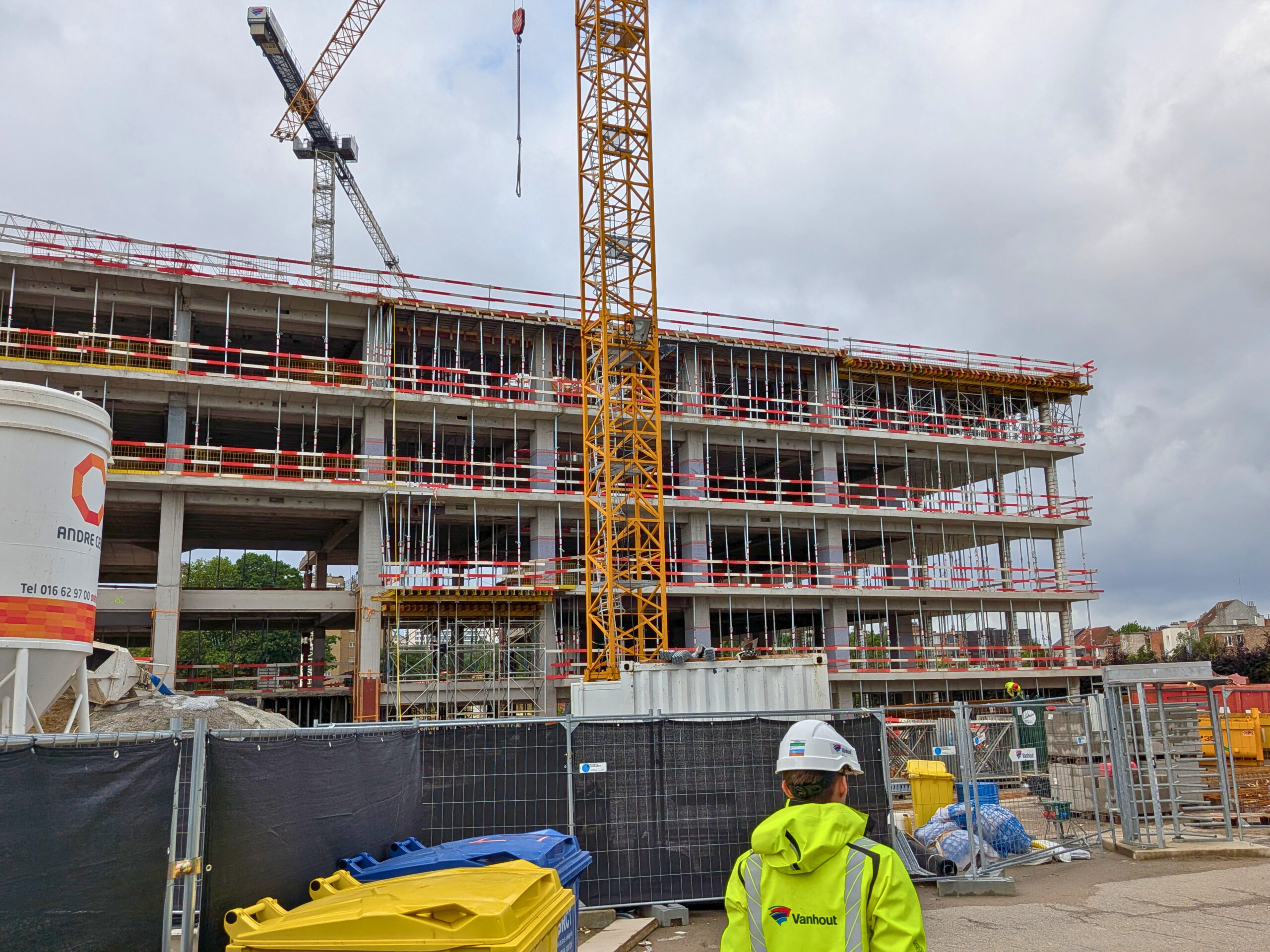
In many European countries, public procurement accounts for between 20 and 38% of construction activity. Public money therefore helps shape the sector itself.
The last revision of the Public Procurement Directives recognised that public contracts should not be awarded solely based on the lowest price. Yet according to the European Court of Auditors, price remains the dominant award criterion across much of Europe. As a result, public money continues to reward business models built on cheap labour, excessive subcontracting and fragmented responsibility.
The upcoming revision presents an opportunity to correct course. Public procurement should reward companies that create attractive jobs, invest in skills, employ workers directly and take responsibility for the projects they deliver. Fraudulent companies should be excluded from public contracts. Main contractors should be fully accountable throughout their subcontracting chains through robust joint and several liability.
This is not a radical proposition. Belgium, Spain and Norway have introduced rules limiting subcontracting chains in public procurement to two levels. On a more local level, the Swedish Transport Administration, the City of Copenhagen and several major contractors have adopted policies reducing subcontracting layers.
The significance is that a growing number of public authorities, businesses and SMEs have concluded that unlimited subcontracting chains are part of the problem.
Today's policy debate is often framed as a choice between competitiveness and regulation. Construction demonstrates why this is the wrong question.
Without effective rules, markets do not become more competitive. They become easier to abuse. Responsible businesses lose out to irresponsible ones. Workers lose out to exploitation. And society ends up paying the bill.
By Tom Deleu, General Secretary of the European Federation of Building and Woodworkers
