
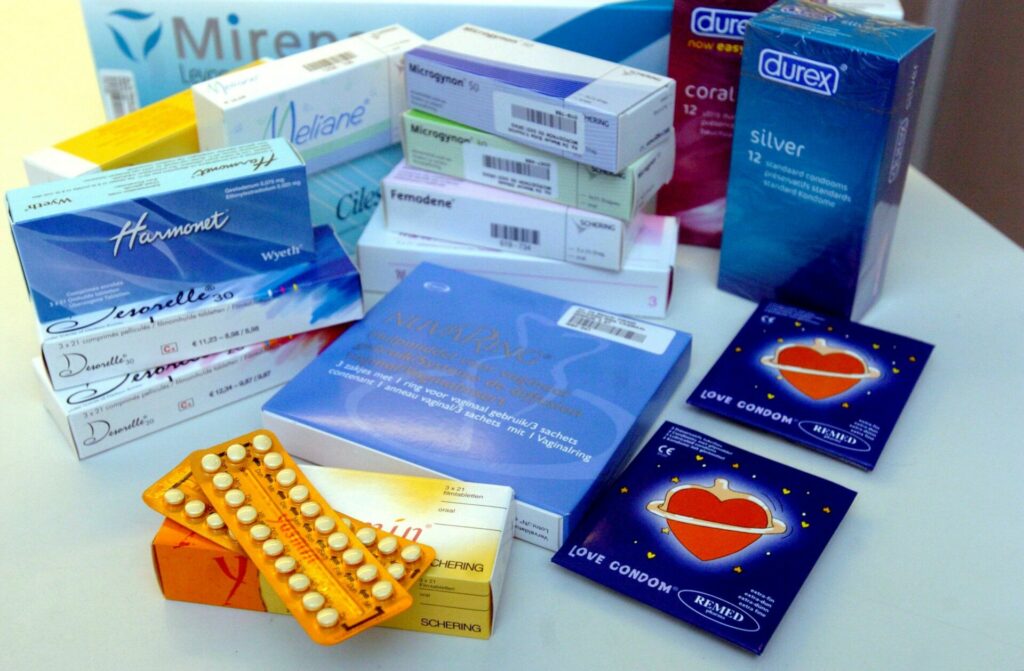
An estimated 1.4 million women could lose access to contraception unless the remaining US-funded contraceptives stored in Belgium are distributed soon, reproductive health organisations warned on Tuesday.
With only four truckloads of the original stockpile remaining suitable for use, according to the Flemish centre of expertise on sexual health Sensoa, it is urging Belgium and the European Union to act before the supplies expire.
The renewed appeal comes nearly a year after the Trump administration halted the distribution of millions of dollars worth of contraceptives purchased through USAID, the US Agency for International Development, for family planning programmes in Africa.
According to Sensoa, around 20 truckloads of contraceptives stored in Kallo (East Flanders) can no longer be used. Four remaining truckloads, stored in Geel (Antwerp), are still considered viable but require urgent action if they are to reach their intended destinations.
Months of uncertainty
Originally destined for the Democratic Republic of the Congo, Kenya, Tanzania, Zambia and Mali, the shipment consists primarily of long-acting contraceptives, including intrauterine devices (IUDs), implants, injectable contraceptives, and tablets containing levonorgestrel and ethinylestradiol.
Several of the intended destination countries are already facing humanitarian crises and shortages of reproductive health products.
The latest warning follows months of uncertainty over the future of the stockpile.
Earlier this year, the Trump administration announced plans to destroy the contraceptives after freezing foreign aid programmes and dismantling much of USAID. The proposal drew widespread criticism from humanitarian organisations and prompted legal challenges, with those opposed to Trump’s notion arguing that reusable medical supplies should not be destroyed while demand remains high.
Belgian authorities later confirmed that the contraceptives had not been destroyed, despite statements from the White House suggesting otherwise. Since then, discussions have continued over whether the remaining supplies could be transferred for humanitarian use.
According to the office of Foreign Minister Maxime Prévot (Les Engagés), Belgium submitted a proposal several months ago to take over the remaining stockpile through a humanitarian organisation and redirect the contraceptives to populations in need. The proposal has not yet received a response from US authorities.
"The ball is now entirely in the United States' court," Prévot's office told The Brussels Times. "Any progress will depend on a decision from the American side."

Foreign Affairs Maxime Prévot ahead of a 'Kern' meeting gathering selected Ministers of the Federal Government. Credit: Belga/Emile Windal
Sensoa and its partners also pointed to new findings from the USAID Office of Inspector General, which show that the US government continues to spend approximately $24,000 (roughly €21,000) per month storing the contraceptives while negotiations remain unresolved.
The organisations argue that allowing the remaining supplies to expire would not only waste taxpayer money but also deepen reproductive health supply shortages in countries that were originally meant to receive them.
According to the Reproductive Health Supplies Coalition, failing to distribute the remaining contraceptives could contribute to an estimated 362,000 unintended pregnancies, 161,000 unplanned births and 110,000 unsafe abortions.
Sensoa argues that the continued storage of the contraceptives reflects a broader shift in US policy on sexual and reproductive health.
"This is a policy where women have no control over their bodies," the organisation said, arguing that women in the Global South and American taxpayers are bearing the consequences of decisions made by the US Government.
The organisation is now calling on Belgium and the European Union to help secure an agreement that would allow the remaining contraceptives to be redistributed before they expire.
Not going to waste
Prévot previously warned that every delay makes redistribution more difficult. Although the expiry dates may appear distant, he said, each passing day reduces the chances of getting the contraceptives to those who need them.
Belgium remains willing to help facilitate a humanitarian transfer of the contraceptives, the minister's office said, but stressed that no further steps can be taken without approval from the United States.
"Belgium continues to believe that, wherever possible, usable supplies should be put to humanitarian use rather than go to waste," their statement said.
The ministry also added that Belgium has already undertaken the necessary diplomatic efforts but has no additional leverage to move the process forward without cooperation from Washington.
While acknowledging that neither Belgium nor the European Union can fully replace the funding lost following the dismantling of USAID programmes, the ministry said sexual and reproductive health remains a priority of Belgian development cooperation policy.
Despite a 25% reduction in the budget, Prévot has decided to maintain funding for organisations focused on sexual and reproductive health, including the United Nations Population Fund (UNFPA), its UNFPA Supplies programme and the World Health Organization's Human Reproduction Programme.
Related News
- US stockpile of contraceptives in Flanders destroyed, says White House - Flemish Government denies
- Activists launch 'raid' on Flemish warehouse storing millions of dollars worth of US contraceptives
- US contraceptives blocked in Belgium: majority of stock lost due to 'substandard storage'
- US decision to burn contraceptives in Belgium is 'morally reprehensible', say protesters
