
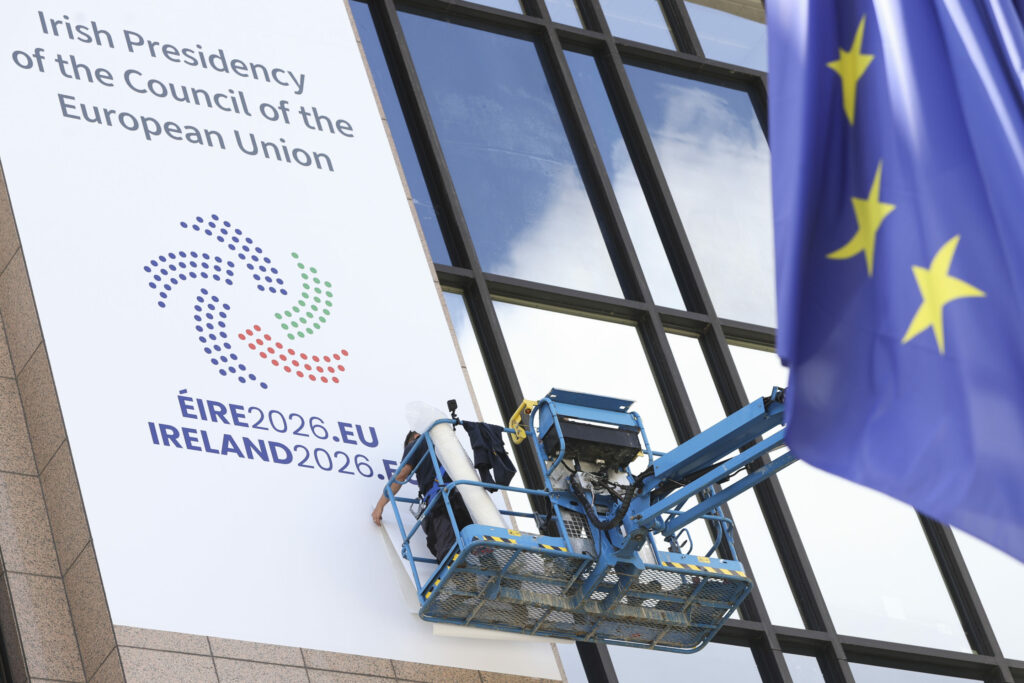
Ireland took charge of the EU’s rotating presidency this week for a six month stint. Here is a crash course in what being the presidency holder entails.
Ever since 1952, a member of what is now the European Union has chaired meetings of the EU council. In the very beginning, the Germany of Konrad Adenauer was in charge of the Special Council of Ministers of the European Coal and Steel Community.
Ever since 1958, these presidency holders have served for a full six months, setting the agenda of legislative work in the institution and playing the role as an honest broker in negotiations with other bodies of the EU.
Ministers from the presidency holder will chair meetings of certain council summits and get-togethers, and represent the council during behind-closed-door talks.
It gives whoever is in charge the chance to set the tone of meetings and to focus on priorities that are important to its national interests.
Presidency holders also use their time in charge as a shop window for their country, organising informal get-togethers of ministers, printing merchandise and taking journalists on press tours. There is even a logo for each presidency.
Croatia’s first presidency since joining the bloc in 2013 fell in 2020, just as Covid-19 swept the world and shut down travel and large-scale events. It wrecked many of the plans that the Balkan nation had spent months preparing.
Being a presidency holder is seen as a great honour and a task that requires the country in charge to adhere to certain principles.
When it was Hungary’s turn in 2024, there were calls from the European Parliament to strip the country of its presidency rights due to the ongoing rule of law issues perpetrated by the government at the time. Those calls did not result in any actual sanctions though.
Countries are not in it alone either. Each upcoming holder is in a trio with two other countries. The previous three presidency wielders of Poland, Denmark and Cyprus all coordinated on what priorities they would work on over the 18 months.
Ireland took over the presidency reins yesterday for what is the country’s eighth go at the wheel since joining the EU in 1973. They will be succeeded in January by Lithuania and Greece will take over this time next year.
It will then be the turn of the presidency trio of Italy, Latvia and Luxembourg.
As momentum gradually builds behind expanding the EU to include more members, that ultimately means there will be more years between presidency opportunities. At the moment it is 13 and a half years.
