
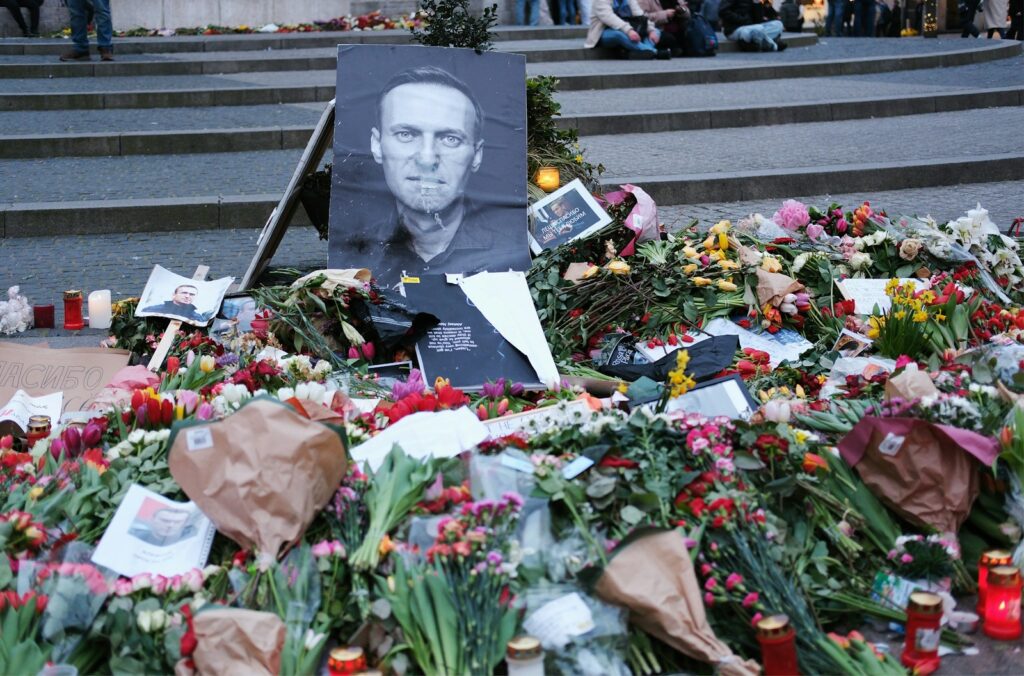
The EU has imposed sanctions on six Russian individuals it said were involved in developing chemical weapons linked to the poisoning and death of Russian opposition politician Alexei Navalny.
The measures target scientists and researchers working in the military sphere, including some connected to the Signal Scientific Centre — also known as SC Signal — where epibatidine was researched and written about in published articles.
Epibatidine is a toxin that was found in samples taken from Navalny’s body after his death in a Russian penal colony, and poisoning with the substance was considered highly likely to have caused his death.
Those named include Igor Babkin, described as the head of SC Signal’s laboratory.
Also listed are Irina Derevyagina, a chemical research analyst at Russia’s State Research Institute of Organic Chemistry and Technology (GosNIIOKhT), described as a central part of Russia’s chemical weapons programme, and Mikhail Gutsalyuk, head of a department responsible for organising scientific work at the Military Academy of Radiological, Chemical and Biological Defence.
Asset freezes and travel bans
The six individuals are subject to an asset freeze, and it is prohibited to provide them with funds or economic resources, directly or indirectly, according to the EU’s sanctions rules.
They are also subject to a travel ban to the EU.
With the latest listings, EU restrictive measures against the use and proliferation of chemical weapons now apply to 31 individuals and six entities.
The legal acts underpinning the sanctions have been published in the Official Journal of the EU.
