
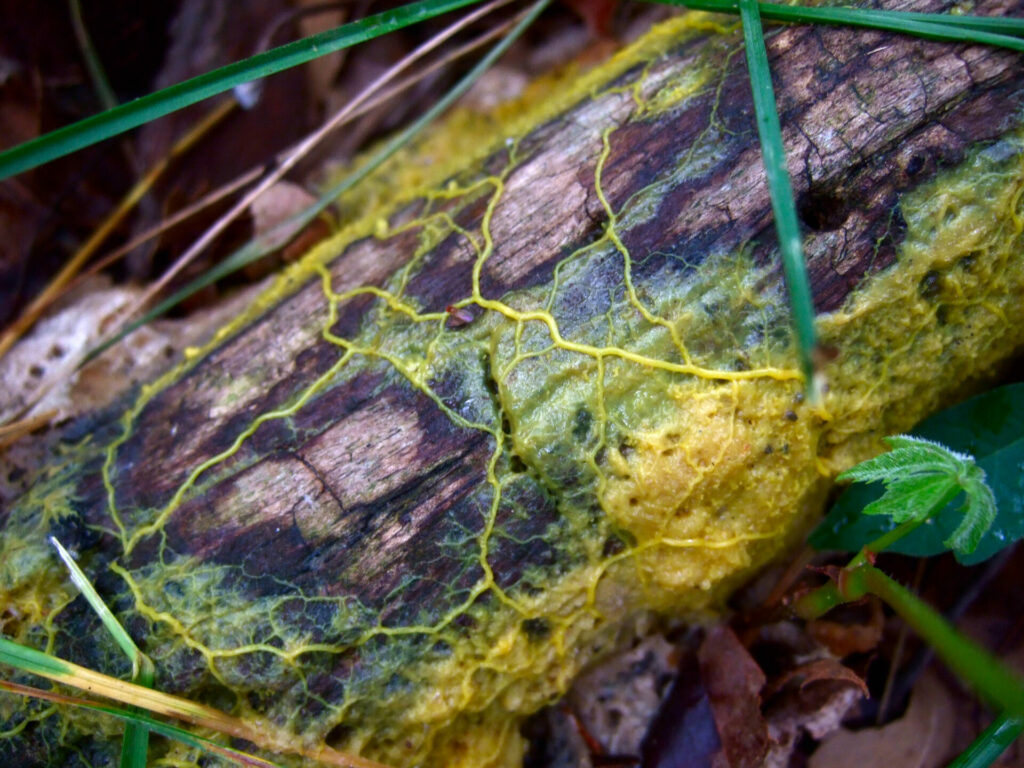
When considering a family pet, sometimes it's best to start small. A gerbil or hamster perhaps. Too much work? How about a fungus? They don’t need a lot of room, don’t need to be exercised, and don’t make mess.
Strange as it may seem, adopting a ‘blob’ – as these fungi are affectionately called – is gaining in popularity. Rather than being a new pet trend, however, it is in fact part of participatory science experiment involving no less than 15,000 families in Europe.
Sparkoh, the scientific adventure park near Mons, is one of the groups participating in this experiment. It is offering some 200 Belgian families the opportunity to adopt a blob, real name Physarum polycephalum.
Why blobs?
The idea is the brainchild of Audrey Dussutour a French ethnologist from the University of Toulouse. She has been studying blobs since 2008. "It is a shapeless being composed of a single cell,” she says. “But it is visible to the naked eye, unlike most cells. It may have only one cell and one nucleus at birth, but after only eight hours, its nucleus divides, then quadruples. In total, its body can contain thousands of nuclei that enclose identical DNA. It is able to double in size every day."
This ability to spread and grow very quickly earned it the nickname ‘Blob’ in reference to the film of the same name from 1957, in which a slimy alien engulfs humans for food. The reference makes Dussutour smile: "it doesn’t eat humans but it does have a slight alien quality with its sliminess and its propensity to be invasive.”
But don't be put off, physarum polycephalum has amazing properties, such as an impressive lifespan. "We have blobs in the lab that are over 70 years old." So to coin a phrase, blobs aren't just for Christmas.
Feed them oatmeal
Nathalie Clausse is a biologist at Sparkoh, and describes the impressive appetite of the blobs: "I feel as if I'm in charge of a huge, very gluttonous family". In a petri dish beside her sits a yellow and viscous mass that is covered in oatmeal.
"Tomorrow morning, the blob will have eaten all the oatmeal and it will have doubled in volume," she says.
Nathalie has increased the volume of the blobs she received more than a hundred times. She has divided them into small pieces that she has dried (or "put to sleep") until it is time for her to part with them.
These blobs will be distributed to almost 200 Belgian families who are participating in the project. Each adoptive family will have to conduct experiments with their blob following strict scientific protocols.
They will receives a kit containing about twenty petri dishes, a box of agar, two thermometres, a heating lamp and the precious dried and sleeping blobs that will have to be awakened by immersing them in water.
Related News
- Belgian breakthrough in organic tooth fillings could transform dentistry
- Keeping your brain young: The benefits of bilingualism
The study looks into the tolerance of blobs to heat. This is the reason why 15,000 families including 200 Belgian families will take a blob home.
In nature, blobs live in the undergrowth away from light and feed on other fungi and bacteria. The products of their digestion become food for plants. But they are sensitive to heat and cannot survive above 29 °C. The study will give researchers new insight into the role played by the blob in our ecosystem.
