
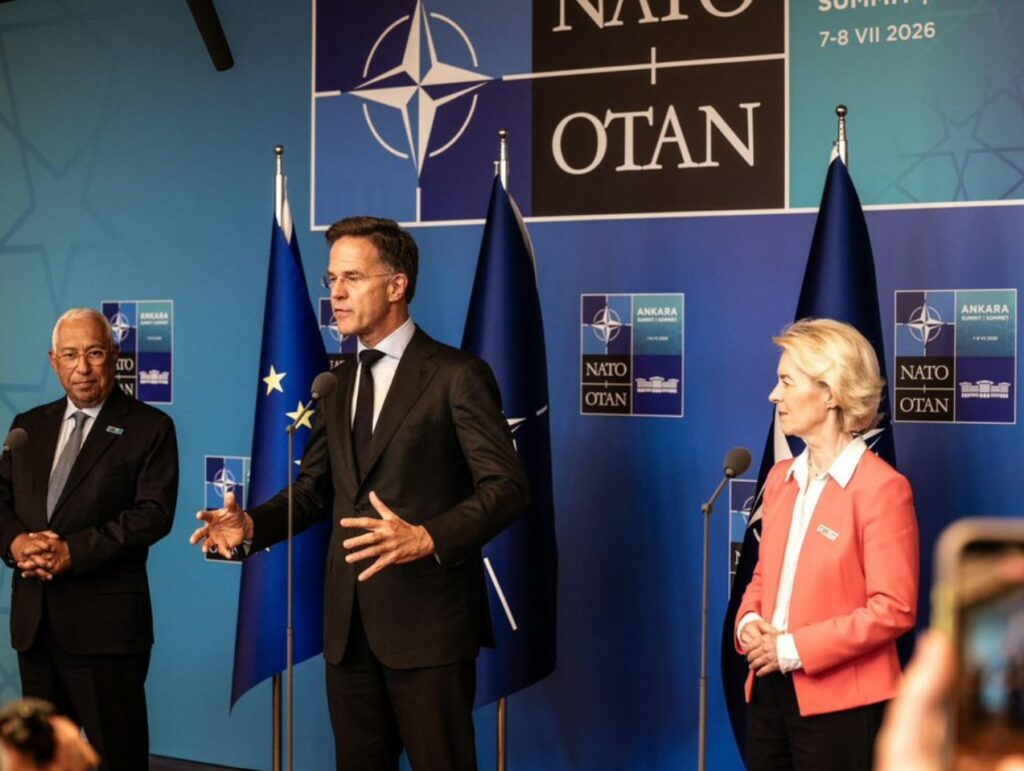
European Commission President Ursula von der Leyen told a NATO Summit Defence Industry Forum panel in Ankara that the EU’s ReArm Europe programme could mobilise up to €800 billion in defence investment by 2030, including €150 billion earmarked for joint procurement through the SAFE programme.
Von der Leyen said EU countries and NATO allies rely on “one single set of forces” that can be assigned to NATO, EU, UN or other missions, and that making this work requires interoperability — the ability of different militaries and equipment to operate together, the European Commission reported on Tuesday.
She outlined EU funding plans she said would support military capabilities and the movement of forces and equipment across Europe, including €131 billion for military capabilities and €17 billion for “military mobility” in the next long-term EU budget, which she linked to infrastructure such as roads, bridges, ports and airports.
Von der Leyen said 10 agreements worth €100 billion had been reached under SAFE, adding that the scheme allows up to 35% of cost components to come from outside the EU, while 65% must be within the bloc.
Turkey, Canada and cooperation with Ukraine
She said non-EU countries could participate more fully in joint procurement if they sign a security and defence agreement with the EU, and described Canada as the first country to have done so, according to the Commission.
Turkey, which she described as having one of NATO’s largest armed forces, could work with the EU under SAFE within the scheme’s provisions.
Von der Leyen also emphasised that the EU had opened an Innovation Office in Kyiv — which she described as a first for the bloc — and was encouraging joint ventures between European and Ukrainian companies, alongside work on a longer-term partnership on defence industrial production.
She said EU efforts should remain aligned with NATO targets, citing the NATO Defence Planning Process (NDPP) — a system used to identify capability needs and address gaps among allies — as a tool to fill gaps “in a cost-efficient manner.”
Von der Leyen also spoke about “hybrid attacks” targeting societies, including foreign interference and manipulation of information online, and said public concern about security and resilience was reflected in Eurobarometer polling of EU citizens.
