
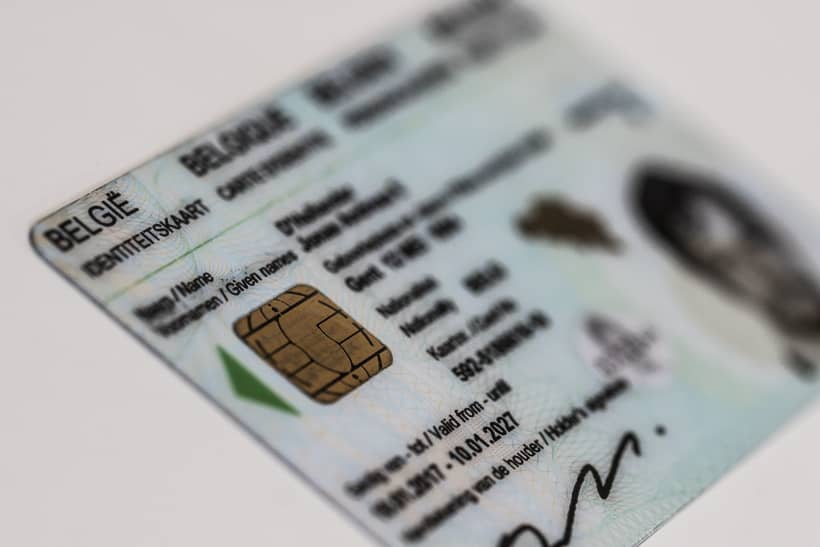
Federal police are dealing with a sharp spike in AI-driven identity fraud, with over 10,000 people falling victim to it in Belgium last year.
According to VRT, the technology is being increasingly used to alter stolen documents, with the authorities recording 10,417 cases in the previous 12 months.
The authorities are warning that fraudsters now only need to get their hands on a sloppily made photograph of an ID card, which can then allow them to use the image to secure loans, make expensive purchases, or commit offences under an assumed name.
Christophe Van Bortel, a cyber expert at the federal police, told VRT that operating remotely from a computer is vastly simpler than breaking into a house.
Modifying an ID photo with AI tools requires minimal technical skill and carries zero risk of running into the neighbours. Identities have effectively become a commodity within criminal networks.
Many digital services and public transport ticket inspectors still accept a smartphone picture of an ID as absolute proof of identity, which the authorities say is a systemic flaw that places a heavy burden on victims.
Authorities initially presume the cardholder committed the infraction. Consequently, the targeted individual must prove they were elsewhere.
One victim referred to by VRT as Hugo*, had his identity card secretly photographed two years ago. Since then, he has received dozens of fines for fare evasion on buses and trains.

Credit: Eric Vidal / EP
The actual perpetrator simply showed a digital copy of Hugo's document during ticket checks and continued their journey unbothered.
Hugo is now forced to wear a GPS tracker whenever he leaves the house just to map his exact movements and establish alibis for crimes he did not commit. His family spends countless hours disputing fines and filing paperwork with local authorities.
Public transport operator SNCB-NMBS has tried to introduce a tool called Checkdoc, a government tool that instantly flags registered fraudulent IDs in their systems. But this system has not yet been properly integrated.
To mitigate risks, experts advise citizens to scrutinise every request for personal documents. If transmitting a copy is unavoidable, applications like KopieID allow users to obscure specific zones and overlay custom watermarks. Victims must report stolen data immediately to the police so their card is flagged as fraudulent.
A fully digital ID system expected later this year should also help track anomalies through metadata. If a digital profile last used in Belgium suddenly registers an action in Asia, the system will immediately trigger an alarm. But it remains to be seen if local identity fraud can be countered in this way.
