
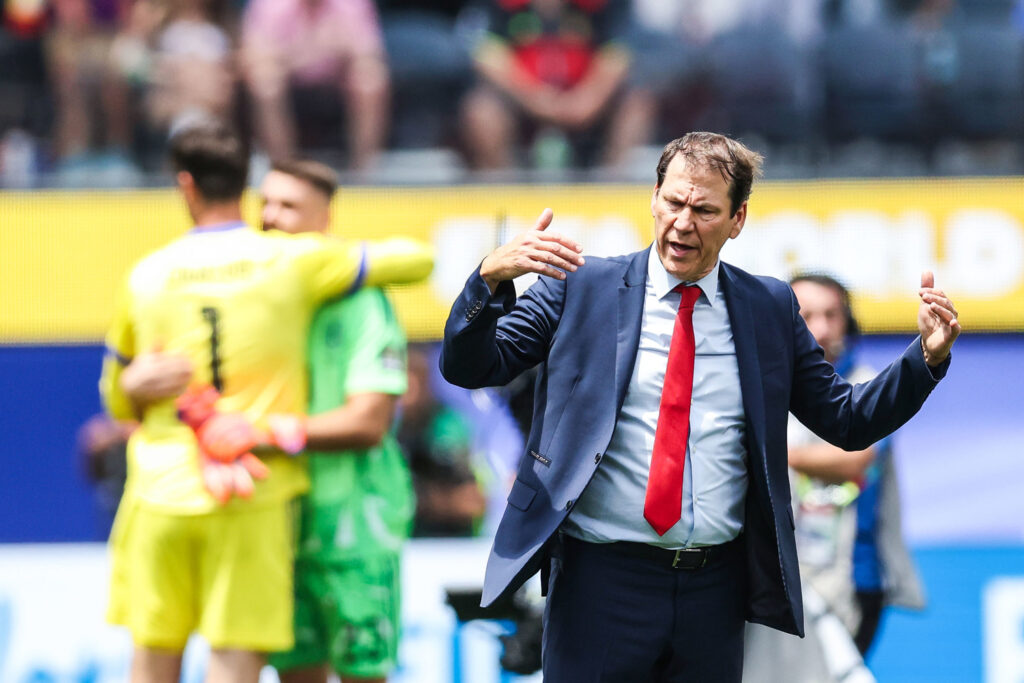
Belgium’s World Cup campaign ended on Friday with a narrow defeat to European champions Spain at the vast SoFi Stadium in Los Angeles.
After an underwhelming qualifying campaign, the Red Devils' form improved sharply during their tournament preparations. They beat Croatia 0-2 in Rijeka with an experimental three-man defence, then swept aside Tunisia in their farewell match.
That upturn raised expectations at home. Nathan Ngoy emerged as a new option in central defence at just the right time, with first-choice defender Zeno Debast still recovering from a thigh tendon injury and ultimately unable to play at the tournament.
Turbulence from the outset
Belgium’s World Cup was turbulent from the outset. Soon after the team arrived in the US, there was widespread discussion around star winger Jérémy Doku, who first fell ill and then travelled to London for the birth of his son, Praise.
There was also controversy over an article in a French-language newspaper regarding two members of the team. On the pitch, Belgium then produced disappointing draws against Egypt and Iran, whose own World Cup participation had not been certain before the tournament.
Those results briefly put qualification for the knockout stage in doubt. However, Belgium responded convincingly in Vancouver, beating New Zealand 1-5 to secure top spot in the group.
Then came the Balogun red card controversy
That set up a last-16 meeting with Senegal, widely seen as one of the strongest third-placed teams. In Seattle, Belgium pulled off a remarkable comeback, turning a 0-2 deficit after 85 minutes into a 3-2 extra-time victory.
The most startling episode of the tournament, however, came on the eve of the match against the United States. On Sunday, FIFA ruled that US striker Folarin Balogun was eligible to play following a phone call from US President Donald Trump.
After days of controversy, Balogun started the match. The United States, buoyed by a media-driven belief that a home World Cup triumph was within reach, ultimately failed to cope with the pressure, and the Balogun saga did little to help.
At Lumen Field, Belgium outclassed the hosts for the second time in a matter of months. The 1-4 scoreline did not flatter them.
Surprise line-ups and puzzling substitutions
The knockout matches against Senegal and the United States underlined both Belgium’s unpredictability and the bold approach of head coach Rudi Garcia. His surprise line-ups and seemingly puzzling substitutions often worked in Belgium’s favour.
Romelu Lukaku was decisive four times in five substitute appearances during the tournament. Kevin De Bruyne and Doku were both left on the bench for the high-stakes clash with the United States.
In total, Garcia used 18 of his 26 players in the starting line-up at some stage, making Belgium difficult to prepare for. His second-half changes also repeatedly altered the course of matches.
With the exception of the injured Debast, Koni De Winter and third-choice goalkeeper Mike Penders, every squad member played at the World Cup. That helped to ensure that all players felt involved and strengthened the atmosphere within the group.
A string of setbacks, but they fought until the end
Against Spain, though, Belgium were hit by a string of setbacks. Youri Tielemans was injured in the warm-up, prompting Hans Vanaken to come into the starting side.
Garcia was already short of midfield options after Amadou Onana had gone off injured earlier in the week against the United States. After the break, Thibaut Courtois was also forced off through injury.
His replacement, Senne Lammens, soon conceded the decisive goal after spilling a saveable shot. De Bruyne was also struggling physically and had to be taken off.
Belgium fought until the end, but their World Cup run came to a close on Friday.
