
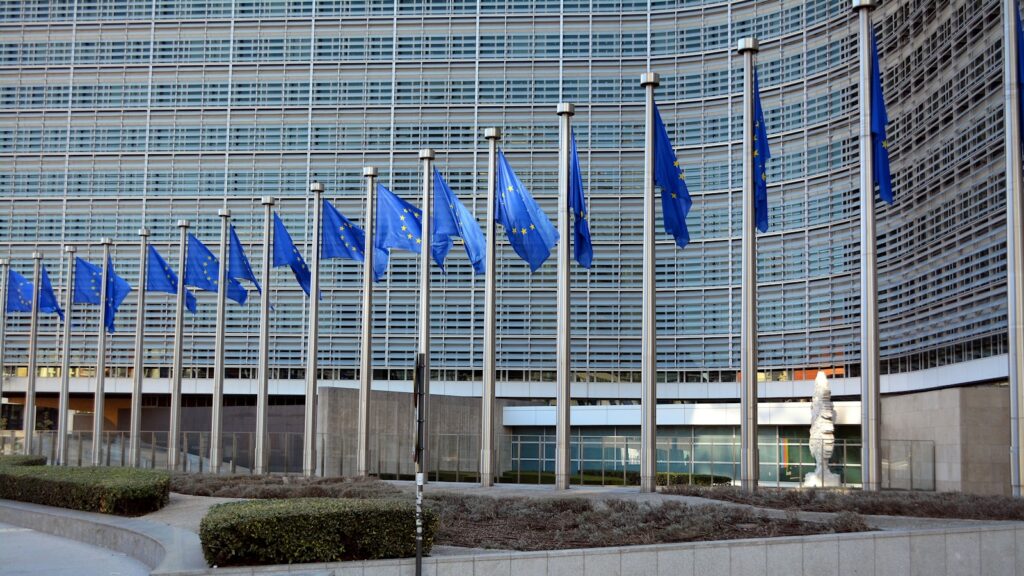
The European Commission has published its 2026 Rule of Law Report, reviewing the state of the rule of law in all EU member states and in four candidate countries — Albania, Montenegro, North Macedonia and Serbia.
The Commission described the rule of law as a foundation for “prosperity, democracy and security”, citing factors such as independent courts, anti-corruption measures, media freedom and institutional checks and balances as key to protecting rights and sustaining trust in public institutions, in a statement released on Friday.
Commission President Ursula von der Leyen said the rule of law “builds trust” among citizens and businesses and that the annual report has become a “reference point” shaping national debates and reforms across the EU.
The Commission stated that the overall direction was “broadly positive”, with progress reported in many member states, although developments were uneven and some challenges persisted.
Courts, corruption and media reforms
Many member states advanced justice reforms over the past year, including measures linked to judicial independence, safeguards around judges’ appointments and disciplinary procedures, and steps to strengthen the autonomy of prosecution services, the Commission said.
It added that reforms were moving more slowly in some countries and that serious concerns remained in certain cases, while in the four candidate countries efforts continued but worries persisted about undue influence affecting judicial independence.
On corruption, the Commission pointed to an EU directive on combatting corruption that entered into force on 31 May 2026, setting out an EU-wide framework to prevent, detect and sanction corruption.
Several member states developed new anti-corruption strategies and strengthened capacity to fight corruption, but further work was needed on prevention rules — including lobbying and conflicts of interest — and on ensuring corruption cases are properly investigated, prosecuted and brought to final judgment.
In media policy, the Commission said reforms were under way to align national laws with the European Media Freedom Act, an EU law covering issues such as safeguards for media independence, while some countries were also changing rules on the financing and governance of public service media and on the transparency of state advertising.
The report said member states were taking steps to address Strategic Lawsuits Against Public Participation, known as SLAPPs — lawsuits used to deter public scrutiny — while the Commission noted that it would continue work around implementing the EU’s anti-SLAPP directive.
The Commission also reported reforms in some countries to improve legislative quality, while noting continued concerns in certain member states about the excessive use of emergency law-making procedures and limited involvement of stakeholders.
It said many member states maintained a supportive environment for civil society, though civil society groups continued to report problems in some countries, including limits on funding and peaceful assembly.
The Commission invited the European Parliament and EU Council to hold debates based on the report and its recommendations, and said it would follow up on issues identified in the candidate countries in future enlargement reports.
