
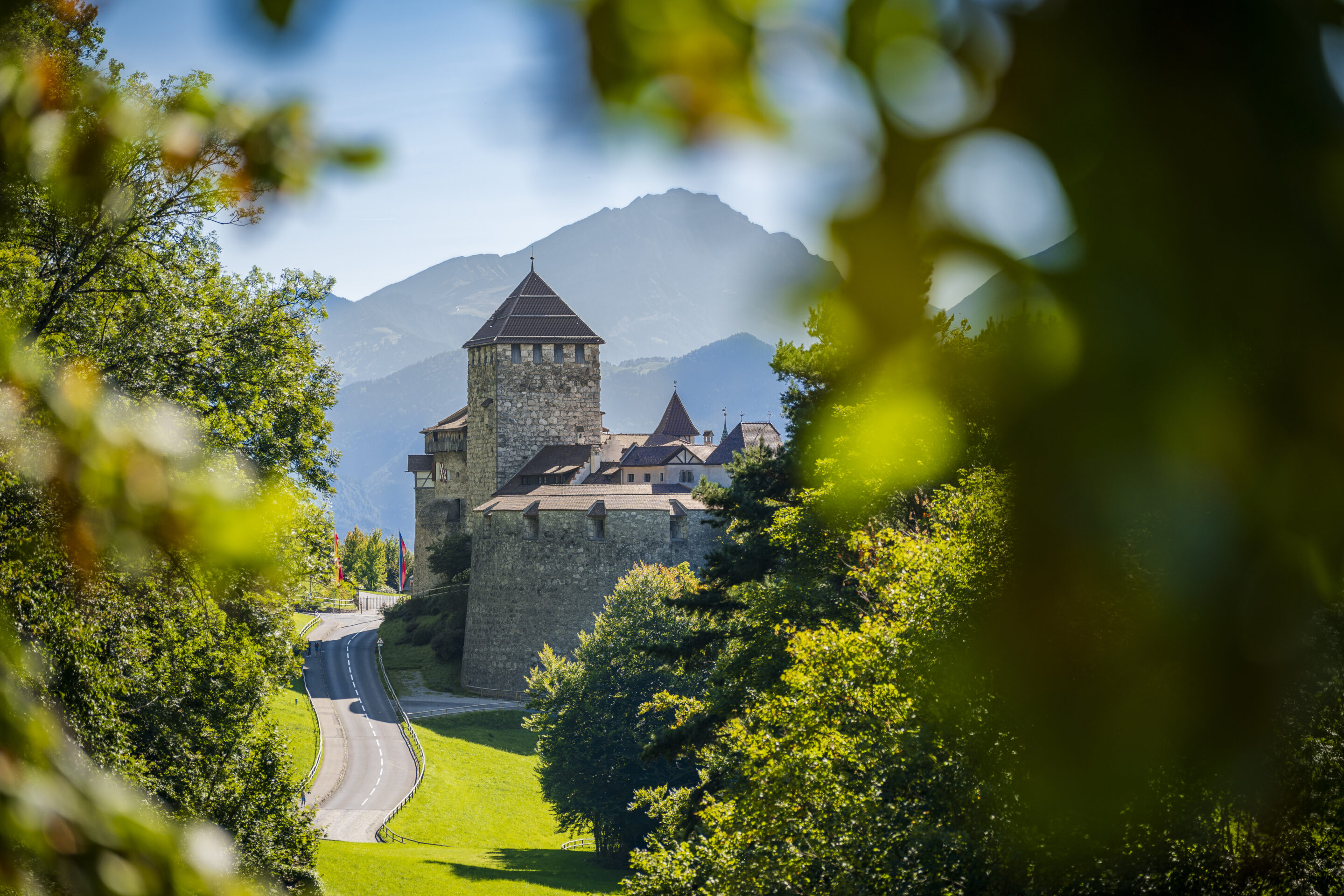
Nestled between Switzerland and Austria, the principality covers just 160 square kilometres, making it one of the world’s smallest countries. Yet what it lacks in size, it more than makes up for in diversity.
Visitors can spend the morning hiking through alpine landscapes, enjoy lunch at a local vineyard, explore museums in the afternoon and finish the day overlooking medieval castles.
© Liechtenstein Marketing
A hiker’s paradise
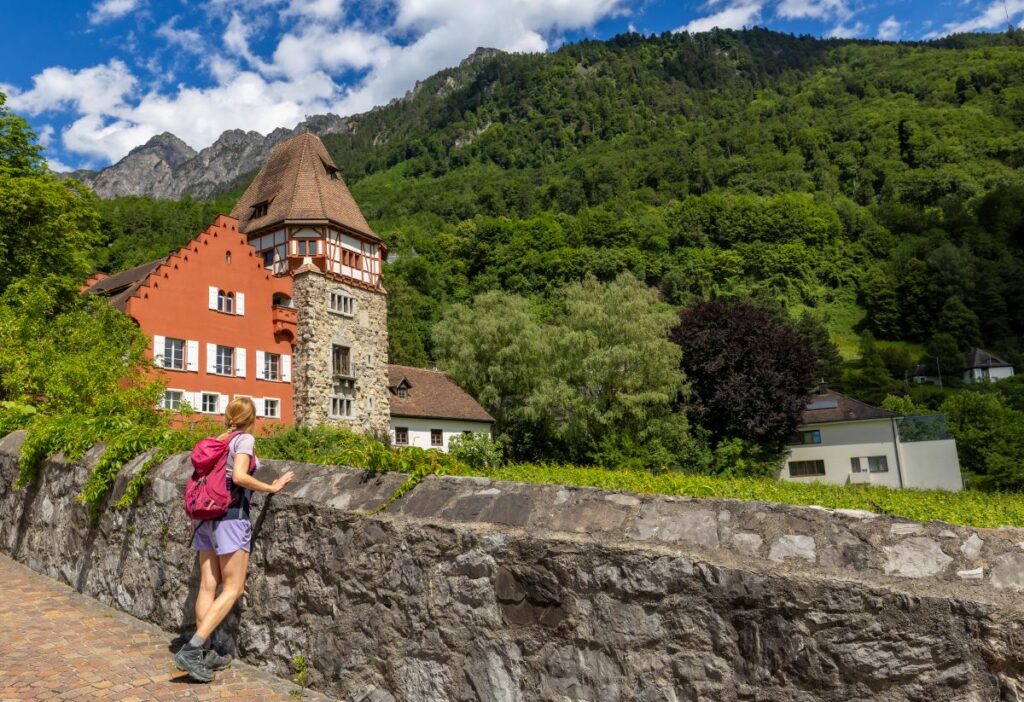
Outdoor enthusiasts quickly discover why Liechtenstein has earned a reputation as a hiking paradise. More than 400 kilometres of marked trails cross the country, creating one of the densest hiking networks in Europe. The Liechtenstein Trail, which connects all 11 municipalities, offers visitors a unique way to experience the country’s landscapes, villages and history in a single journey.
Along the route, travellers encounter historic sites, local traditions and viewpoints that tell the story of the principality. As one of Liechtenstein’s flagship tourism experiences, the trail offers an immersive way to discover the country’s landscapes, heritage and culture. Digital features and storytelling elements enrich the journey, bringing to life the people, events, and places that have shaped Liechtenstein over the centuries.
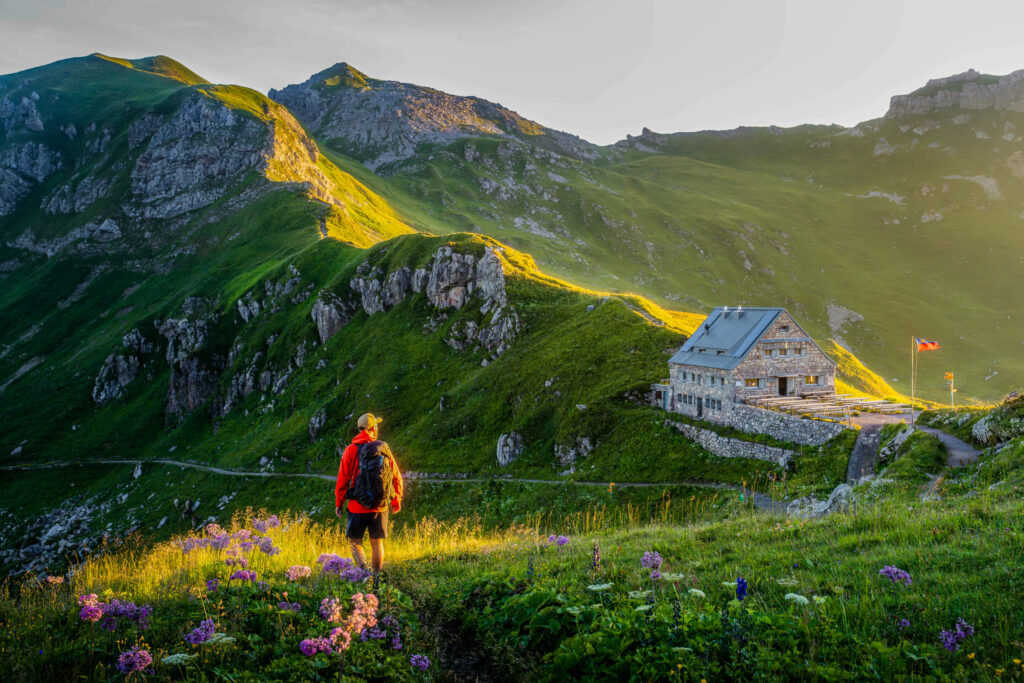
Among the country’s most iconic outdoor experiences is Route 66, Liechtenstein’s celebrated panoramic hiking trail. Far removed from its famous American namesake, this alpine route takes hikers across mountain ridges, high-altitude meadows and remote mountain huts, offering sweeping views over the Rhine Valley and neighbouring Switzerland and Austria. Completed over several days, the trail showcases the country’s remarkable natural diversity and has become a symbol of the slow, sustainable travel experiences that increasingly attract visitors to the principality.
The route also highlights one of Liechtenstein’s greatest assets: its pristine Alpine environment. Hikers pass through protected natural areas rich in biodiversity, while mountain huts provide an opportunity to experience traditional hospitality high above the valley floor.
Beyond hiking, Liechtenstein is increasingly attracting cyclists and mountain bikers. A growing network of cycling routes winds through vineyards, forests and mountain landscapes, while e-bike infrastructure makes the country’s terrain accessible to visitors of all fitness levels.
© Liechtenstein Marketing
Where royal heritage meets local flavours
The country’s cultural heritage is equally impressive. In Vaduz, contemporary art museums stand alongside historic landmarks, while castles such as Vaduz Castle and Gutenberg Castle in Balzers remind visitors of the principality’s centuries-old traditions. The result is a destination where modern creativity and royal heritage coexist naturally.
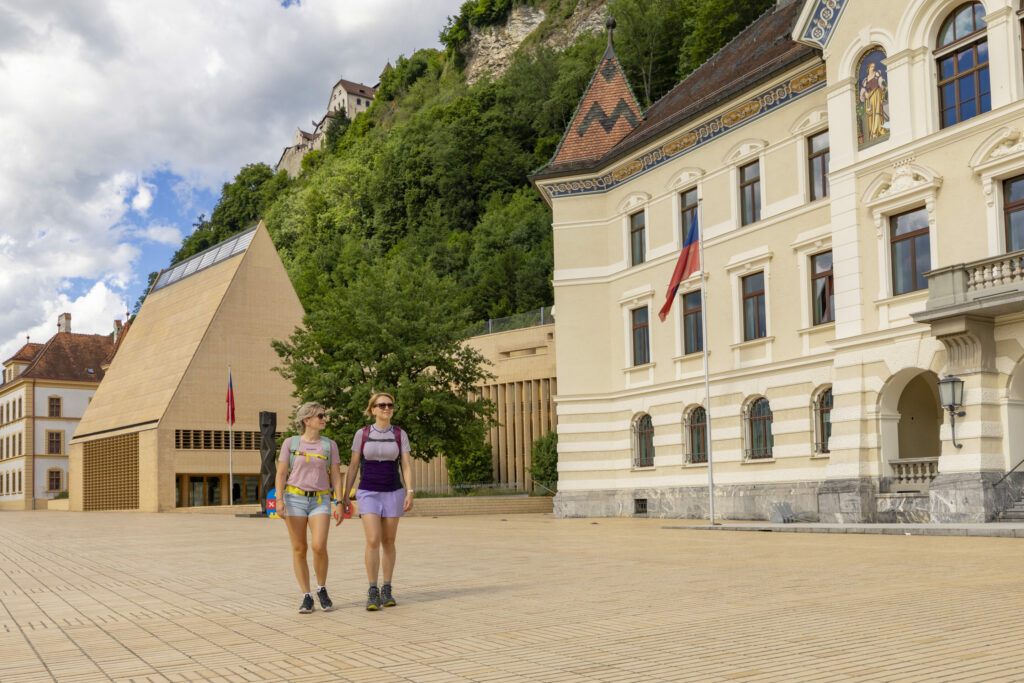
As the residence of the Princely Family, Vaduz occupies a special place in European history. Visitors can stroll through the capital’s compact centre, discover public art installations, visit museums dedicated to history and fine arts, and learn more about the country’s unique political system as a constitutional monarchy.
A growing destination for wine lovers
Liechtenstein also punches above its weight when it comes to gastronomy. Vineyards cling to sunny slopes above the Rhine Valley, producing wines that have become a point of pride for the country. Combined with regional cuisine and local farm products, they offer visitors a taste of Liechtenstein’s strong connection to its landscape and traditions.
Wine culture is deeply rooted in the principality. Local wineries produce a variety of award-winning wines and tasting experiences have become increasingly popular among visitors.
The country's cultural calendar is equally vibrant. Throughout the year, concerts, exhibitions, traditional celebrations and outdoor events bring communities together and offer visitors a glimpse into contemporary Liechtenstein life alongside its historical heritage.
© Liechtenstein Marketing
Four seasons of sustainable adventure
During winter, attention shifts to Malbun, the country’s mountain resort. Skiing, cross-country skiing and winter hiking attract visitors looking for a quieter alternative to some of the Alps’ larger destinations. Families appreciate the relaxed atmosphere and easy access to the slopes.
Malbun has established itself as a family-friendly destination where visitors can enjoy winter sports without the crowds often associated with larger Alpine resorts. Snow-covered hiking trails, sledging opportunities and breathtaking mountain scenery make it attractive even for non-skiers. During the warmer months, the same area transforms into a gateway for hiking, wildlife observation and outdoor recreation.
Underlying all of this is a strong commitment to sustainability. Public transport, cycling infrastructure, nature conservation and environmentally conscious tourism initiatives encourage visitors to explore responsibly while helping preserve the landscapes that define the principality.
The country's tourism strategy promotes slow travel, local products and environmentally responsible mobility. Visitors are encouraged to explore by foot, bicycle or public transport, reducing their environmental footprint.
Liechtenstein may be one of Europe’s smallest countries, but it offers a compelling reminder that memorable travel experiences are not measured in kilometres. Here, everything is close, yet there is always something new to discover.
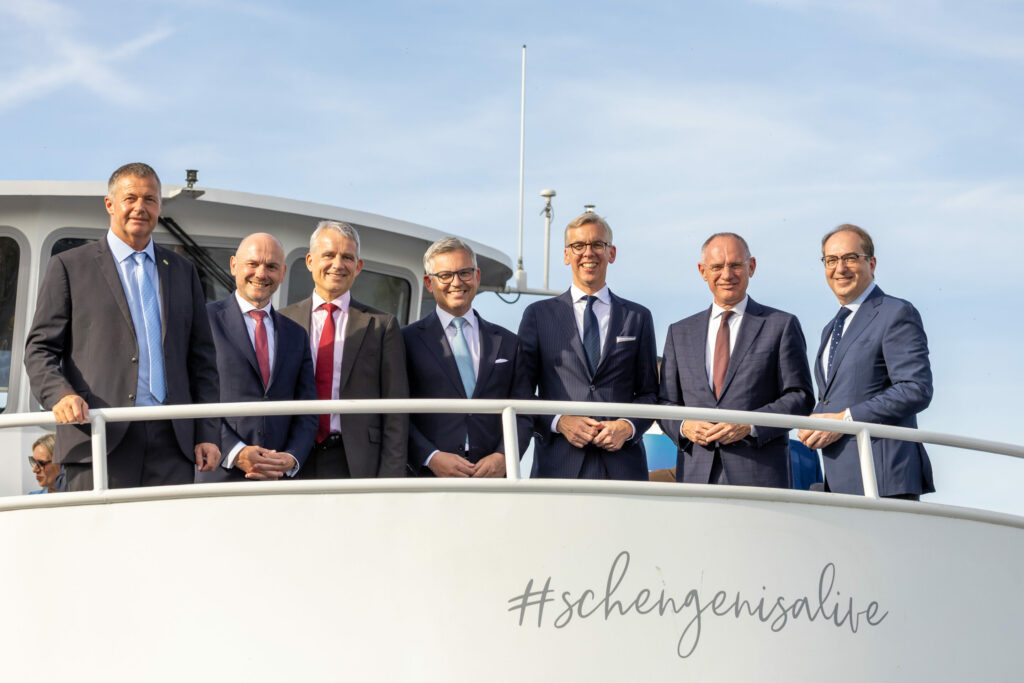
Meeting of the German-speaking Ministers in Luxembourg © Grand-Duché de Luxembourg, Ministère des Affaires intérieures
15 years in Schengen: "How a small state benefits from a borderless Europe"
Fifteen years after joining the Schengen Area, Liechtenstein considers membership indispensable not only for daily life but also for national security. Although the Alpine principality has no airport and no external Schengen border and citizens may rarely notice its impact in daily life, officials say authorities rely on Schengen cooperation and information systems every day.
Schengen membership has given the country a voice in shaping European migration and security policy. Home Affairs Minister Hubert Büchel and Ambassador Pascal Schafhauser reflect on 15 years inside Europe's passport-free zone.
Interview with Minister Hubert Büchel
If you had to summarise 15 years of Schengen membership in one message, what would it be?
Hubert Büchel: For Liechtenstein, 15 years of Schengen have shown that openness and security go hand in hand. As a small and highly interconnected country, we benefit greatly from freedom of movement and close international security cooperation. Schengen remains one of Europe’s greatest practical achievements and a trusted framework for cooperation.
How important is Schengen for Liechtenstein’s internal security and day-to-day governance?
Hubert Büchel: Schengen is deeply embedded in Liechtenstein's daily life and in the way our authorities work. As a doubly landlocked country without an external Schengen border, we depend heavily on the smooth functioning of the Schengen area. Citizens, commuters, visitors and businesses benefit from seamless mobility, while our authorities rely every day on shared information systems and police cooperation mechanisms. These tools have become indispensable for maintaining security and for working effectively with our European partners.
What Schengen has demonstrated over the past 15 years is that freedom and protection do not have to come at each other's expense. For Liechtenstein, membership has strengthened both.
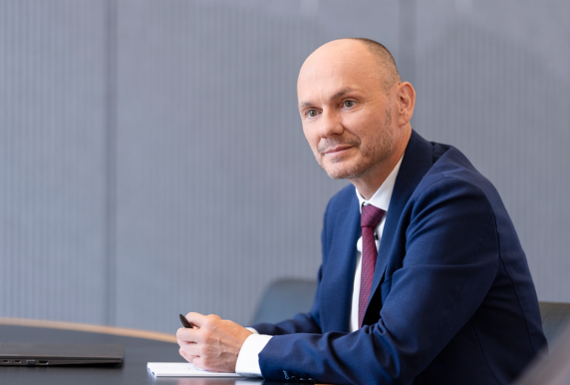
Minister Büchel © Yannick Zurflüh, Government of the Principality of Liechtenstein
What lessons has Liechtenstein learned about balancing openness and security?
Hubert Büchel: One lesson has stood out clearly over the past 15 years: openness and security are not opposing goals. In fact, they depend on one another.
Citizens will only support open borders if they are confident that security is effectively maintained. Our experience has also shown that international cooperation delivers better results than isolated national approaches. Challenges such as organised crime and cross-border criminal activity cannot be addressed by any country acting alone.
Schengen demonstrates that freedom of movement and effective security cooperation can coexist. Many people still remember a Europe with more checks and less integration. Today, seamless travel is often taken for granted, which is perhaps the clearest sign of how successful the system has been.
Schengen was created around the idea of free movement. In today’s geopolitical climate, is that principle under pressure?
Hubert Büchel: Free movement remains one of Europe's greatest achievements. It has brought significant economic, social and cultural benefits and continues to be one of the defining strengths of European cooperation.
At the same time, the principle is facing growing challenges. Migration pressures, organised crime, hybrid threats and wider geopolitical tensions are all putting the system under strain. However, these developments do not diminish the value of Schengen. Rather, they underline the importance of making it more resilient.
Safeguarding free movement requires effective management of the external borders and close cooperation among member states. The long-term objective should remain to preserve an area without internal border controls.
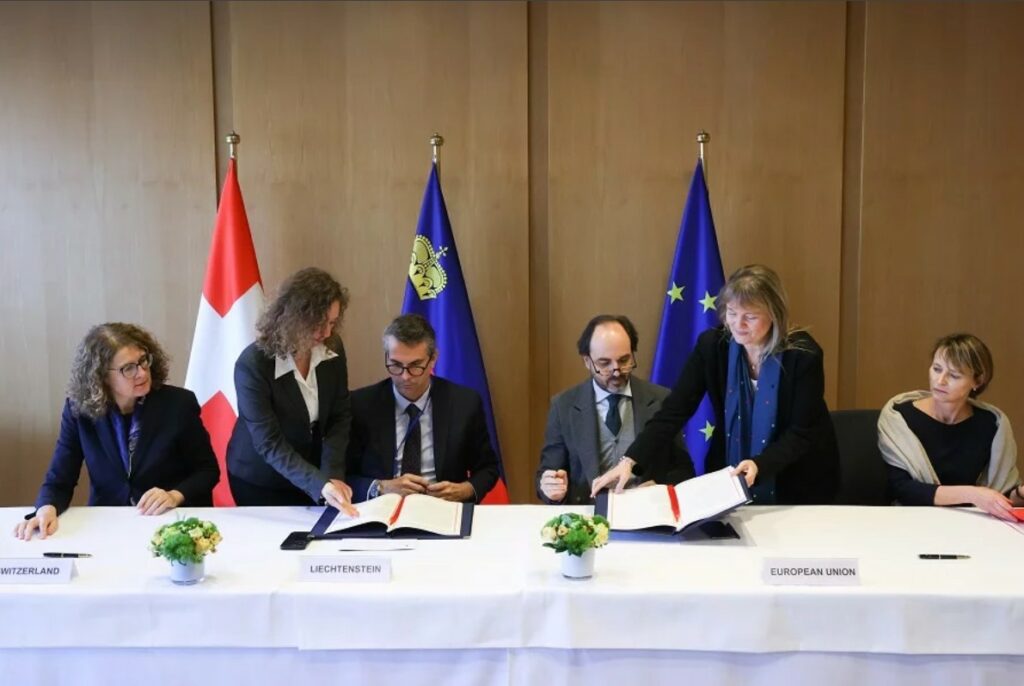
Signing of a supplementary agreement with Ambassador Rita Adam (Switzerland), Ambassa-dor Pascal Schafhauser (Liechtenstein), Ambassador Marcos Alonso Alonso (Spain, EU-Presidency back then), Director Corinna Ullrich (EU-Commission). Source: Francois Lenoir
How important are tools such as the Schengen Information System for a small country like Liechtenstein?
Hubert Büchel: For a small country like Liechtenstein, they are essential. Access to timely and reliable information is a critical component of effective security policy.
The Schengen Information System provides information that no country could gather alone. It enables authorities to identify persons and objects of interest quickly and efficiently and supports practical cooperation across borders.
More broadly, information sharing strengthens both national and European security. Through Schengen's information systems, Liechtenstein contributes to a collective security network while also benefiting from it.
The Schengen Area is undergoing significant changes, including new digital border management systems and increased information-sharing between authorities. How important is digitalisation for the future of Schengen?
Hubert Büchel: Digitalisation will be key to ensuring the future effectiveness of the Schengen area and will be particularly beneficial for a small administration such as Liechtenstein's. New systems have the potential to improve security while also making processes more efficient.
Better information sharing enables authorities in countries of all sizes to make faster and more accurate decisions, while contributing effectively to our common system. At the same time, digital tools can help identify risks while facilitating legitimate travel.
Future challenges cannot be addressed with analogue solutions alone. For that reason, Liechtenstein supports the continued modernisation of Schengen's digital architecture.
From migration and organised crime to cybersecurity and geopolitical instability, what do you see as the greatest challenge facing Schengen today, and how should it evolve to meet that challenge?
Hubert Büchel: At its core, the greatest challenge facing Schengen today is maintaining trust. That includes trust between member states, trust in common rules and systems, and trust among citizens that Schengen can continue to deliver both security and freedom.
The challenges themselves are well known. Migration management, organised crime and emerging security threats require coordinated European responses rather than isolated national ones. The effective implementation of agreed European measures, including the Pact on Migration and Asylum, will therefore be important.
To meet future challenges, Schengen must continue to evolve. Stronger cooperation, better information exchange and modern digital tools will all play a role. A resilient Schengen area is in the interest of every European state, whether large or small.
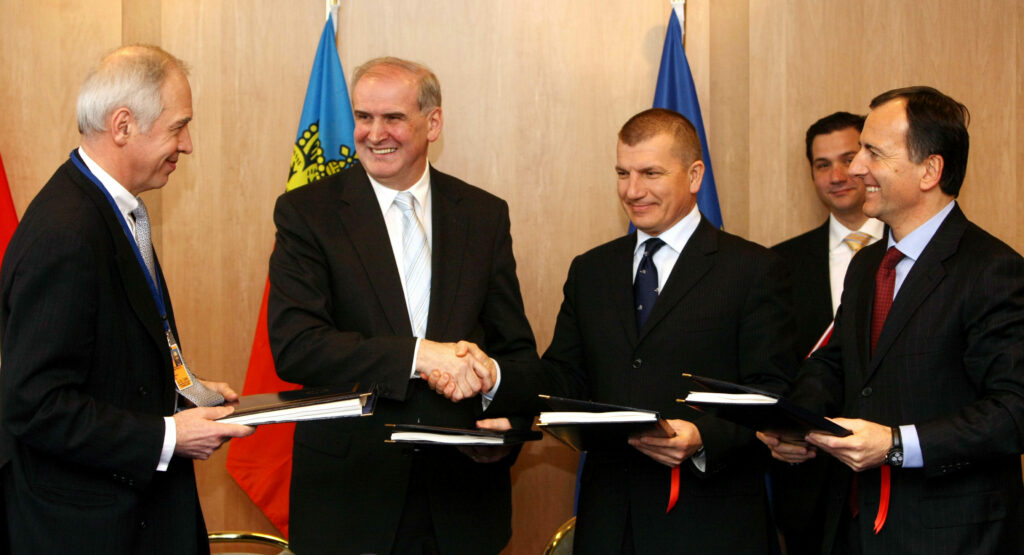
Shake hands after signing of the Schengen agreement with Ambassador Jacques de Watteville (Switzerland), Prime Minister Otmar Hasler (Liechtenstein), Commissioner Franco Frattini (EU-Commission) and Interior Minister Dragutin Mate (Slovenia) © Keystone/ Geert Vanden Wijngaert
Interview with Ambassador Pascal Schafhauser
For many Europeans, Liechtenstein remains something of a hidden gem. How would you describe the country to someone who has never visited it?
Pascal Schafhauser: Liechtenstein is a small state at the heart of Europe, situated between Switzerland and Austria. While modest in size, it possesses a strong international outlook, a highly diversified economy and a long tradition of political stability and innovation. The alpine setting provides opportunities for hiking, cycling and winter sports, while its museums, cultural institutions and eleven municipalities reflect a distinctive blend of tradition, local identity and modern development.
And how easy is it for people living or travelling in Europe to visit Liechtenstein?
Pascal Schafhauser: Very easy. For example, Brussels is only 750 kilometres away from Vaduz, which is roughly a seven-hour drive, while a flight to Zurich followed by a train and bus journey brings visitors to Liechtenstein in just a few hours. Thanks to Schengen, travellers can make this journey without border checks, and visitors do not need a separate visa to enter Liechtenstein.
This is also one of the tangible benefits of Schengen. By joining the Schengen Area in 2011, Liechtenstein became part of a common European travel space that makes crossing borders simple and seamless. Whether people come for business, tourism, or to enjoy our Alpine landscapes, they can travel to Liechtenstein with ease. For a small country in the heart of Europe, this openness is invaluable and one of the many ways Schengen has strengthened our connection to the rest of the continent.
Having been involved in Liechtenstein’s Schengen accession process from the very beginning, why was joining Schengen considered so important for the country?
Pascal Schafhauser: Joining Schengen was a natural step for Liechtenstein. Since becoming a member of the European Economic Area in 1995, our citizens have benefited from the EU’s four freedoms, including the free movement of people. Schengen membership translated that principle into everyday reality by making travel across borders simpler and more seamless.
There was also a very practical reason. Liechtenstein has shared an open border with Switzerland for more than a century. Many people crossing one of the five bridges over the Rhine do not even realize they are moving from one country to another. Had Liechtenstein remained outside Schengen while its neighbours joined, this open border would have become an external Schengen border, requiring controls similar to those at some of Europe’s external frontiers. That would have fundamentally changed daily life in our region.
At the same time, Schengen is about much more than open borders. It strengthens security through close cooperation between participating countries, improves the management of migration and asylum issues, and facilitates the exchange of information between authorities. For a small country in the heart of Europe, these advantages are particularly valuable.
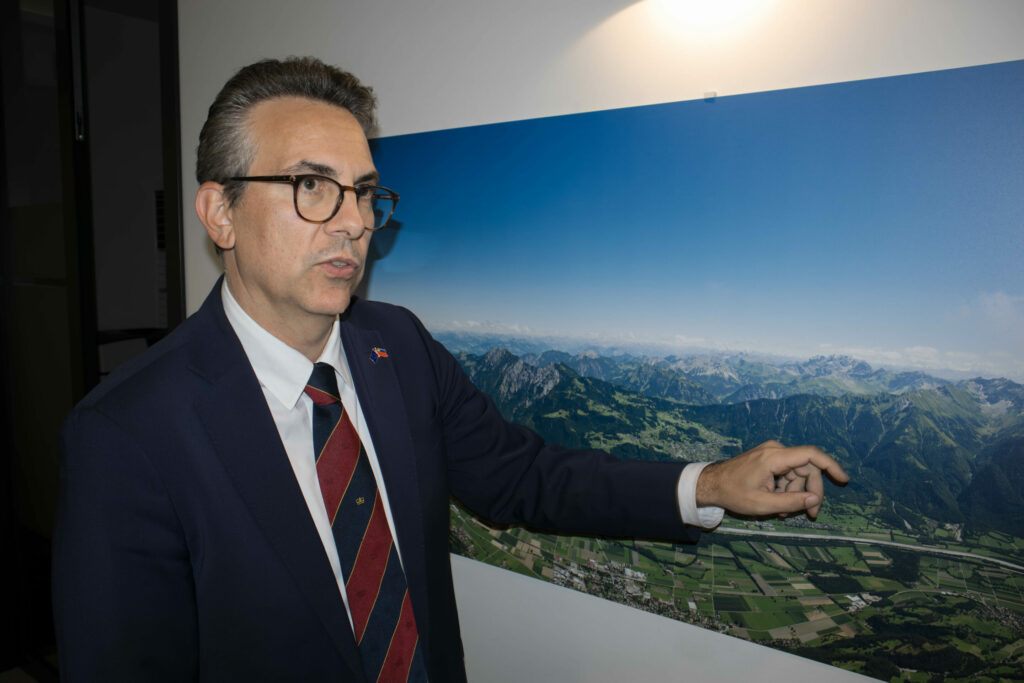
Ambassador Pascal Schafhauser © The Brussels Times
Looking back, what did Schengen actually change for Liechtenstein?
Pascal Schafhauser: For most people, almost nothing changed at the border and that was precisely one of the main goals. Joining Schengen ensured that the open border with Switzerland could remain open.
The real changes happened behind the scenes. Liechtenstein became part of common European systems for police cooperation, visas and asylum. We gained access to tools such as the Schengen Information System (SIS) and became part of the Schengen visa regime, allowing visitors to travel seamlessly across much of Europe.
At the same time, Liechtenstein joined the Dublin asylum system, closing a gap that had been exploited by several hundred asylum seekers who travelled to Liechtenstein specifically because it was outside the common European asylum framework. Finally, Schengen gave Liechtenstein a seat and voice at the table in Europe's most extensive security and justice cooperation with non-EU countries.
What was the biggest challenge between signing the accession protocol in 2008 and fully joining Schengen in 2011?
Pascal Schafhauser: The challenge was that Switzerland joined Schengen in 2008 while Liechtenstein was still waiting to complete its accession process. For three years, the open border existing between the two countries since the 1920s turned formally into an external Schengen border.
Together with the EU, Switzerland and Austria, we developed pragmatic interim solutions that kept daily life running smoothly. This was particularly important for the thousands of cross-border commuters travelling to Liechtenstein every day. For the public, the transition was almost invisible, which was a success in itself.
What is the most memorable or unexpected challenge you encountered during the accession process?
Pascal Schafhauser: There were quite a few, but two examples come to mind.
The first involved connecting Liechtenstein to the Schengen Information System (SIS). While transferring data on wanted persons and stolen vehicles was straight forward, there was genuine concern about the workload of migrating years of records on stolen bicycles. Fortunately, we soon learned that missing bicycles cannot be entered into SIS at all. With that, one perceived challenge disappeared overnight.
The other was our heliport. Liechtenstein has no airport, but Schengen experts pointed out that, in theory, a helicopter could fly directly from a non-Schengen country to our small heliport. The solution was straight forward: we introduced national legislation prohibiting direct arrivals from outside the Schengen area.
Both stories illustrate that highly technical accession processes can present unusual challenges, but that a constructive and pragmatic approach can help overcome them successfully.
Being one of Europe’s smallest countries, did Liechtenstein's size make joining Schengen easier or more difficult?
Pascal Schafhauser: A bit of both. On the one hand, Liechtenstein has no airport and no external Schengen border, which means some parts of the Schengen rules do not apply to us. On the other, we still have to meet the same standards as much larger countries, while having far fewer resources. That requires practical and innovative solutions, which has always been one of Liechtenstein's strengths.
How important was cooperation with Austria and Switzerland for Liechtenstein's Schengen success?
Pascal Schafhauser: The cooperation with our neighbours was already excellent before Schengen and accession significantly deepened and broadened these relationships.
One concrete example established during the accession period is the Liechtenstein-Austrian-Swiss Police Cooperation Centre in Schaanwald, at our northern border to Austria. More broadly, Schengen connected Liechtenstein's police and migration authorities not only with our immediate neighbours but with partners across Europe.
After 15 years of membership, what do you see as Schengen's greatest benefit for Liechtenstein?
Pascal Schafhauser: The greatest benefit is that Schengen allows Liechtenstein to be fully integrated into European security and mobility structures while maintaining our unique position and open borders with our closest neighbours.
For most citizens and businesses, Schengen works almost invisibly. That may not sound spectacular, but when borders remain open, security cooperation functions effectively and people can travel freely, it is a sign that the system is functioning as intended.
For us, Schengen is more than open borders. It means being part of an important community built on trust, shared responsibility and close cooperation between European partners.
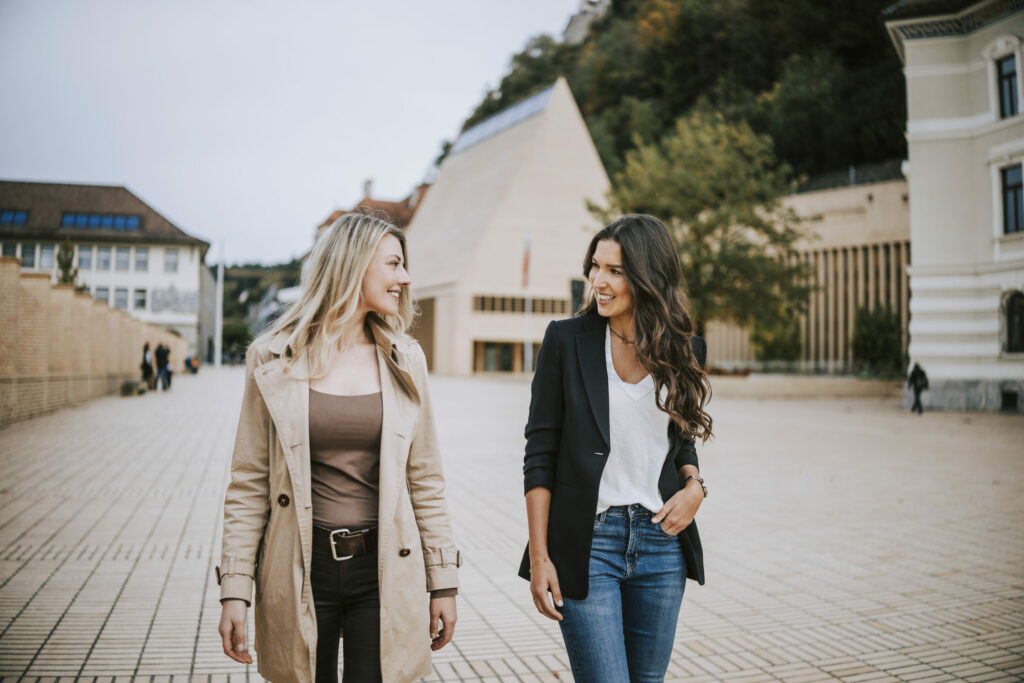
© Liechtenstein Marketing
How is the 6th smallest country in the world attracting global businesses
When people think of Liechtenstein, they often picture alpine landscapes, medieval castles and one of the world’s smallest countries. Yet behind its postcard-perfect scenery lies an economic success story that has turned the principality into one of Europe’s most competitive business locations.
Liechtenstein covers just 160 square kilometres and is home to more than 40,000 residents. Despite its size, the country has built a reputation as a global hub for innovation, advanced manufacturing, financial services and entrepreneurship. Today, it hosts a remarkable concentration of internationally active companies, many of which are world leaders in their respective sectors.
A gateway to two markets
One of Liechtenstein’s most distinctive advantages is its unique position between two major economic areas. Through its membership of the European Economic Area (EEA), businesses based in Liechtenstein enjoy access to the European single market, while the country’s customs and monetary union with Switzerland provides direct access to the Swiss market as well.
This dual-market access has helped transform the principality into an attractive location for international companies seeking a stable base in the heart of Europe. Combined with a liberal economic policy, efficient administration and political continuity, it creates an environment where businesses can focus on growth and innovation rather than bureaucracy.
The country also benefits from top international credit ratings and a reputation for fiscal responsibility. The Swiss franc serves as the official currency, providing an additional layer of monetary stability for companies operating across borders.
Industry at the heart of the economy
Unlike many small countries that rely heavily on tourism or financial services, Liechtenstein has developed a highly diversified economy. Industry accounts for 40.4% of the country’s gross value added, making it the largest contributor to economic output. Financial services represent 19.6%, while the remainder is spread across a broad range of service sectors.
This industrial strength is reflected in the presence of internationally recognised companies such as Hilti, Ivoclar and Oerlikon Balzers. Founded in Liechtenstein in 1941, Hilti has grown into a global leader in construction technology, employing tens of thousands of people worldwide while maintaining its headquarters in the principality. Ivoclar, meanwhile, exports dental solutions to more than 130 countries and continues to invest heavily in research and development from its base in Schaan.
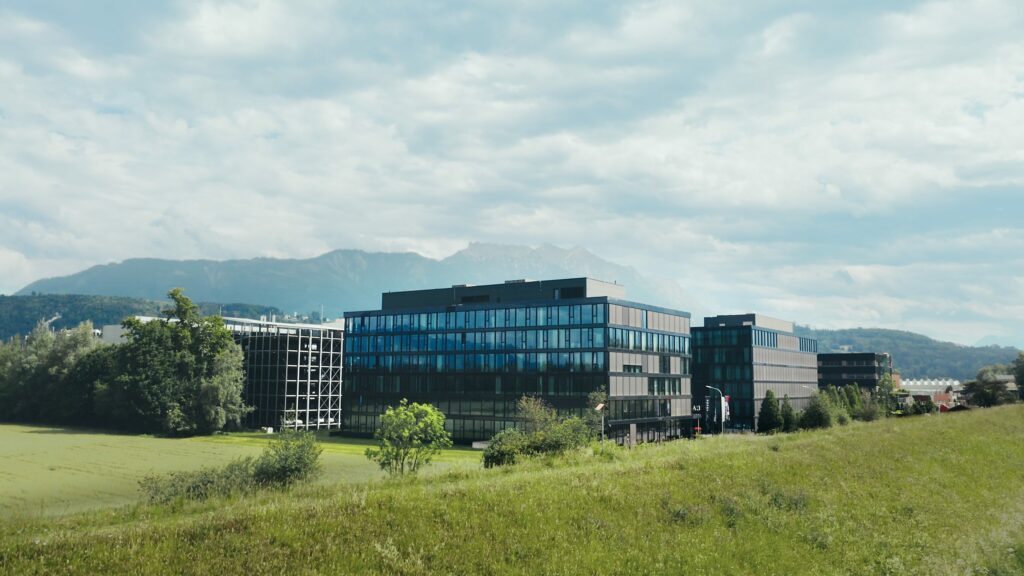
© Liechtenstein Marketing
Innovation as a national strategy
Innovation plays a central role in the country’s economic model. Liechtenstein invests nearly 6% of its GDP in research and development, placing it among Europe’s leading innovators. Businesses also benefit from extensive digital infrastructure and one of the world’s most comprehensive fibre-optic networks.
The government has actively promoted digital transformation through initiatives that bring together businesses, academia and public institutions. Events focused on artificial intelligence, cybersecurity and digital innovation have become regular fixtures, reflecting a broader ambition to position Liechtenstein among the world’s most modern and digitally advanced states by 2030.
This forward-looking approach extends to emerging technologies. Liechtenstein was among the first countries to establish a comprehensive legal framework for blockchain-based business models, creating legal certainty for companies operating in the digital asset and token economy.
A strong labour market
For employers, access to talent is another major advantage. Liechtenstein actually has more jobs than inhabitants, attracting thousands of cross-border commuters every day from neighbouring Switzerland, Austria and Germany.
The labour market is characterised by low unemployment, high levels of education and strong demand for skilled professionals. Employees benefit from competitive salaries, international career opportunities and a high quality of life, while businesses gain access to a multilingual workforce with expertise across a wide range of industries.
The country’s location in the Rhine Valley places it within reach of major cities such as Zurich, Innsbruck and Munich, which can support access to a broader regional talent pool.
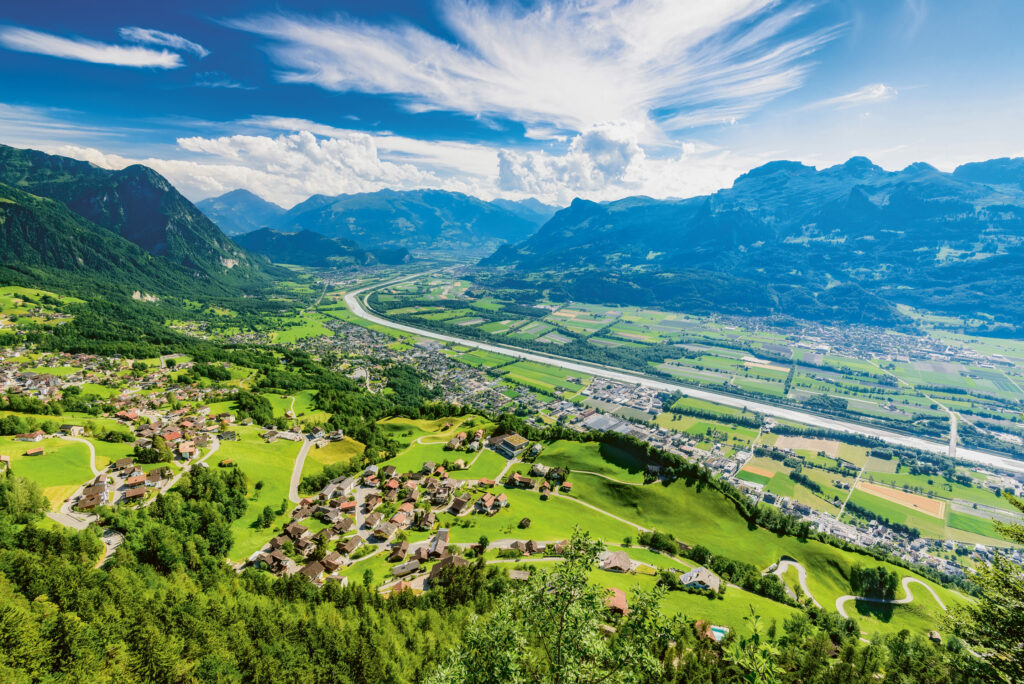
© Liechtenstein Marketing
Sustainability and long-term thinking
Economic success in Liechtenstein is increasingly linked to sustainability. The government has set ambitious climate goals, including achieving climate neutrality by 2050 and sourcing all energy needs from renewable resources in the long term.
Support programmes encourage businesses to invest in digitalisation, innovation and resource efficiency, while public-private cooperation helps ensure that economic growth remains aligned with environmental objectives.
This long-term perspective is reflected throughout the country’s economic strategy, where stability, innovation and sustainability are viewed as complementary rather than competing priorities.
Small country, global ambitions
Liechtenstein may be one of the world’s smallest states, but its economic footprint extends far beyond its borders. With a highly diversified economy, access to two major markets, strong institutions and a culture of innovation, the principality has developed a business environment that consistently punches above its weight.
Coverage of this topic was made possible with the support of the Embassy of the Principality of Liechtenstein in Brussels and Liechtenstein Marketing, the official tourism website of the Principality of Liechtenstein, while all research and writing were conducted independently by The Brussels Times.
