
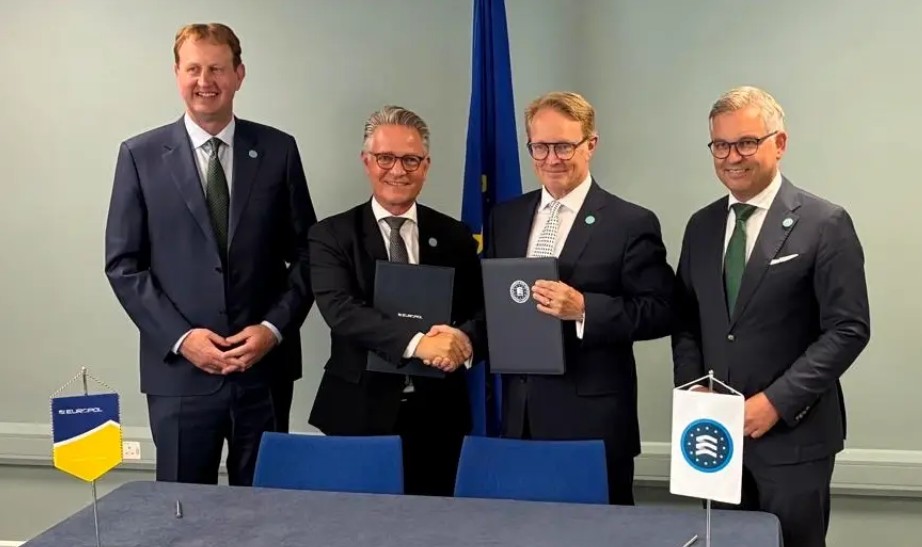
Europol and the EU border agency Frontex have signed a new working arrangement to strengthen cooperation on cross-border threats.
The agreement was signed in Dublin on the margins of a Justice and Home Affairs Council meeting on 16 July, Europol informed on Friday.
The arrangement replaces a previous cooperation deal signed in 2015 and reflects expanded mandates for both agencies in recent years.
It sets an updated framework for the secure exchange of information, including for operational purposes, enabling both agencies to support EU member states.
Criminal networks “do not distinguish between border security and law enforcement” and exploit “every vulnerability they can find”, acting Europol executive director Jürgen Ebner said.
Information gathered at the EU’s external borders can provide “the first indication of criminal or terrorist activity”, he added.
Focus on smuggling, trafficking and organised crime
The two agencies said the arrangement will support cooperation on threats including migrant smuggling, trafficking in human beings and other forms of serious and organised crime.
“Frontex sees the border. Europol sees the criminal networks behind it,” Frontex executive director Hans Leijtens stated, adding that officers and analysts already work “side by side, from joint operations to shared analysis”.
The updated framework follows legal changes affecting both organisations, including the European Border and Coast Guard Regulation adopted in 2019 and a revision of Europol’s mandate.
Both agencies are now able to exchange information more effectively, including personal data where allowed under their legal frameworks and in line with EU data protection rules.
