
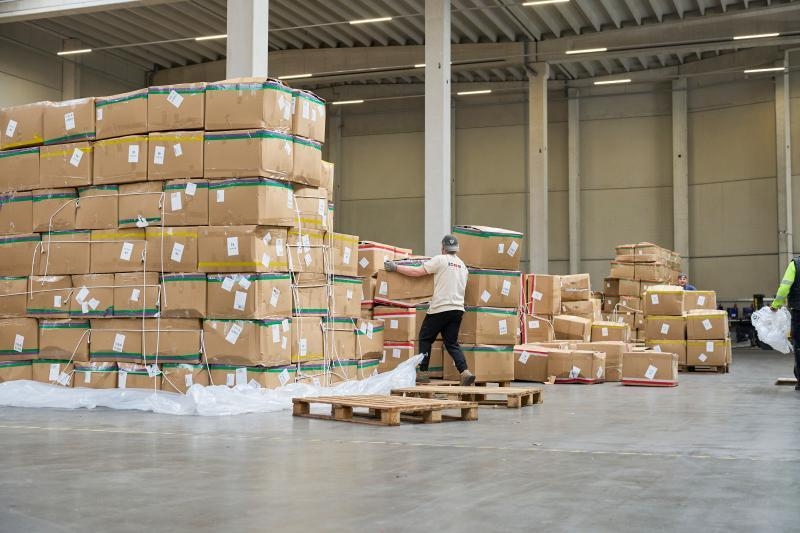
EU customs authorities released about 6 billion items for free circulation in 2025, three times more than in 2022, as imports driven by online shopping from outside the bloc surged, according to the European Commission’s 2025 product compliance report.
E-commerce parcels accounted for more than 97% of all shipments entering the EU, a level described as beyond what customs and market surveillance bodies can manage using traditional checks, the Commission reported on Monday.
As volumes increased, the EU control rate fell to 65 items per million imported in 2025, while the rate of goods refused at the border for non-compliance or serious risk dropped to below 10 items per million.
EU rules require products sold in the bloc to meet safety, health, environmental and performance standards, and customs act as the first checkpoint at the EU’s external borders for stopping unsafe or non-compliant goods.
Online purchases failing checks
A large-scale customs investigation launched by the Commission in 2025 found that more than 60% of checked toys, small electronics, cosmetics, personal protective equipment and food supplements bought online from outside the EU did not meet EU product compliance and safety requirements, according to the report.
The Commission also updated its Integrated EU Prohibitions & Restrictions List — a tool used to identify rules on goods that are banned or restricted when entering or leaving the EU — to reflect changes in EU law and provide clearer guidance for businesses and customs authorities.
Enforcement performance varied widely across member states in 2025, with the best-performing country recording a discovery rate 384 times higher than the worst-performing one.
The Commission said it has launched monitoring actions and structured dialogues with Member States and supported the development of national action plans, adding that countries identified as underperforming last year improved in this year’s assessment.
The report draws on statistical data provided by member states on product compliance controls at the EU’s external borders, carried out by customs working with market surveillance authorities.
