
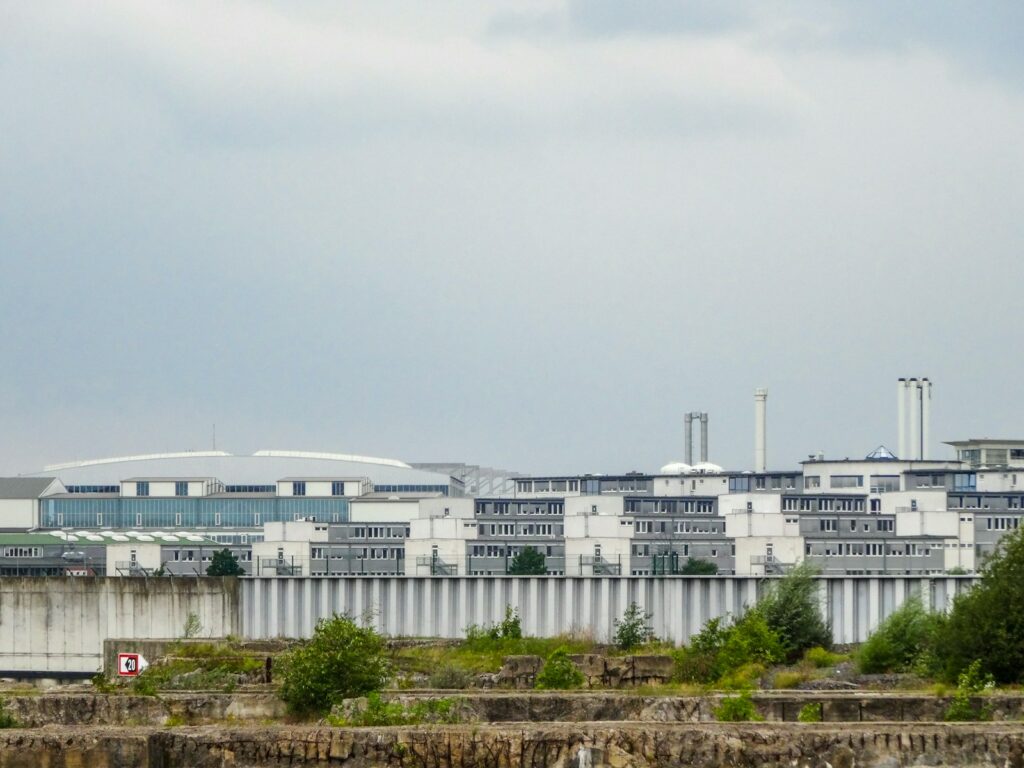
The European Economic and Social Committee has backed the European Commission’s proposed Industrial Accelerator Act, as manufacturing’s share of EU GDP has fallen to 14.3% from 17.4% in 2000.
The committee declared on Tuesday that it supported the Commission’s target to lift manufacturing’s share of the economy to 20% by 2035, but called for measures to protect European industry, ensure fair competition and create “quality jobs”, according to an opinion adopted at its July plenary session.
“Achieving this ambition will require more than just setting targets. We must create the conditions that allow companies to invest, innovate and grow in Europe,” said Antje Gerstein, president of the EESC section that drafted the opinion.
The EESC backed plans to simplify and speed up permitting procedures — the process companies must go through to get official approval for industrial projects — but said faster permits would not help if other barriers persist.
Companies also need reliable energy supplies, modern infrastructure and skilled workers, as well as better coordination between EU and national rules, Gerstein stated.
The committee said “acceleration areas” intended to fast-track industrial development should not widen regional inequalities, and urged member states to consider regional disparities when designating them.
‘Made in Europe’ rules and foreign investment
The EESC supported the Act’s “Made in Europe” approach, but warned against automatically giving the same treatment to non-EU countries that have free trade or government procurement agreements with the EU.
Any non-EU country benefiting from the rules should demonstrate reciprocity, compliance with EU standards and respect for European value chains, the committee said, adding that a lack of reciprocal market access or equivalent standards could expose EU companies to unfair competition.
Decisions on adding or removing countries from any list of eligible partners should be taken by the European Parliament and EU member states in the Council through the ordinary legislative procedure, rather than by the Commission through delegated acts.
The committee also said it supported including steel among the sectors earmarked for European preference, alongside aluminium and concrete, and called for any future expansion of the approach to be based on a thorough impact assessment.
Separately, it backed safeguards for foreign direct investment above €100 million in strategic sectors such as batteries, electric vehicles, photovoltaics and critical raw materials, provided conditions strengthen EU value creation, technology transfer and local manufacturing without adding unnecessary administrative burdens.
