
My first classroom was a small mosque outside Tangier in the early 1960s.
Learning began before dawn. At five or six years old, I walked through narrow alleys with the other boys while the village still slept. The air smelled of damp earth, fresh bread, and Ouazzane olive oil.
Inside the mosque, we prayed. Then we took up our lawḥ, the wooden tablet on which we copied Qur’anic verses. We carried it to a shallow stream nearby, washed away the previous day’s writing, covered the wood with clay, and waited for the sun to dry it. Then we began again.
Only later did I understand what that ritual contained. Learning began with erasure. The words disappeared, but the wood remembered.
As a child, I thought I was learning to write. I did not know I was learning something about life itself: that people and places, like tablets, keep traces of what has passed over them.
We lived a simple life until 1964, when my father left Morocco for Belgium. He belonged to a generation of Moroccan men who traveled north to help rebuild Europe after the war years. They left carrying invisible luggage: languages, prayers, memories, and the habits of another life.
My father knew absence before he knew migration. His own father died when he was nine years old.
Some people carry their first departures long before they ever leave a country.
Perhaps that early loss shaped him. He learned responsibility young. He learned to continue. He learned that love was not always spoken; sometimes it was built through daily acts.
When he left Morocco, he was carrying more than a suitcase. He carried the hope that his children might begin elsewhere.
Four years later, he brought us to Brussels.
I was ten years old when we arrived in Molenbeek in the spring of 1968.
Brussels did not welcome us with an announcement. The city appeared quietly: brick houses darkened by rain, tram bells disappearing around corners, windows glowing against the early evening. The sky seemed lower than the one I had left behind.
In Tangier, light came from the horizon. In Brussels, it came from cafés, street lamps, and wet pavement.
The city revealed itself through small things: a bicycle bell, a train passing behind a row of houses, a conversation changing language halfway through a sentence. At the Marché du Midi, Moroccan oranges sat beside Belgian endives beneath the same grey Brussels sky.
It was a city accustomed to crossings. Brussels did not translate itself. It simply continued.
My father understood this before I did. At SABENA, Belgium’s national airline, he worked in catering, preparing meals for people departing for places he might never see.
He spent his life beside departure, yet his own world became rooted in one street, one neighborhood, one city.
Sometimes I wonder what he felt as he watched those planes rise. Did he think of Morocco? Of the Rif village he had left behind?
He rarely spoke about what was missing.
My father belonged to a generation that carried silence as another form of endurance. But when he became a father himself, he gave us what he had once lacked: presence.
Not through long explanations. Through small things.
The walk to school. Food on the table. A coat waiting by the door on cold mornings. The winter days when his old Opel refused to start and we pushed it down Avenue de Roovere, half asleep, hoping the engine would catch.
The certainty that, whatever happened outside, home remained.
At home, another rhythm continued: prayer, recitation, music, silence.
The Brussels outside our house and the Morocco inside it did not compete. They occupied different rooms of the same life.
My first school was École 13 in Molenbeek, where French and Flemish lived side by side.
During my first weeks, Madame Hontoit asked me:
'Do you know the multiplication table?'
'No.'
'Have you studied mathematics?'
'No. Only the Qur’an.'
She looked at me for a moment.
'Then we begin.'
Mathematics came slowly.
French came differently. Years of recitation had taught me that words were not simply spoken; they were shaped, carried, and remembered. The wooden tablet had become the blackboard. The rhythm remained.
Outside the classroom, Brussels taught me other lessons: where to stand, how to wait, when to speak.
For many years, I believed the languages inside me belonged to separate worlds. Darija was the language of home. Arabic was the language of prayer. French was the language of school.
They were different rooms of the same house.
One rainy afternoon in the schoolyard, a boy passed me and said:
'Sale Marocain.'
Dirty Moroccan.
The words were brief, but they stayed with me.
My reaction came before thought. I kicked him, and he fell onto the wet gravel. Monsieur V arrived, my father was called, and the matter was settled quietly.
That evening, my father did not raise his voice.
'Make yourself small. We are guests here.'
He paused.
'But do not let yourself be broken.'
My mother placed mint tea on the table.
'Wlidi, hadi ghir bidaya.'
This is only the beginning, son.
At the time, I heard only the pain of those words. Years later, I understood that my father was teaching me how to survive without disappearing.
After that day, I listened differently. I began to understand that Brussels was not only made of streets and buildings. It was made of encounters — some painful, some generous.
There was Madame Jeanine, who ran a café on Chaussée de Ninove. She knew people through their habits: who arrived early, who stayed late, who needed kindness without asking for it. Sometimes she slid a plate of fries toward me before I had ordered.
Behind the counter, Jacques Brel’s voice filled the room.
There was Monsieur Duchateau, our art teacher, who once asked me for a word from my language that carried a special meaning.
I told him labas.
It is often translated as 'all is well,' but translation is never enough. Labas is reassurance — a way of holding life together when things are uncertain.
From then on, whenever he saw me, he greeted me:
'Labas.'
His pronunciation was never quite right. His smile always was.
These people never appeared on maps, but they became part of the city’s memory.
We lived on Chaussée de Ninove, where the street never completely slept. Shopkeepers lifted their shutters each morning. Buses sighed at the curb. People returned home carrying bread, newspapers, and the tiredness of the day.
Behind our house, near the railway tracks, lived a retired railway worker. Every evening, he released his birds. He stood beneath the rooftops calling to them as they circled above the houses, their voices rising above the traffic and the trains.
I never knew his name. But I remember him.
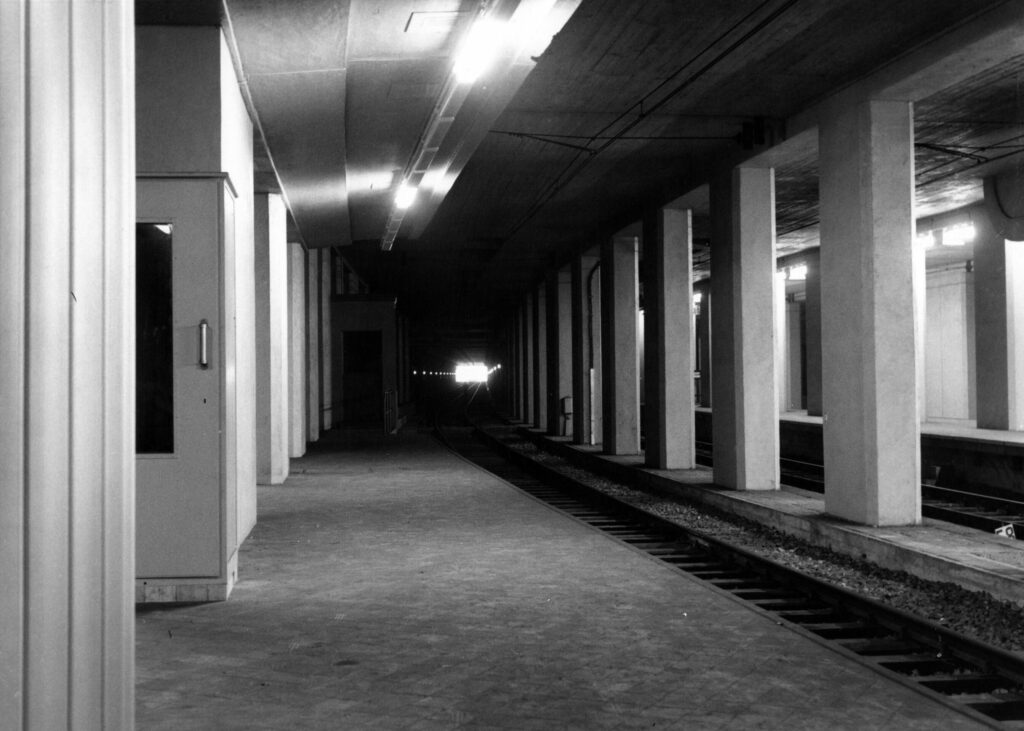
At night, the express train passed behind our house. At first, we stopped speaking whenever it approached. Then, slowly, we learned to continue.
The city teaches you its sounds until they become part of your own silence.
My father sometimes stood at the window. He was not watching. He was listening.
He was listening to a city that had become his.
Reading came after. Tintin entered first, then Simenon, and Jacques Brel’s songs opened another Brussels — a city made not only of streets, but also of stories.
One evening, I wrote down a story my mother had told me. The movement of the pen across the paper brought back the wooden tablet from my childhood.
But the gesture was the same.
A word placed on a page. A memory given another life.
Every belonging contains a departure. To gain one city is also to carry the absence of another.
My father spent fifty years in Brussels. The city he arrived in was not the city he eventually left behind. The neighborhoods changed. New voices joined the old ones.
After retiring from SABENA, he returned to the wooden lawḥ he had carried from Morocco.
Again, he wrote. Again, he memorised. Again, he repeated.
The same gesture he had learned as a child.
A boy who had lost his father at nine became a father who carried his children across borders. A man who spent his working life preparing other people’s departures returned, finally, to the place where his own story had begun.
I think now of that child walking before dawn toward the mosque outside Tangier. He believed he was learning words.
He did not know he was learning how memory survives.
The writing disappeared.
The wood remembered.
And so did the elusive city that left in all of us a faint Brussels melancholy.
