
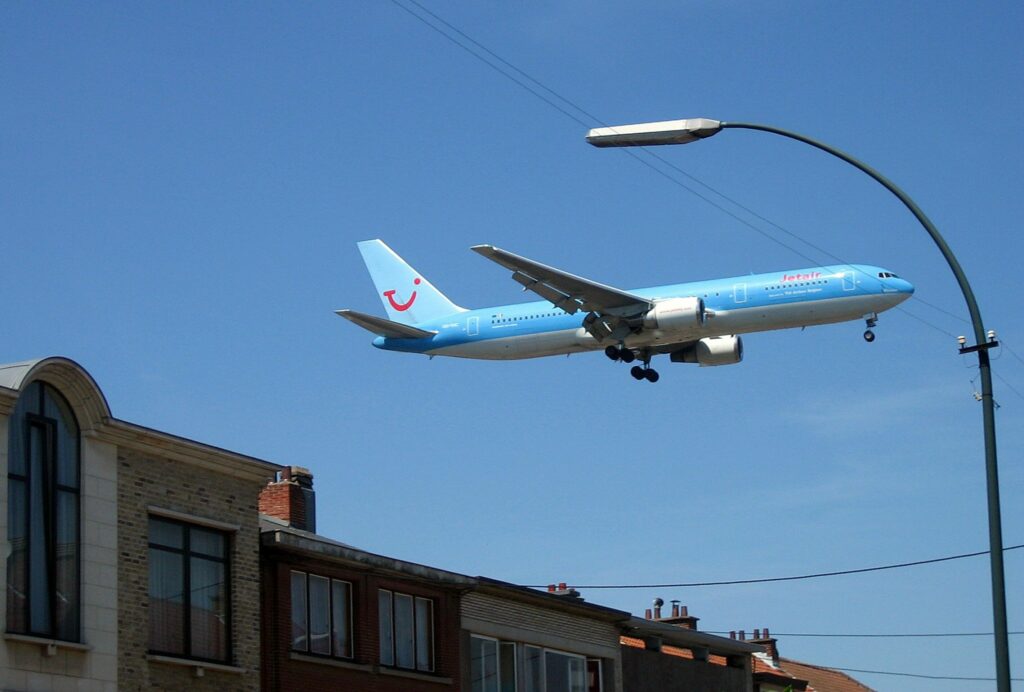
The Flemish Government has drawn up more than 300 proposals to cut noise around Brussels Airport in Zaventem, from which a shortlist of workable measures is to be selected in the coming months.
Flemish Environment Minister Jo Brouns told the regional parliament on Wednesday that the aim is to identify measures that are genuinely feasible, legally robust and effective. He was responding to a question from Groen parliamentarian Aimen Horch.
The Brussels Airport file has been politically and legally contentious for decades. While the airport is a major economic hub, it also sits in the middle of a densely populated area where noise pollution has a major impact on residents’ quality of life.
'Balanced approach' to tackling airport noise
Almost every decision on air traffic has led to legal challenges and disputes. Last year, the airport’s environmental permit was cancelled by the Flemish Council for Permit Disputes.
Flanders has until 30 June 2029 to issue a new permit. Before that can happen, however, it must complete the European “Balanced Approach” procedure for tackling airport noise.
Under that method, authorities must assess measures in a strict order. They must first consider quieter aircraft and other measures at source, then land-use planning measures, followed by operational changes, and only as a last resort impose operating restrictions.
Target is to cut the number of victims of noise pollution by 30%
Brouns said the basic principle is already clear. The goal remains to reduce by 30% the number of people seriously affected by noise and severe sleep disturbance around the airport, compared with 2019 levels.
A preliminary list of more than 300 possible measures is now under review. These range from using quieter aircraft and adjusting airport charges to improving runway use and flight paths.
Other options include building restrictions in heavily affected areas, sound insulation for homes and compensation measures. Operating restrictions are also among the measures being considered.
Next stage to include noise-level calculations
“There is no taboo on this issue,” Brouns said. If needed, that could mean stricter night-time rules or a ban on noisier aircraft, subject to certain conditions.
The list was drawn up with stakeholders from the 55 affected municipalities and the airport community. It will now be assessed against a set of criteria in order to produce a narrower shortlist.
The next stage will involve noise-level calculations and a cost-effectiveness analysis. On that basis, the government will examine which combinations of measures could help meet the noise-reduction target by 2032.
