
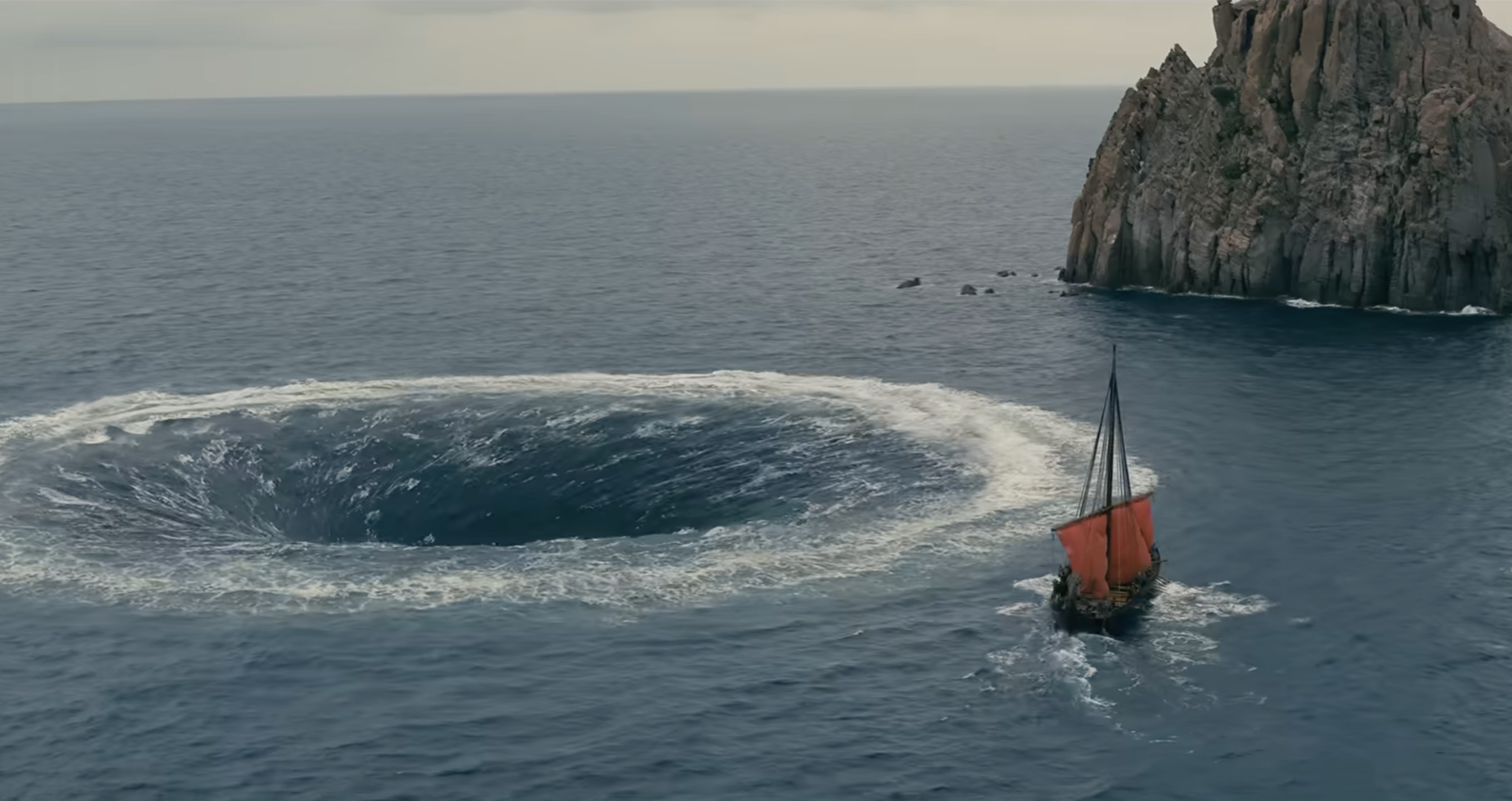
The Strait of Hormuz is not the only narrow geopolitically-exposed waterway thousands of kilometres away that could disrupt your everyday life. These choke-points threaten to trigger yet more crises.
Greek mythology’s wiliest character, Odysseus, knew a thing or two about troublesome waterways. On his way home from Troy to his beloved Ithaca, he had to navigate vengeful gods and fearsome monsters along the way.
Ancient historians have long wondered whether any of the fictional locations mentioned in Homer’s epic poem actually corresponded to real life parts of the world.
During his voyage home, Odysseus and his crew have to carefully navigate between a gigantic whirlpool known as Charybdis and a high rocky outcrop where the monster Scylla lives. Some of his warriors are killed but the ship eventually makes it through.
Some say this part of the Odyssey was based on the Strait of Messina between Italy and Sicily, others contend it is the Bosphorus. Maybe though, it was the narrow stretch of water between Iran and Oman.
Most people had probably not heard of the Strait of Hormuz before this year, let alone were able to pick it out on a map. Such is the effect its closure has had on the wider world, the strait is now as well known as the Nile or Amazon rivers.
Despite a half-promising peace deal a couple of weeks ago, shipping through the channel is still largely at a standstill after the Iranian military launched attacks against vessels and prompted United States forces to retaliate.
The future is very much unclear. The US has floated the idea of reopening the strait and either allowing the Iranians to charge a transit toll or to even impose tariffs themselves on any vessels making it through.
All of this uncertainty has played havoc with energy markets in particular, given the reliance of the global economy on fossil fuels sourced from the region, which need to pass through Hormuz.
It is not just Hormuz that is causing trouble. On the other side of the Arabian peninsula, Yemen’s Houthi rebels insist they are blockading the pinch-point where the Red Sea meets the Gulf of Aden.
That cuts off Saudi Arabia from shipping its fossil fuels unencumbered, forcing ships to potentially take the long way round through the Suez Canal. The pipeline Saudi has used to ship oil across the peninsula to bypass Hormuz is rendered less useful by these unfolding events.
It is not just wars and waterways making life more difficult either: the authority that manages the Panama Canal has announced that it is monitoring the canal’s water levels as El Niño conditions risk a reduction in daily capacity.
Less water means larger ships might not be able to make it through, the old lock gates might not be able to function as effectively. Lack of supply, in this case transit slots, will increase demand and maybe push up prices. The impact could be significant.
In Europe, key river arteries like the Rhine and Loire are both running dry, severely curtailing shipping. In the past, dry periods have shaved a full percentage point off German industrial productivity and cut full GDP by half a percent.
There is also another significant impact on the energy sector: many inland nuclear power stations require water to cool their reactors. If water levels run low, there is either not enough water to use or discharging heated water will impact river ecosystems too much.
At the end of the day there is no quick fix for any of these problems, but there is an obvious solution that we can already implement and which will eventually pay off: clean renewable energy.
Solar panels and wind turbines do not have to pass through these waterways. They do not require river water to cool their components. Sure, a lot of them are sold by China, but once you buy the tech, it is yours, to operate and recycle as you wish.
More clean energy means fewer emissions. Fewer emissions means a reduced anthropogenic impact on climate change, eventually leading to hopefully a reversal of the damage human activities have already caused.
Also, if everybody went cold turkey on fossil fuels tomorrow, global shipping would reduce by 40%, so those waterways would be less clogged, less important and less exposed to global shocks.
Europe is trying to chart this particular course and last week’s new electrification action plan aims to increase electricity’s share of the total energy mix to 46% by 2040. That displaces a lot of oil and gas, neutralising the region’s exposure somewhat.
Odysseus made his way home after 20 years of suffering. Hopefully, Europe won’t have to put up with trials and tribulations for that long.
Want more updates and analysis of what is happening in the world of energy and climate? Interested in finding out more information about public tenders and consultations? Sign up to our Energy Rundown newsletter here!
