
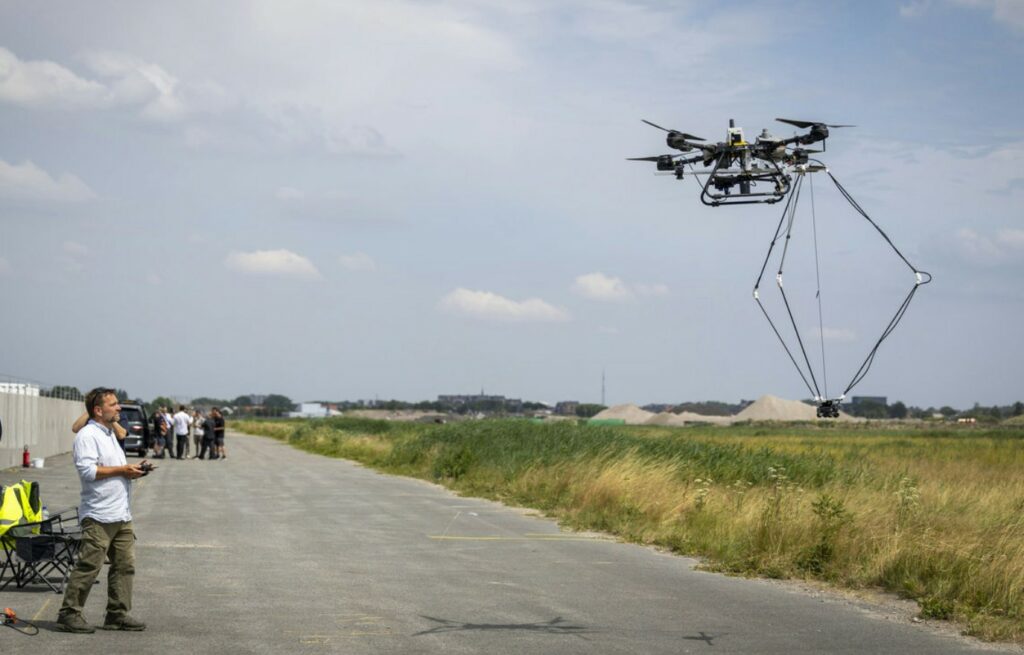
NATO’s Science for Peace and Security (SPS) Programme held live demonstrations and a research workshop on uncrewed and autonomous systems at a Dutch testing facility in mid-July.
Researchers, national representatives and NATO subject-matter experts met on 16 July at Unmanned Valley in the Netherlands to showcase security-related uses of uncrewed and autonomous technology and discuss future cooperation, the alliance announced on Thursday.
The event included demonstrations of SPS-supported projects using air- and land-based systems, with examples including search and rescue missions and demining efforts.
Drone teams tested in simulated disaster zone
The demonstrations also opened a two-day SPS cluster workshop where participants discussed the applications, challenges and vulnerabilities of uncrewed and autonomous systems, with sessions covering decision-making systems, sensing and navigation, and reliability in difficult conditions.
During the same week, the SPS Programme hosted the third SAPIENCE competition, which challenged young researchers to build Uncrewed Aircraft Systems (UAS) — drones — that can carry out search and rescue tasks without satellite positioning.
Teams from City St George’s, University of London; the University of Klagenfurt; the University of Alabama in Huntsville; and Delft University of Technology took part on 14 and 15 July, putting their systems through a simulated disaster zone across indoor and outdoor settings.
In the competition, the drone systems had to work together autonomously by communicating and dividing tasks, avoid obstacles and one another without human correction, and identify survivors while delivering different supplies depending on urgency.
