
The renewed escalation in the Middle East conflict is driving up energy prices and could send gas bills soaring across Europe as winter storage refilling falls behind.
Gas prices have risen in recent months because of strikes involving Iran. After a preliminary agreement between Washington and Tehran in mid-June appeared to offer a path towards ending the conflict, prices fell briefly.
Hostilities have since resumed, however, with little sign of a diplomatic breakthrough. That has put fresh pressure on European governments and gas suppliers, which had delayed replenishing storage this year in the hope of buying gas more cheaply once the war eased.
That strategy now looks increasingly risky. Gas storage sites across the European Union are currently only 54% full, well below the five-year average of 70% for this time of year.
At the same time, market prices are again nearing the peak reached shortly after the conflict began. The delay in refilling stocks now stands at about five months.
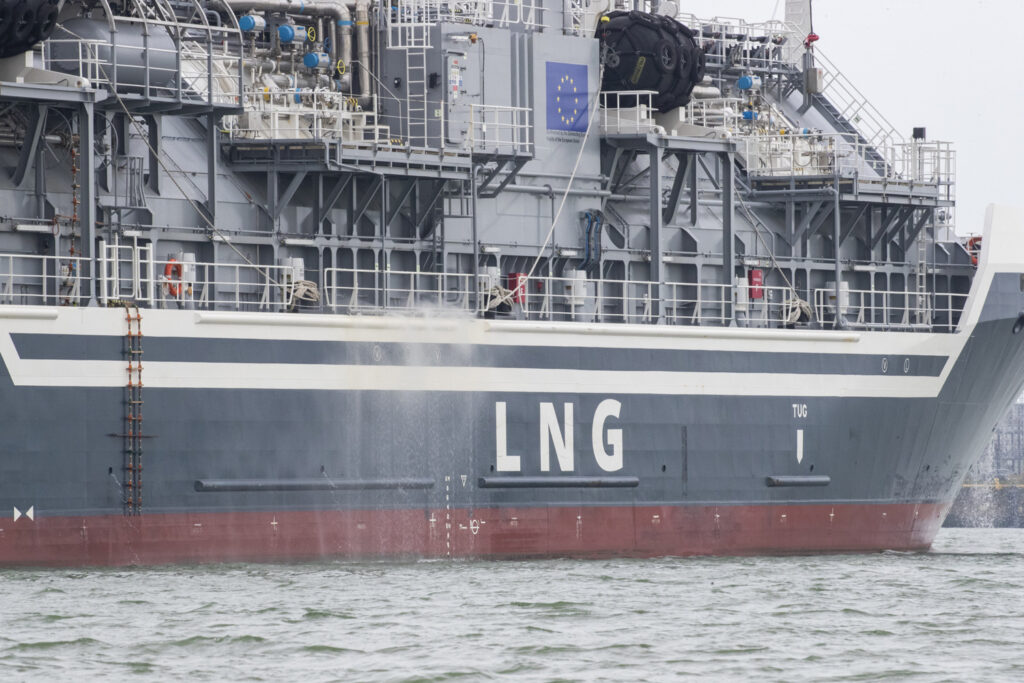
The conflict has also halted shipping through the Strait of Hormuz, a crucial route for about one-fifth of global liquefied natural gas supplies. Much of that gas comes from Qatar, the world’s second-largest exporter.
A resumption of Qatari deliveries does not appear imminent. After the June agreement in principle, Qatar sent a small number of cargoes through the strait, but exports stopped again after a Qatari vessel was hit by a projectile two weeks ago.
According to Bloomberg sources, Qatar is considering declaring force majeure on deliveries to European customers until mid-October. Such a move would further tighten supplies at a time of mounting pressure on the market.
Demand for LNG is also rising in Asia, where heatwaves have increased electricity consumption. This is intensifying global competition for limited cargoes.
The EU is also aiming to end all imports of Russian LNG by January 2027. Russian natural gas still accounted for 17% of supplies in the first half of this year.
EU Member States have until 1 December to rebuild gas reserves ahead of winter. The usual target is 90%, but the European Commission has lowered it to 80% because of the war in the Middle East.
Current deliveries are already running more than a quarter below last year’s level, according to ship-tracking data compiled by Bloomberg.
