
Standing 2.2 metres tall in the Cambodian city of Siem Reap, the newly unveiled statue of Magawa is perhaps the most unusual war memorial in the world.
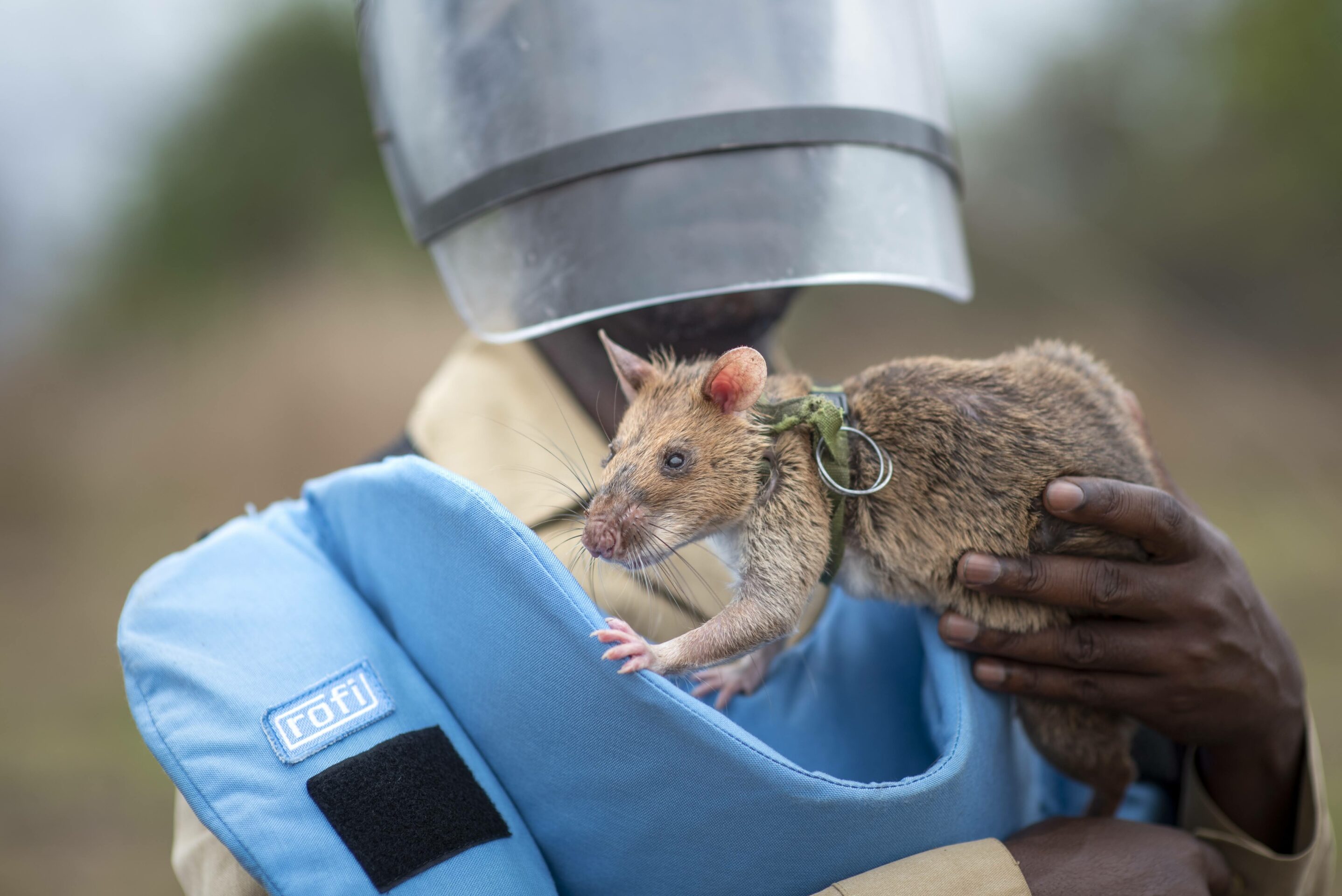
It honours not a general, soldier or politician, but an African giant pouched rat that spent five years locating hidden explosives in Cambodia's minefields. During his career, Magawa detected more than 100 landmines and unexploded ordnance, helping return vast swathes of contaminated land to farmers and families.
For Christophe Cox, Chief Executive of Belgian non-profit Apopo, the monument is both surreal and deeply moving.
"It was fantastic," he says. "It's crazy how that PDSA medal made our rat so famous. Then he died, and now he's got a statue."
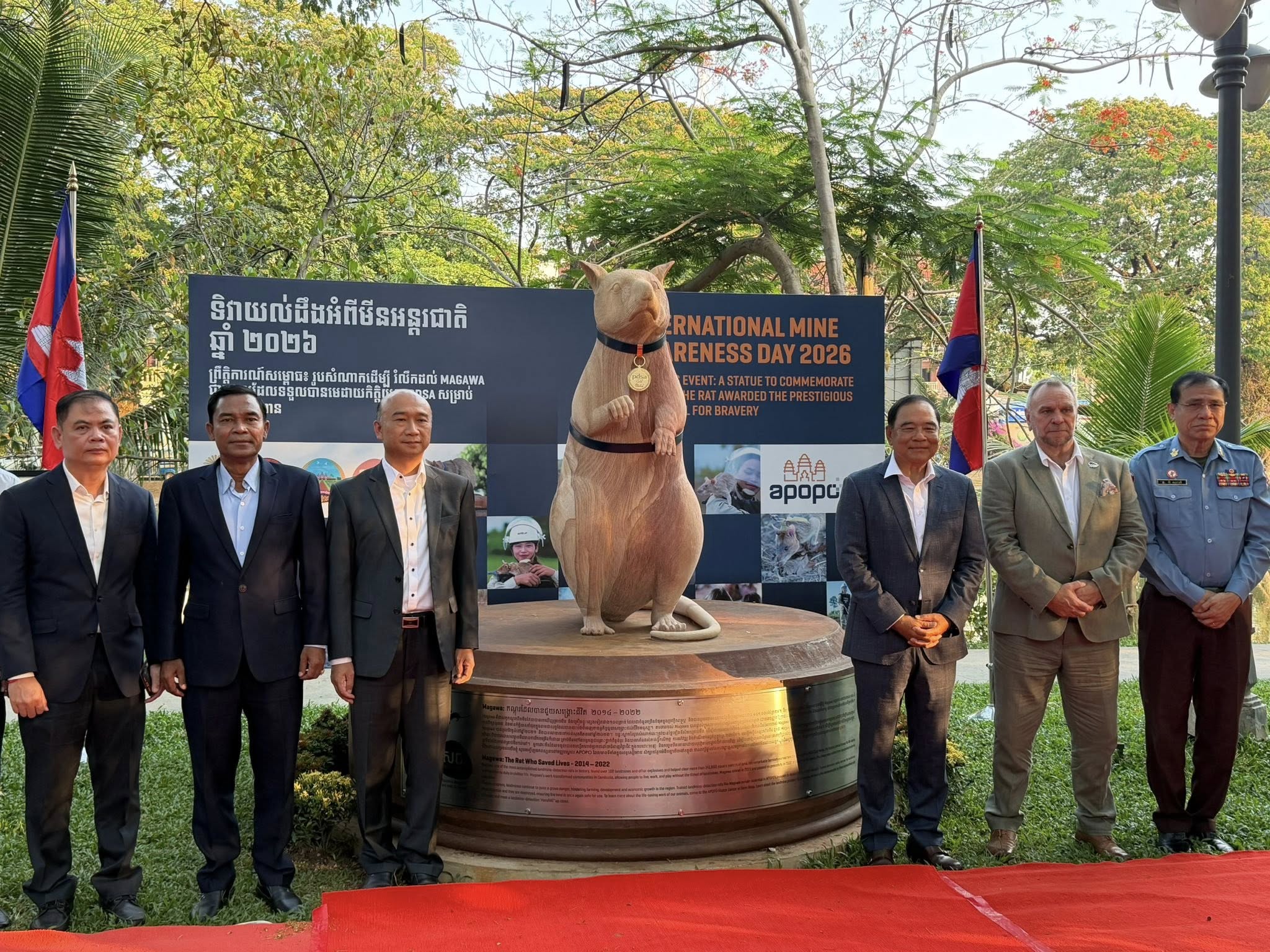
The statue of Magawa in Cambodia. Credit: APOPO
An international symbol of hope
Few organisations have managed to turn one of humanity's least-loved animals into an international symbol of hope. Yet nearly three decades after Apopo was founded by two Belgians, its "HeroRATs" have become globally recognised, clearing minefields from Angola to Cambodia and now expanding into new missions, from earthquake rescue to wildlife trafficking.
Like many successful innovations, Apopo began with an idea that sounded ridiculous.
Cox and co-founder Bart Weetjens met while studying product development in Antwerp. After graduation, Cox chose civilian service in Kenya instead of military service, while Weetjens remained in Belgium supporting humanitarian projects. Long before emails or smartphones, the pair exchanged handwritten letters.
"One day I got a letter," Cox recalls. "It said: 'I'm going to train rats for landmine detection.' I thought he'd had a bad night out."
The inspiration came after Weetjens examined why clearing minefields remained painfully slow decades after conflicts had ended. The real bottleneck, he concluded, was not destroying mines but finding them.
Dogs were already being used, but they were expensive to train and transport. Rats, by contrast, had extraordinary noses, were inexpensive to keep, and – crucially – were too light to detonate anti-personnel mines.
Working with researchers at the University of Antwerp and Tanzania's Sokoine University of Agriculture, the founders settled on the African giant pouched rat. It was an unusual choice, but a carefully considered one.
"They live for eight years, they're calm animals, they're easily trainable, they like repetitive tasks, they work for peanuts – literally, peanuts and bananas," Cox laughs. "And they're very fast."
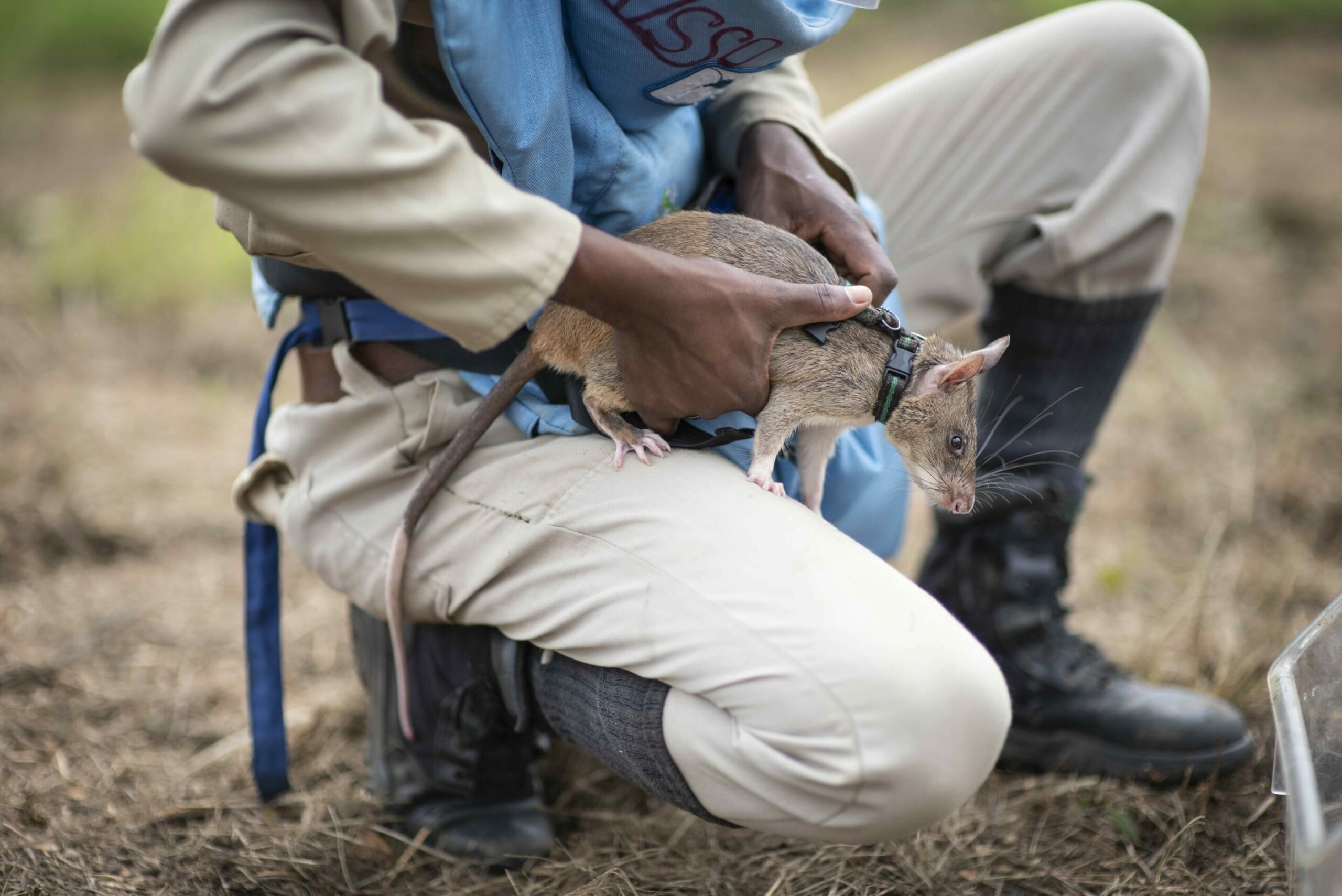
A mine-detection rat in Angola. Credit: APOPO
Gaining acceptance
The first experiments were hardly glamorous.
Before importing African rats, the team bought ordinary pet rats from Belgian pet shops and trained them in sandboxes containing explosive scents. Positive reinforcement – a click followed by a food reward – gradually taught the animals to identify TNT explosives.
The real breakthrough came several years later in Angola.
Apopo tested its rats in a genuine minefield containing 20 hidden mines. "We found all 20," Cox says. Shortly afterwards, the system passed formal accreditation by the Geneva International Centre for Humanitarian Demining.
Even then, acceptance proved difficult.
Traditional mine-clearance organisations struggled to incorporate the rats into their operations. Eventually, Apopo concluded that the only way to demonstrate the technology properly was to become a full mine-action operator itself, employing its own deminers alongside the rats.
"It took a long time before the industry took us seriously," Cox says.
Rooting out landmines
Landmines have an extraordinary ability to outlast the conflicts that created them. Decades after peace agreements are signed, they continue to kill farmers ploughing fields, children walking to school and families gathering firewood. Even where they never explode, they impose a quieter cost, leaving fertile farmland abandoned, delaying roads and schools, and deterring investment in communities that can least afford it.
Cambodia illustrates the challenge starkly. Millions of mines and unexploded munitions remain buried after decades of conflict, and the country has had to push back its ambition of becoming mine-free until 2030. Magawa's statue is therefore more than a tribute to one remarkable animal; it is also a reminder that the job is far from finished. Apopo warns that international funding for mine clearance has become increasingly fragile just as demand is growing.
For Cox, the challenge is not finding new applications for the animals but securing the resources to deploy them. "It's possible to scale up," he says. "It's all a matter of funding."
Watching a HeroRAT at work is a surprisingly methodical process.
Minefields are first divided into carefully prepared lanes. Two handlers stand on cleared ground holding a rope between them while the rat, attached to a lightweight harness, systematically searches the strip between them.
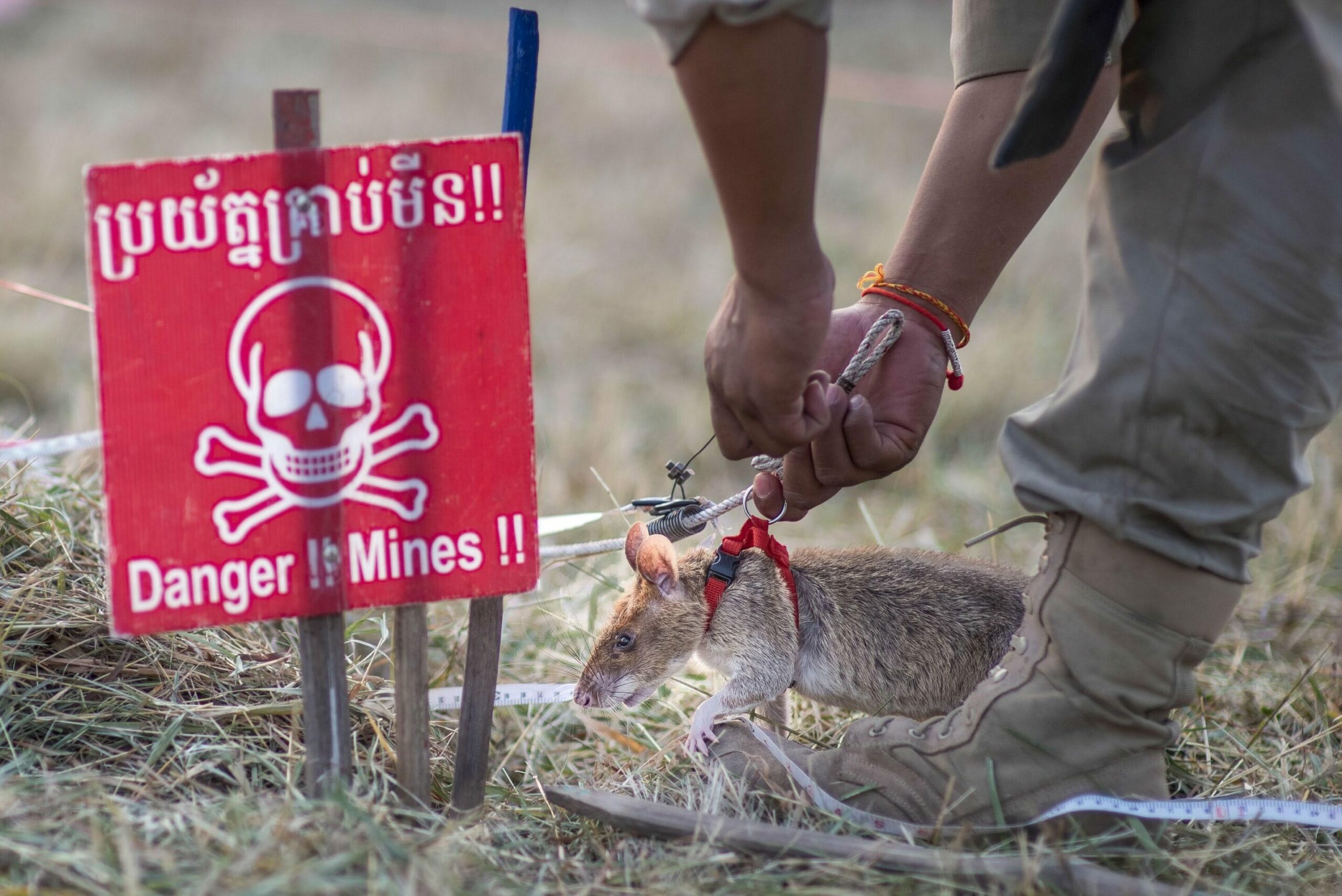
A rat being put to work in the field. Credit: APOPO
When it detects explosive compounds, it stops, scratches the ground and waits.
Unlike metal detectors, which react endlessly to harmless fragments of metal left behind after wars, rats ignore scrap entirely.
"The problem with metal detectors is thousands of false positives," Cox explains. "The rats are trained only on explosives."
Their light weight provides another crucial advantage.
An African giant pouched rat weighs around one kilogram – nowhere near enough to trigger anti-personnel mines. The animals can therefore search a tennis court-sized area in around 20 minutes, a task that might occupy a human deminer for between one and four days.
The difference is measured not simply in efficiency, but in lives.
A need for new recruits
Magawa may have become the organisation's global celebrity, eventually receiving the PDSA Gold Medal for animal bravery before his death in 2022, but newer recruits are already surpassing him. Ronin, another HeroRAT working in Cambodia, has now broken Magawa's record after locating 109 landmines and 15 items of unexploded ordnance.
Today Apopo has around 321 rats, most based at its breeding, training and research centre in Tanzania. The organisation combines rats with manual deminers, mechanical equipment and detection dogs across multiple countries.
Mine clearance remains its largest activity, but not its only one.
In Tanzania, specially trained rats screen thousands of sputum samples for tuberculosis. Cox says they identify around 2,500 to 3,000 patients every year who had previously been told they tested negative.
Even in an age where PCR laboratory tests can identify specific genetic material from a virus, bacterium, or other biological target, Apopo’s rats sometimes have an edge.
"A few years ago, we thought PCR would make us obsolete," he says. "Instead, we're finding patients that even PCR missed."
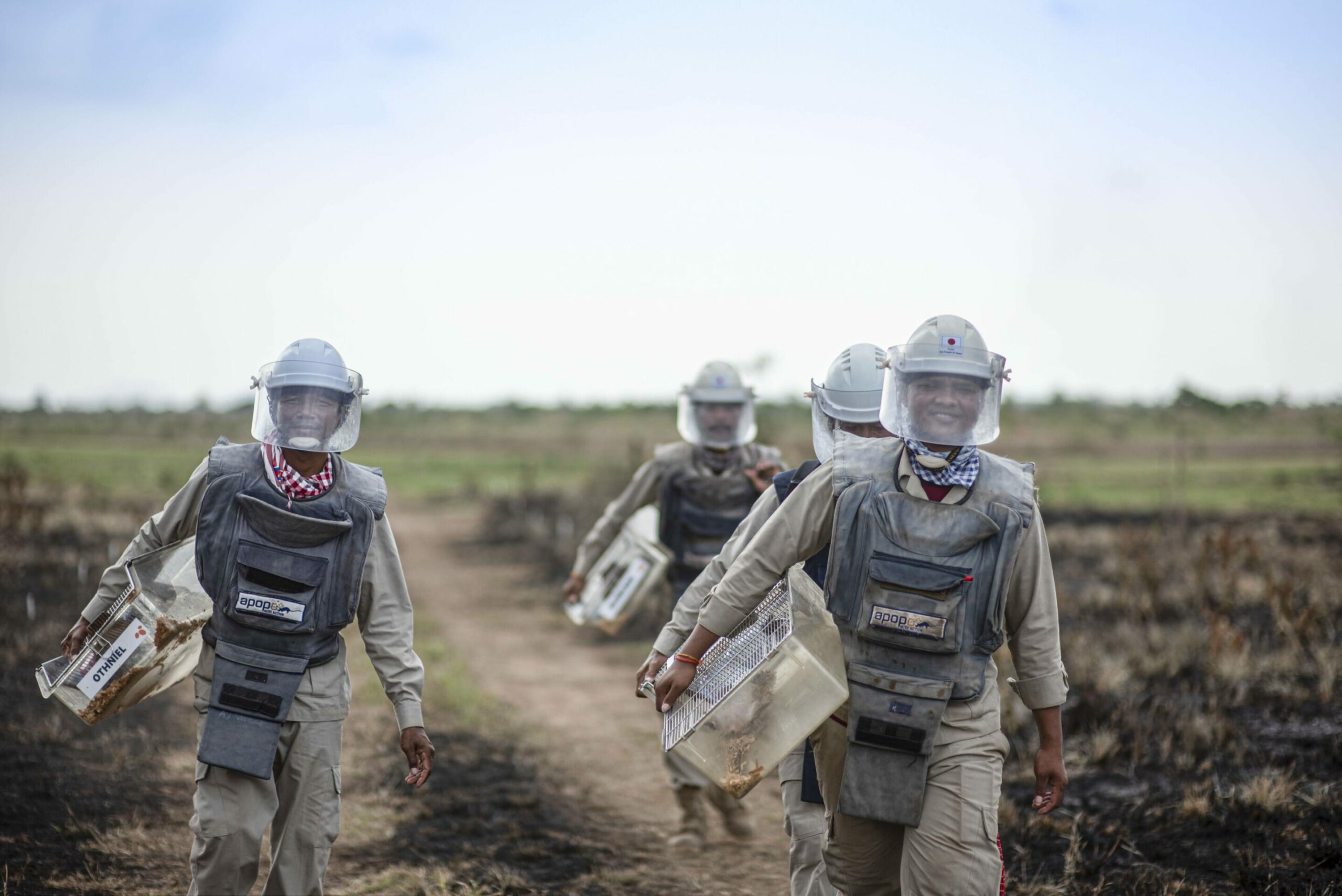
Deminers on patrol in Cambodia. Credit: APOPO
Other rats are being trained to detect illegally trafficked wildlife products passing through the port of Dar es Salaam. In Turkey, Apopo is experimenting with rats carrying miniature backpacks capable of searching earthquake rubble for survivors in spaces inaccessible to rescue workers.
The world's need for mine clearance is hardly diminishing. Russia's invasion of Ukraine has created Europe's largest new contaminated landscape in decades. Apopo has already deployed dozens of specially trained dogs there and believes rats could eventually follow despite the colder climate.
Yet humanitarian funding has become increasingly uncertain. The organisation lost significant support in Zimbabwe after cuts to USAID programmes, delaying work that was close to completion.
"Stopping two years before a minefield is completely cleared isn't very nice," Cox says.
More broadly, he worries about declining international commitment to mine action just as some countries reconsider long-standing arms control agreements.
"It's possible to scale up," he says. "It's all a matter of funding."
A monument to Belgian ingenuity
Despite operating largely overseas and employing only a handful of people in Belgium, Apopo remains proudly Belgian, having grown from an Antwerp university project into one of the country's most distinctive humanitarian exports. Cox says the organisation is now considering establishing a stronger presence in Brussels as engagement with EU institutions grows.
The temptation, in an age of artificial intelligence and autonomous robotics, is to assume technology will eventually replace animals altogether.
Cox is unconvinced. AI may become increasingly useful in analysing satellite imagery or identifying areas most likely to contain mines, he says, but distinguishing explosive compounds hidden beneath layers of earth remains a very different challenge. "I'm currently not so worried that AI is going to render the animals jobless," he says.
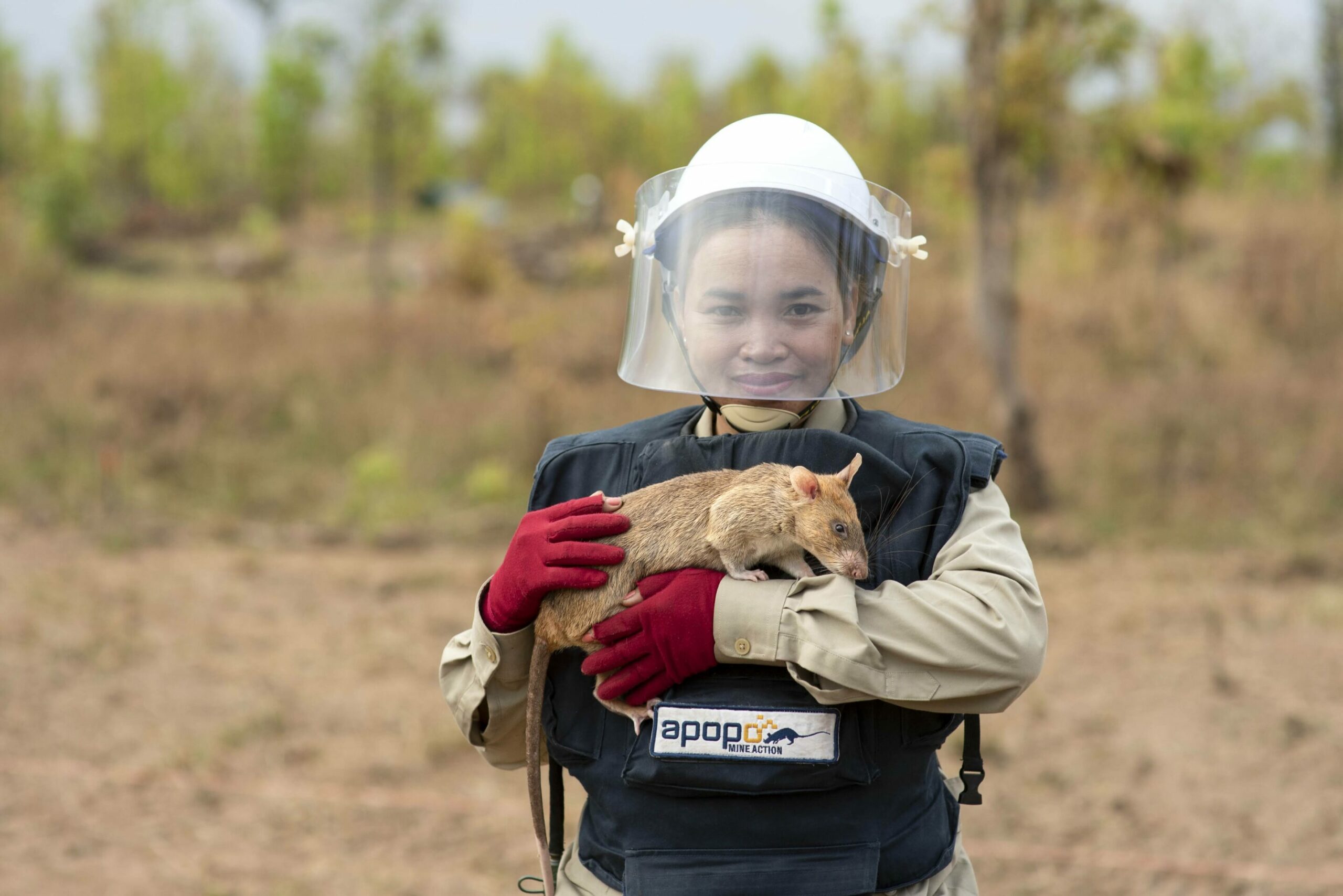
A mine detection rat with its handler. Credit: APOPO
Instead, he sees future mine clearance relying on complementary technologies: drones mapping terrain from above, AI processing data, dogs searching wide areas and rats carrying out the painstaking work of detecting explosives hidden below ground.
"I'm currently not so worried that AI is going to render the animals jobless," he says. AI may help identify areas that are more likely to contain mines, he argues, but actually detecting explosives buried beneath the ground remains another matter entirely.
For now, the world's most celebrated rat continues to make his point in stone.
Magawa's statue is an unlikely monument to Belgian ingenuity: proof that one apparently outlandish idea, pursued with persistence and a willingness to challenge convention, can help transform millions of square metres of deadly ground back into places where children can play, farmers can work and communities can rebuild.
