
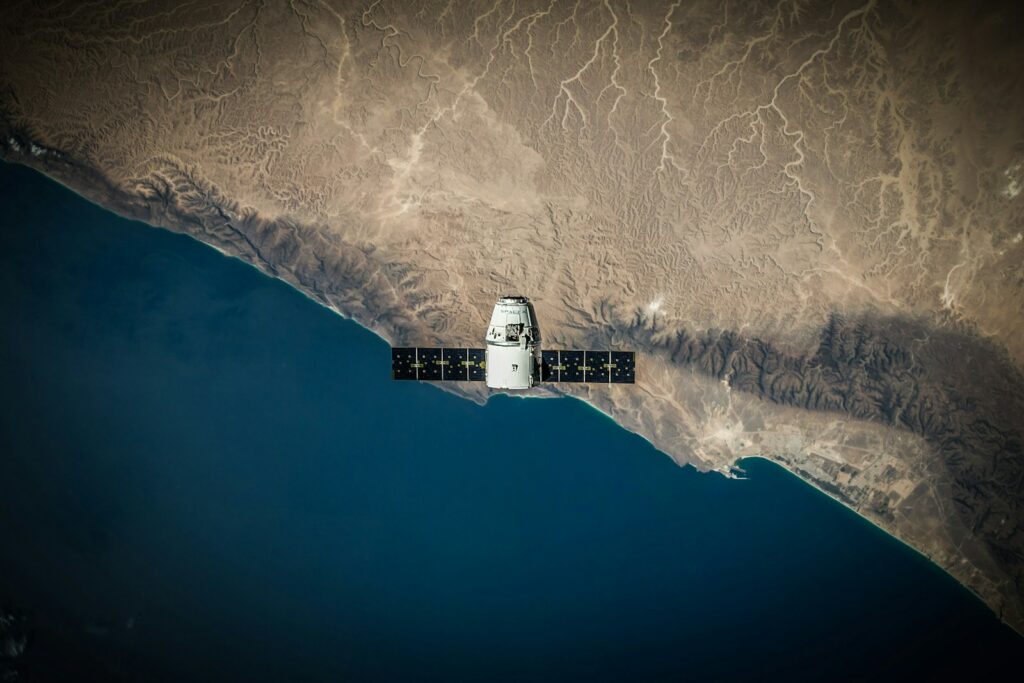
The European Commission has signed an implementation agreement with the SpaceRISE consortium to roll out IRIS², the EU’s new satellite network, expanding the planned constellation to 348 satellites and moving the programme into full-scale deployment.
The deal adds 66 satellites in low Earth orbit, taking the main constellation to 348 satellites in total, the Commission announced on Friday.
IRIS² is designed to provide secure communications for European governments, defence and security forces and emergency services, once the system is operational, it said.
Negotiations on the agreement began in January 2026 and concluded on 7 August 2026, with the parties confirming parameters including design, capacity, deployment schedule, target price and investment by private operators.
First launches are now expected by 2029.
Expanded constellation and funding commitments
The planned network will include 330 satellites in low Earth orbit and 18 in medium Earth orbit — a higher altitude where satellites cover larger areas — with additional optional elements for specific missions, according to the Commission.
The extra 66 satellites are described as a dedicated “High - low Earth orbit” layer intended to strengthen defence, security and emergency services.
The reinforcement will increase secure governmental capacity by 60% within the EU and 54% globally.
IRIS² is being developed through a public - private partnership with SpaceRISE, a consortium consisting of SES, Eutelsat and Hispasat, with industrial partners including Airbus Defence and Space, Thales Alenia Space, OHB and Aerospacelab.
The Commission said faster deployment and increased capacity will require additional investment, funded through a mix of EU budget resources for 2028–2034 and extra contributions from member states and third countries.
Poland and Hungary have committed €656 million and €500 million respectively, while Spain has announced investments of between €1.6 billion and €2 billion.
An official letter has been sent to the European Parliament and member states to inform them of the outcome of negotiations and the start of the implementation phase.
