
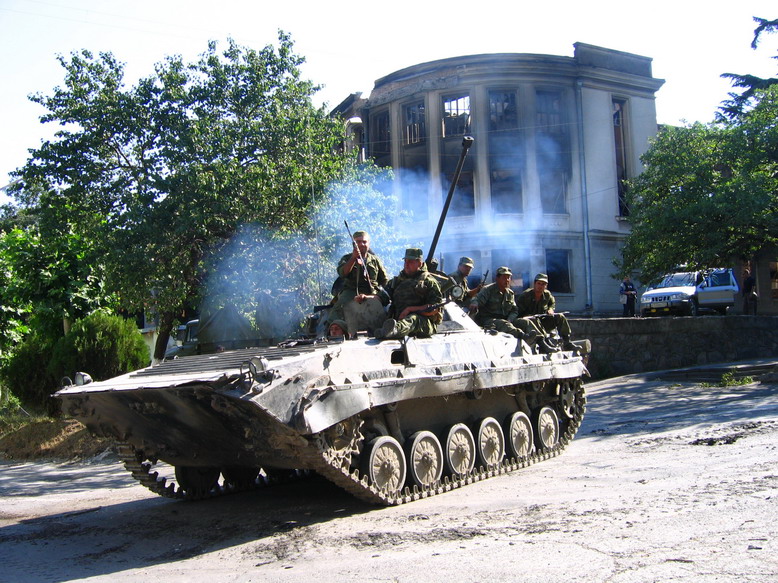
Eighteen years after the outbreak of the 2008 war between Russia and Georgia, the European Union said the conflict’s consequences continue to affect Georgia’s security, sovereignty and territorial integrity, with humanitarian impacts still felt today.
Russia’s recognition of the breakaway regions of Abkhazia and South Ossetia was again condemned, and Russia’s ongoing military presence there without the consent of Georgia’s government was described as illegal and a violation of international law, according to an EU statement released on Friday by the European External Action Service (EEAS).
The EU stated that Russia was seeking to "de facto" integrate Abkhazia and South Ossetia into Russia’s regulatory and security structures.
It cited the so-called “Agreement on Deepening Allied Cooperation” signed on 9 May between Moscow and Tskhinvali, and the appointment of a Russian official as so-called “Acting President” of South Ossetia, saying these actions have “no validity under international law.”
Humanitarian and human rights concerns
Local communities have faced humanitarian challenges and human rights violations for 18 years, including restrictions on freedom of movement and illegal detentions, the EEAS said.
Obstacles preventing internally displaced people and refugees from returning to their homes also remain.
The EU said it remained committed to a peaceful resolution through its co-chair role in the Geneva International Discussions — a forum set up after the 2008 war — and through the work of the EU Special Representative for the South Caucasus and the crisis in Georgia.
It also pointed to the continued presence of the EU Monitoring Mission in Georgia (EUMM), which it described as the only international monitoring mission on the ground, and urged participants in the Geneva talks to engage constructively to implement the 12 August 2008 six-point agreement and follow-up measures agreed on 8 September 2008.
The EU reiterated its support for Georgia’s independence, sovereignty and territorial integrity within its internationally recognised borders.
