

Belgians have increasingly found their way to the stock market in recent years, but too much money is still parked in savings accounts, according to Federal Finance Minister Jan Jambon (N-VA). He has a plan ready to encourage Belgians to invest more. Whether the Belgian economy will actually benefit, as intended, is another matter entirely.
Now, an enormous amount of money sits idle in Belgian savings accounts: €300 billion. Jambon wants to see more of that money move toward the stock market instead. Belgium currently has growth of around 1%. Too little, in his view.
He considers growth the best answer to challenges like an aging population and the country's debt burden. Getting people to invest, he said, could give the economy the boost it needs. To do this, Jambon has drawn up a plan inspired by Sweden.
"The Swedes have an individual investment account that lets them invest and buy shares on the stock market," financial economist Hans Degryse (KU Leuven) told The Brussels Times.
"It is completely tax-exempt: no taxes apply, except for an annual tax of around 1% on the outstanding balance – though with an exemption up to roughly €25,000 to €30,000."
The account has been a clear success in Sweden. "People there have signed up en masse, and it has not hurt the Swedish stock exchange at all," Degryse said. "On the contrary, it has allowed Sweden to attract many new companies to the market and has resulted in a stock exchange that functions reasonably well."
Why Belgium is a harder case
Replicating that success will not be straightforward. Belgians have long had a reputation as die-hard savers – a habit the government itself actively encouraged. "Various measures made savings accounts more tax-attractive," Degryse said. "Some say this has to do with our high public debt. That debt is, in the end, also our debt. We have partly tried to save for it."
Even so, Belgians have started investing more in recent years. "Take the government bond: a couple of years ago the government issued a bond to the public with a fairly attractive tax status. That caused a shift."
Lower yields on savings accounts have reinforced the trend, especially as the stock market's appeal grew at the same time. The past five years have generally been good ones. Figures from the Financial Services and Markets Authority (FSMA) show that 37% of Belgians between 16 and 80 now invest, up from 34% two years earlier.
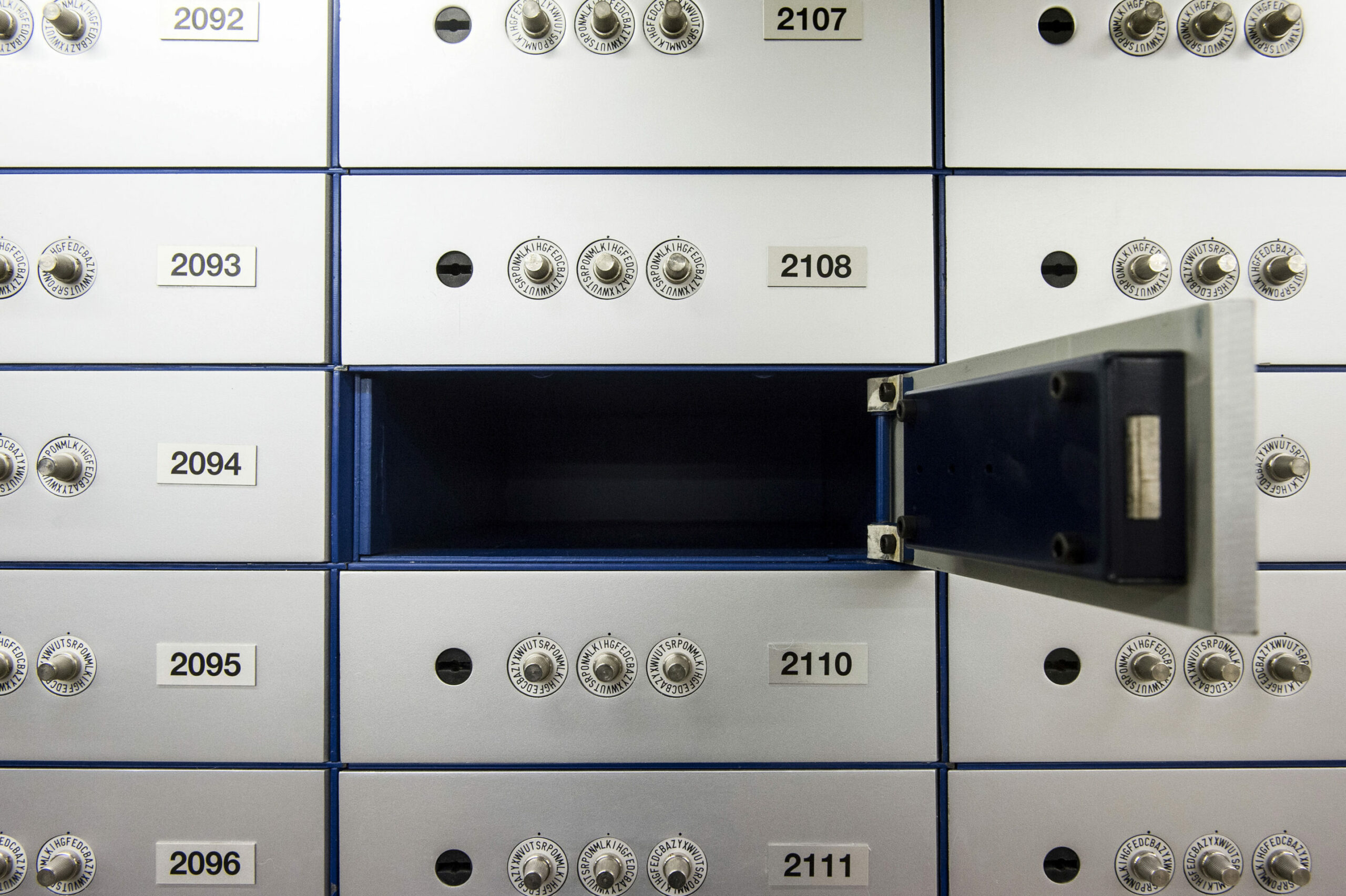
Bank vault. Credit: Belga/Jonas Hamers
"In recent years, the Belgian savings rate – the share of disposable income that gets saved – has been around 13%. That's no longer particularly high compared to other European countries," Degryse said.
Still, he sees room to grow the investor base further: "For historical reasons, a lot of money still sits in savings accounts; 30% of Belgians' wealth is savings."
An investment account modeled on the Swedish system could help change that, according to Ben Granjé of the Flemish Investors' Federation. "A growth account could contribute to a better understanding among young people of what investing actually is."
"In the long run, that leads to adults who handle their investments in a healthy, purposeful, and informed way," he said. "They also learn that you can lose money on the stock market, but that over the long term it is still a good idea. Viewed over a longer period, the risk of loss is close to zero."
The catch: a policy working against itself
Still, there are real reservations about Jambon's plan – starting with a tax he does not control.
Since the start of this year, the capital gains tax of the Federal Government, led by Prime Minister Bart De Wever (N-VA), has required investors to pay 10% on profits from the sale of shares, bonds, crypto, and investment gold.
"That tax runs somewhat counter to this plan," Degryse said. "First you make something a bit less attractive, and then you try to make it attractive again through another route. There is already a 30% withholding tax, and now the capital gains tax comes on top of that. My message would be: keep it simple."
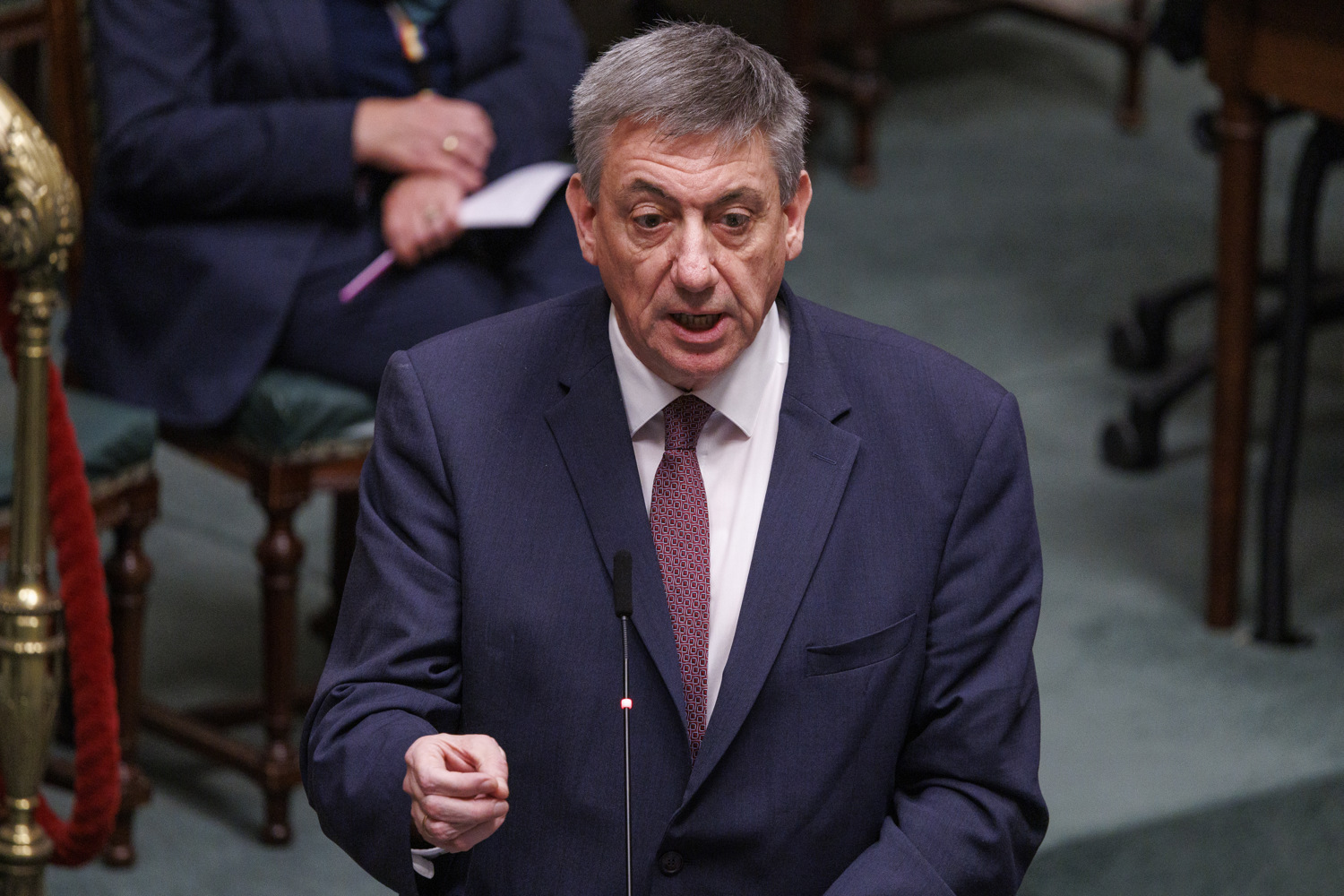
Deputy Prime Minister and Minister of Finance Jan Jambon. Credit: Belga/Nicolas Maeterlinck
Granjé agreed with Degryse, and goes even further. "If Jan Jambon manages to push this through, it will certainly be a nice political trophy for him. That does not change the fact that the government should address the tax treatment of investing as a whole."
He pointed to the capital gains tax's ripple effects: "Because of the capital gains tax, a lot of money was already funneled out of Belgium and pulled out of companies at the end of last year. There are far fewer transactions on the Brussels stock exchange. If you have some innovative technology and want to raise money for it, you go to a Dutch exchange instead."
Will it even help the Belgian economy?
That last point cuts to a deeper problem with Jambon's plan: even if it works, it may not deliver the domestic boost he is promising. "In Sweden, that worked without any obligation to invest in Swedish shares or on the Swedish stock exchange – Europe forbids that," Degryse said.
He doubts Belgium can replicate the outcome. "In recent years we have seen more companies leaving the stock exchange here than new ones joining it. There is a risk that you end up channeling more money into international investments instead of it flowing into the Belgian economy or the Belgian government."
Granjé shared that skepticism, noting that the Brussels exchange holds limited appeal on its own merits.
"If you only invested on the Belgian stock exchange, you would not get an extraordinary return anyway. The Belgian exchange is more like an anchor in an investment portfolio: when things go well, it lags a bit; when things go badly, it holds up a bit better. It is not the engine of long-term capital growth."

The Bourse building in Brussels. Credit: Lauren Walker/ The Brussels Times
According to Degryse, the more effective lever would be making investment in Belgian companies specifically more attractive – something Jambon has also considered.
He wants to review existing tax breaks for start-ups and growth companies, addressing what some analysts describe as a broader European shortage of risk capital for young firms.
Jambon aims to tackle this at the Belgian level, within EU rules, by having the Federal Government develop a strategy to help companies find their way onto the stock exchange – a move that would also chip away at the more fundamental obstacle underlying all of this: the limited appeal of the Brussels stock exchange itself.
