
Belgium has spent about €150 million since 2025 on civil co-operation with war-torn Ukraine, funding projects ranging from veteran reintegration and specialist surgery to business support, school shelters and winter energy supplies.
During a two-day working visit to Ukraine, Belgian Foreign Minister Maxime Prévot (Les Engagés) said reconstruction could not wait until peace was secured. “Reconstruction cannot wait until the day after peace; it is already beginning now,” he said.
Investing in operating theatres
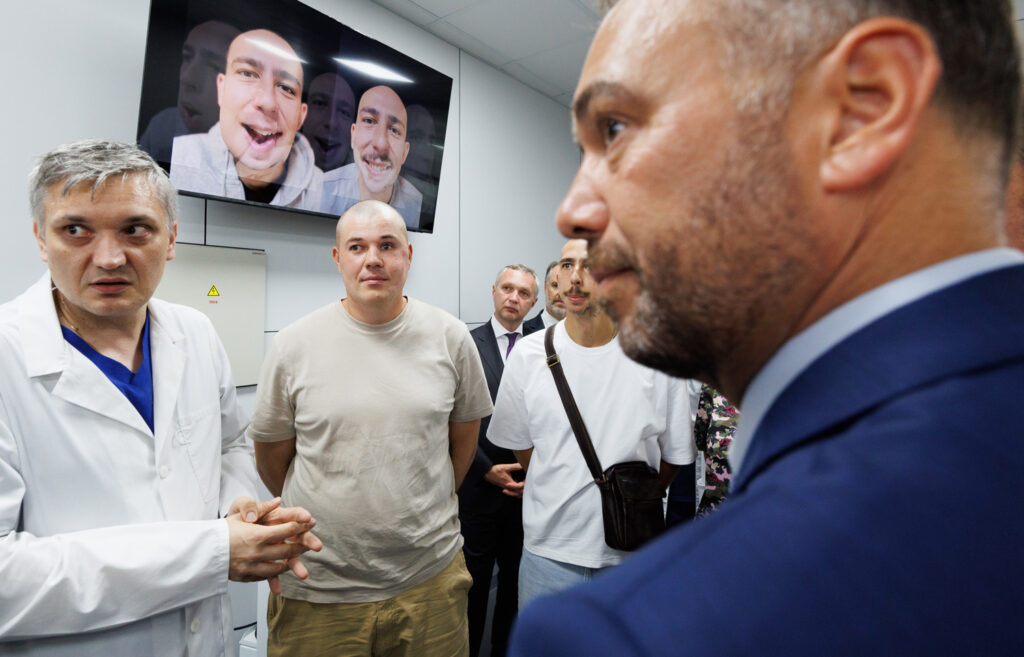
In Kyiv, Belgium, through its development agency Enabel, has allocated €1.75 million to equip two operating theatres for maxillofacial surgery at the regional hospital. The hospital aims to become a reference centre in this field, with further investment also planned in Lviv.
Dr Andrei Kopchak said the country was facing a surge in patients with severe facial injuries after more than four years of war. He said the hospital had already operated on 1,800 people since the start of the conflict, with some patients requiring nine or ten operations each.
He said most cases were highly complex and required specialised surgical procedures. Ukraine needed dedicated centres where expertise and knowledge could be brought together, he added.
The project draws on the expertise of Materialise, a KU Leuven spin-off known internationally for its 3D medical technology. The partnership will allow surgeons to plan operations with greater precision and produce implants tailored to each patient.
Reintegration of Ukrainian veterans
Another major challenge is the reintegration of Ukrainian veterans. In Kyiv, Prévot met veterans and Ukraine’s Veterans Affairs Minister, Vitalii Kim, at a dedicated hub.
Prévot said many veterans would need support returning to work after the war, especially as most had been wounded. He said they received care and benefits while in hospital, but that support often dropped away once they were discharged, even though many continued to face physical and psychological problems.
Belgium has committed €4 million to fully finance the Veteran Interoperable Service Platform, which is being implemented under a NATO programme. The scheme is intended to modernise the digital systems of the Ministry of Veterans and make services easier to access.
Burn victims and enterprises
A further €10 million will go towards the development of a national centre of expertise for treating patients with severe burns. The project will involve the Grand Hôpital de Charleroi and the Queen Astrid Military Hospital, reflecting one of Belgium’s specialist areas.
Belgium is also backing Ukraine’s private sector. BIO Invest, the Belgian development finance institution that supports private enterprise in emerging countries, will invest about €6 million.
That funding will go through the Rebuild Ukraine Fund, which will provide long-term capital to Ukrainian companies hit by the war and in need of financing to continue their recovery and growth.
