
In Brussels, a Zinneke is more than a dog. The word has come to evoke the city's mixed identities and those who do not fit neatly into a single category. Now, the term became part of a fitting name for a hockey team built around the idea that everyone should have a place on the pitch.
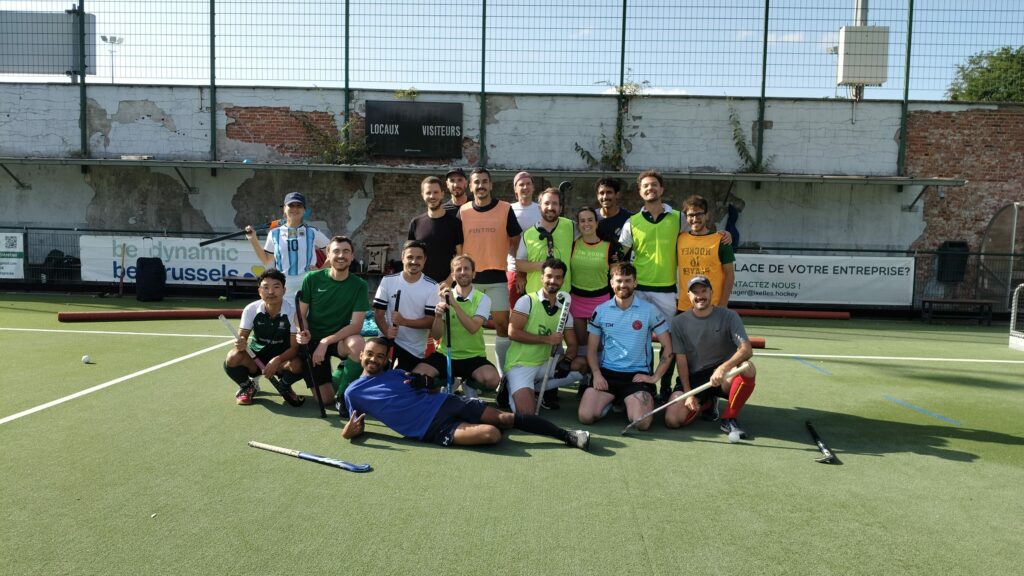
The Zinneke Sticks began with a handful of friends, a few pizzas and beers, and the ambition to create the kind of inclusive hockey community that captain Merlijn de Rijcke had first encountered during his Erasmus programme in Copenhagen, Denmark.
The inclusive hockey team quickly helped him feel at home in the city because he was "absorbed in a nice network of people", he told The Brussels Times.
Upon his return to Belgium, De Rijcke wanted to create something similar on a local level, and succeeded in March 2023 when the first training session of the Zinneke Sticks took place. With hockey pitches being rented for a high price, the new team improvised, holding its first training session on a tennis court where the nets could be removed.
They held their first training with just six players, but more people started showing up with every consecutive session. "Then we were 18, 20, 25 and it exploded really fast," said De Rijcke. Eventually, demand became so high that the team had to create a waiting list.
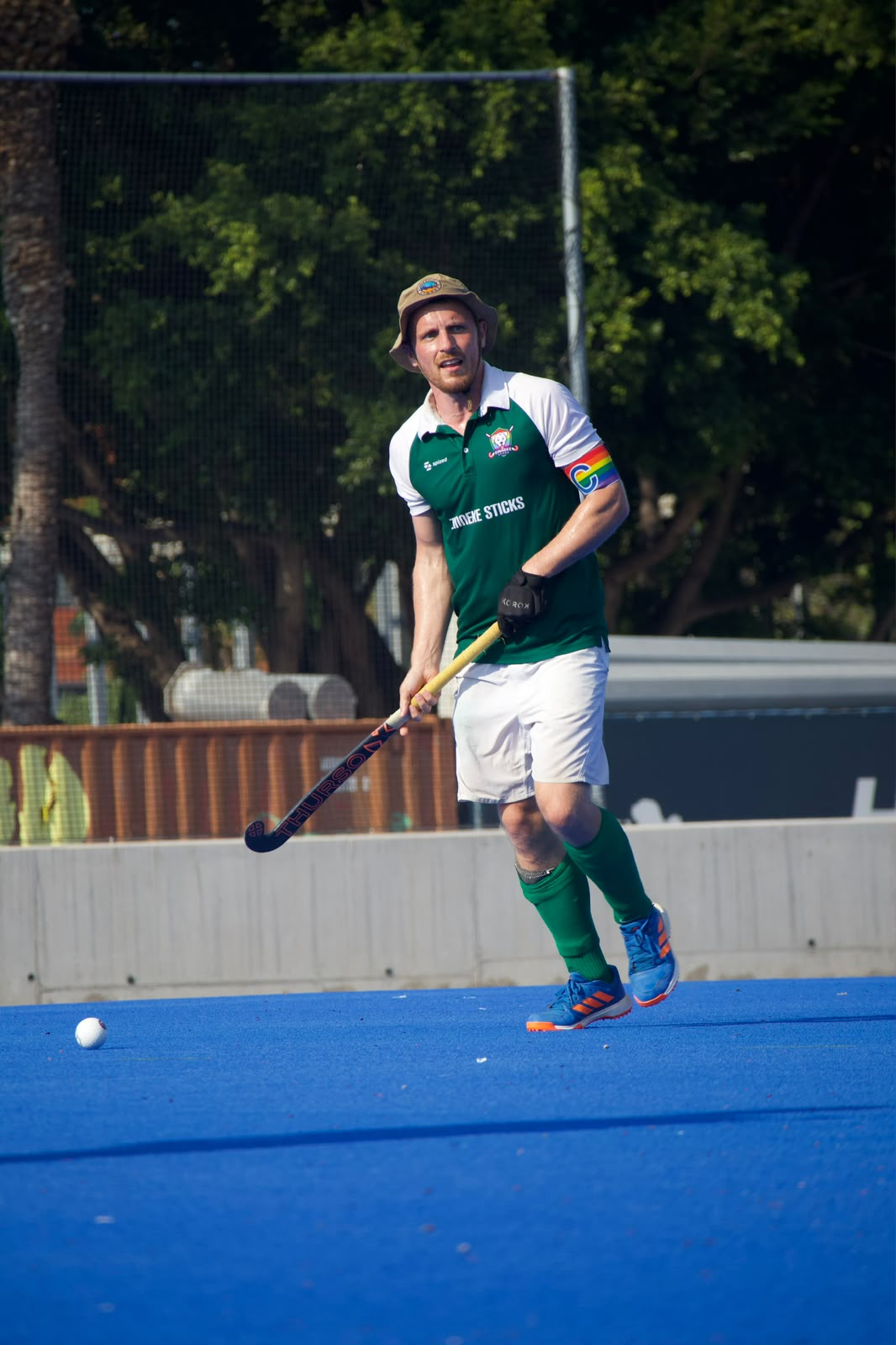
Credit: Zinneke Sticks
Today, the Brussels club is bringing the Danish message to one of hockey's biggest stages: during the 2026 FIH Hockey World Cup, taking place from 15 to 30 August in Belgium and the Netherlands, the Zinneke Sticks are joining the "Hockey for All" campaign, aimed at promoting diversity and respect in the team sport.
The initiative is a collaboration with the Royal Belgian Hockey Association (RBHA), Hockey Vlaanderen, the Royal Dutch Hockey Association (KNHB) and the Zinneke Sticks. The campaign includes videos of professional players who discuss the importance of inclusive sports.
On 22 August, an inclusive tournament will also take place at Ixelles Hockey Club, where mixed teams of all levels, countries, and genders will play against each other.
A Brussels team with a Brussels name
The small group behind the Zinneke Sticks initially included Flemish, French-speaking, and Spanish members, which presented the question: what should they call themselves. From the very beginning, the founders wanted to give the team a local name, related to Brussels.
The name emerged during a social event over pizzas and beers. By the end of the evening, the team had a name. "We did not want to use an English word because we wanted to link the name to our identity and the city of Brussels," said the captain.
Het Zinneke is the statue of a dog in Brussels' city centre. The word zinneke usually refers to a mongrel dog, and nowadays to a person who lives in Brussels but was not born there. De Rijcke said the word also carried associations with people who had been treated as outsiders and rejected by society.
For him and his team members, this was perfect: "Sometimes we feel like outcasts, like we don't fit in properly," he said.
Another reason for this choice was that the word zinneke is a word from Brussels dialect, and is used by both Dutch- and French speakers. Additionally, "sticks" is a nod to the hockey sticks and gives the team its catchy final name. "I am very proud of the name because even today it’s very accurate," said De Rijcke.
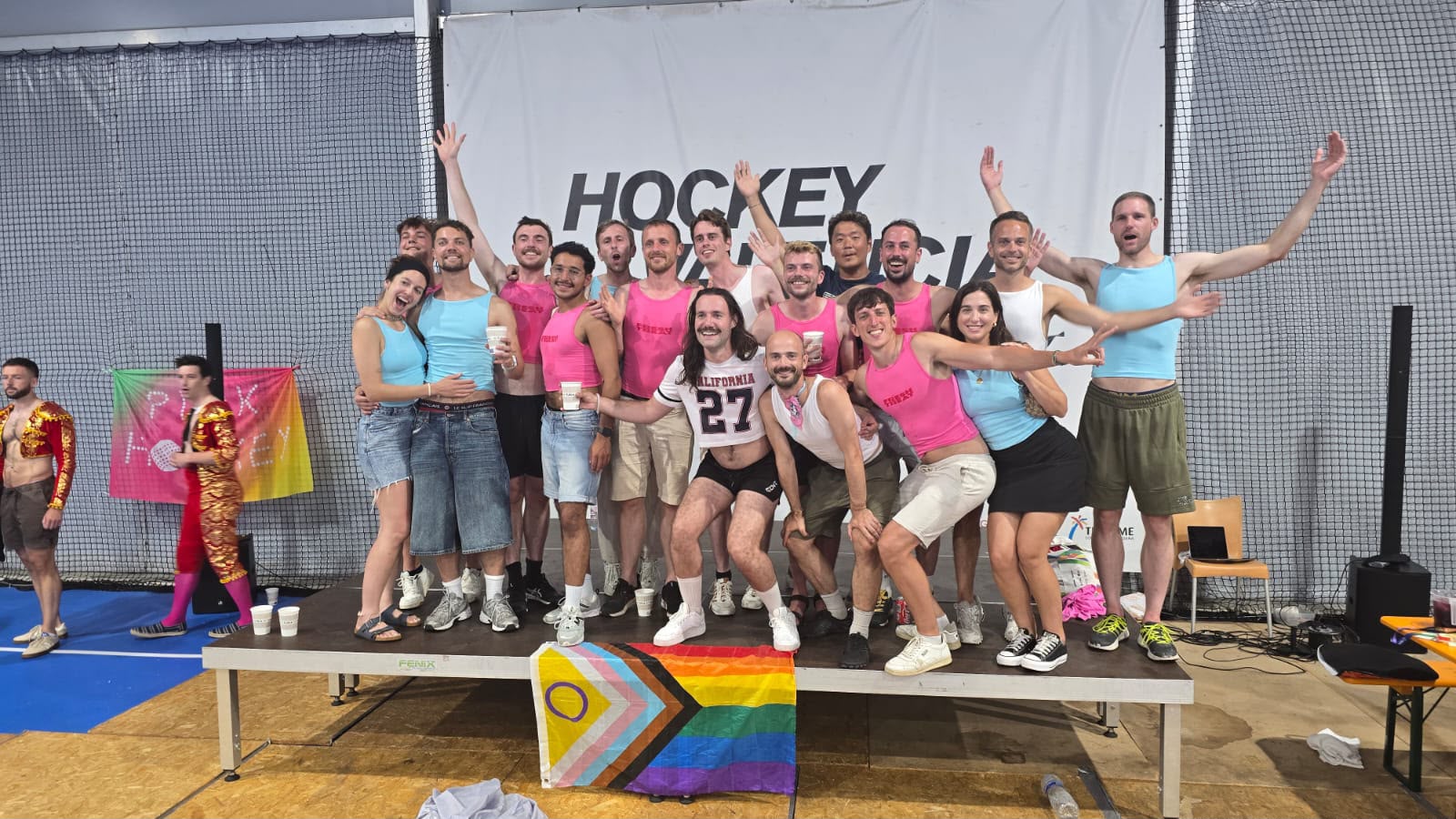
Credit: Zinneke Sticks
The captain believes that the sense of community existed from the first training session, adding that one of the things that unites the team members is their shared experiences.
De Rijcke shared that people quickly started reaching out to him to share their previous experiences with hockey and team sports. "They would tell me that they used to play hockey but stopped because they didn’t like the environment and now was the first time in their lives that they wanted to play hockey again."
Often, people have bad experiences with team sports in high school, De Rijcke said, making them think that team sports "are not for them". But he disputes this. "It is for them, but they never have been in an environment where they can properly be themselves and enjoy this group support."
The goal is not to become a professional player, but instead to have fun, discover hockey, and enjoy playing it.
Everyone is welcome
De Rijcke also pointed out that the people who are motivated to take an extra step can join existing teams and play more competitively. Some players eventually move into more competitive teams, but few leave the Zinneke Sticks community completely. They continue to attend social events and stay in touch. "They are part of our family."
At the same time, the Zinneke Sticks tries to achieve balance between hockey and its social activities: more competitive members may focus on training and attend fewer parties, while others are drawn more strongly to the club's social side. But for De Rijcke, hockey remains what holds the community together.
Without the sport, he believes, it would be harder to maintain the close connections that have developed between members. "I think hockey will always be an important thing for us," he said.
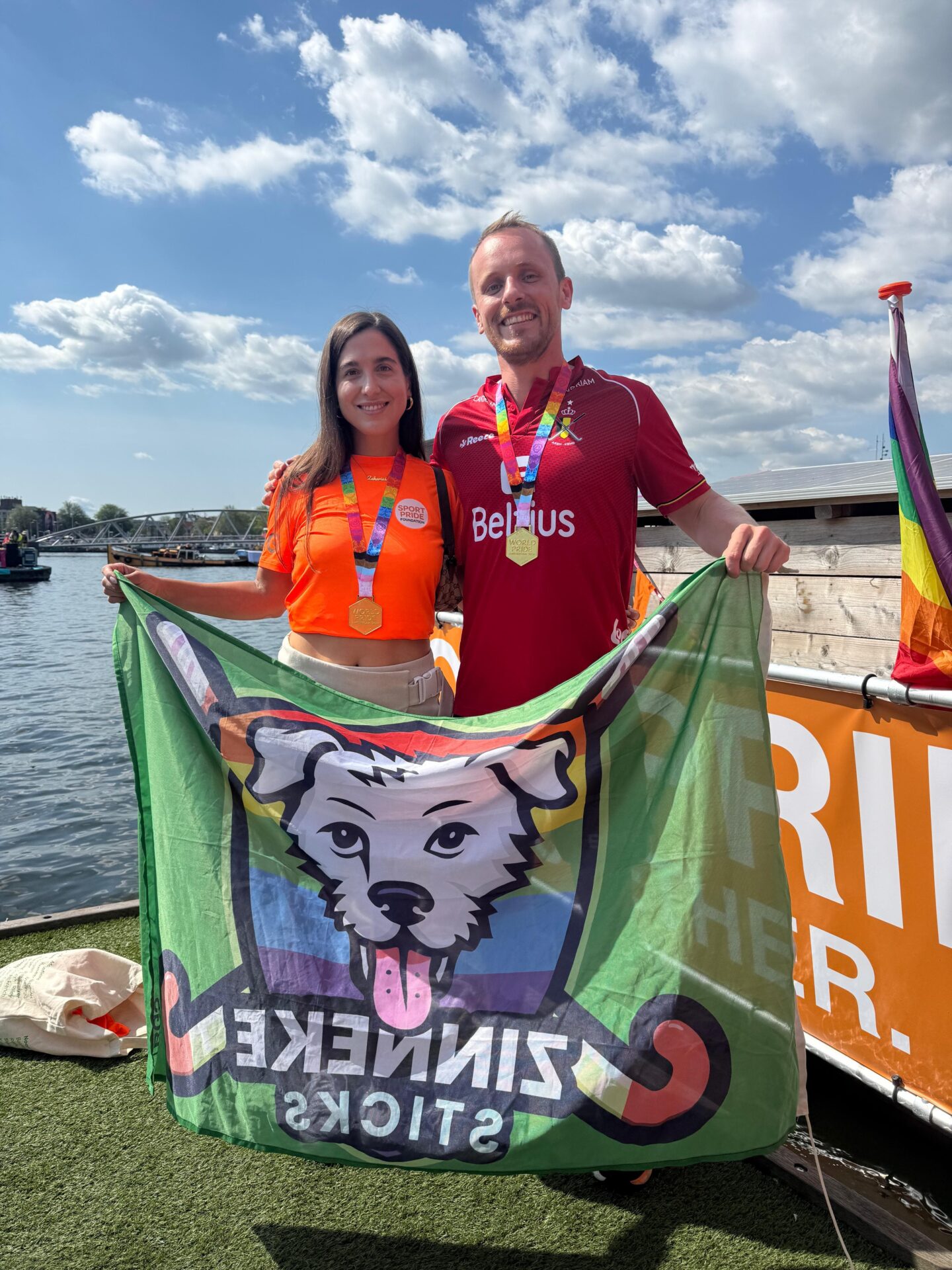
Credit: Zinneke Sticks
Although the club was founded primarily as an LGBTQ+ hockey team, what's most important is the community that extends beyond sexual orientation, according to De Rijcke. "As long as someone shares the same values of respect and that everyone can be themselves, they are more than welcome."
During last year’s tournament, a heterosexual player joined the Zinneke Sticks and played with them throughout the whole event. "They said that they never loved playing so much hockey, and it was super nice to receive that feedback," added De Rijcke.
The team also created the Jeanneke Sticks, a group aimed at creating an entry environment where women would feel comfortable to join the club as well. The Zinneke Sticks were intended to be mixed from the beginning, but the club initially attracted predominantly gay and bisexual men. With relatively few women joining, those who did were less likely to stay.
De Rijcke realised that if the club wanted to attract and retain more women, it needed to take more deliberate action. "It is very difficult to have a mixed team, because hockey is a very physical sport. You can hit the ball very hard, and it can also be dangerous," said De Rijcke.
This, he said, is also why women tend to prefer having a separate category. Now, the Jeanneke Sticks has a group of 15 to 20 female members who are coming to the training sessions and working on their skills and technique.
