
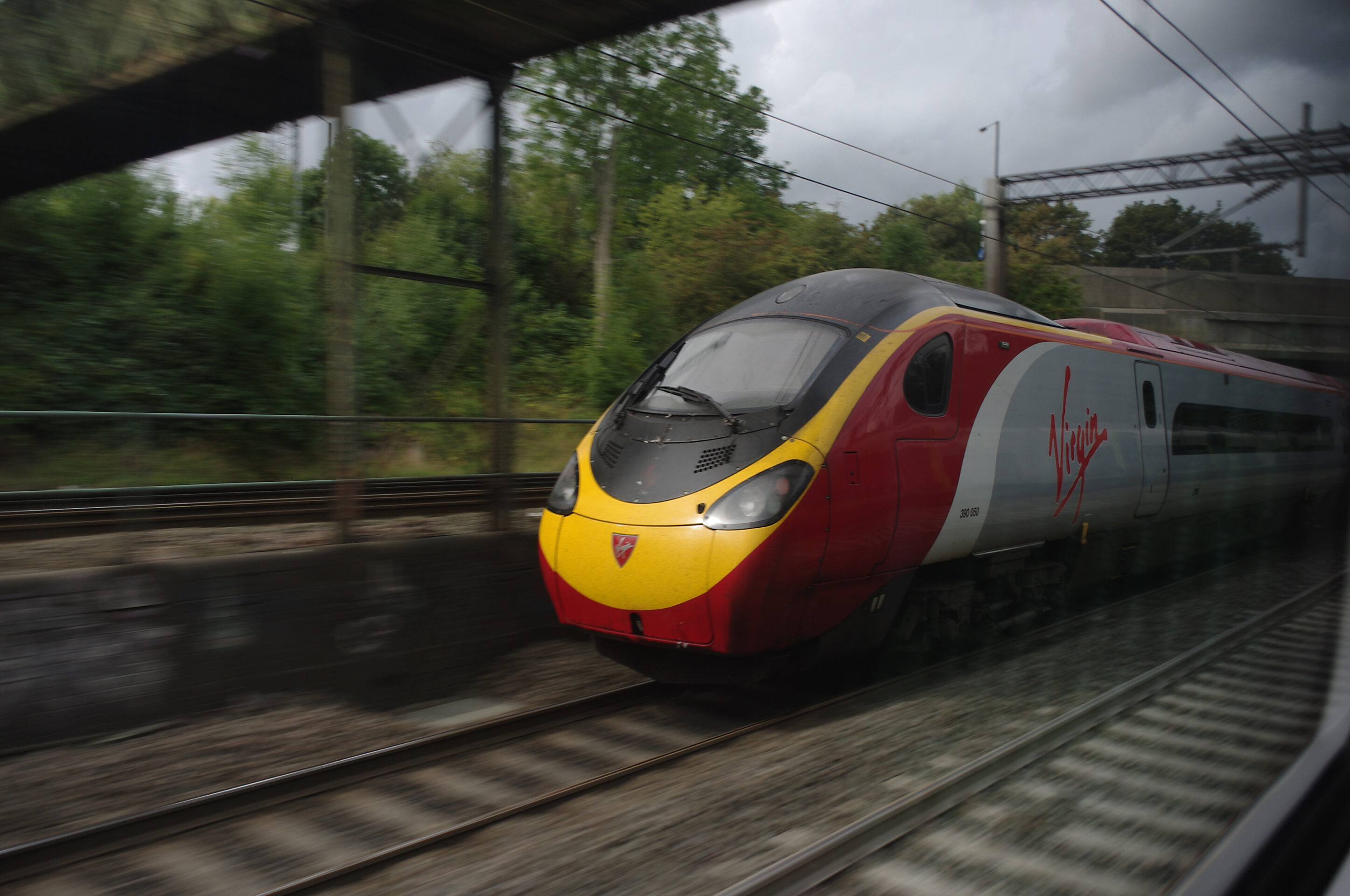
Belgians could soon have more choice when it comes to travelling to London by rail. However, plans by the UK's Virgin Group for new services are risky and do not automatically mean cheaper fares – here's why.
This week, UK rail regulators gave the green light to Virgin Group to run train services between London and the Channel Tunnel along the rail link known as High Speed 1 (HS1).
"Our plans for a new London-Europe rail service from 2030 are moving at pace," a spokesperson for Virgin Group told The Brussels Times. "We welcome the ORR's pre-approval of our track access agreement and the opportunity to bring competition and Virgin’s award-winning customer experience to the Channel Tunnel."
The approval moves the Group one step closer to offering competing services to passengers along the London to Brussels route by February 2031 (after Paris in October 2030). This route is currently served only by Eurostar.
Virgin could succeed in breaking Eurostar's monopoly between Brussels and London, but their attempt is not risk-free and passengers may not see the benefit from competition.
Why Virgin might succeed
Several factors play in Virgin's favour, from capacity along the route to a more streamlined environment for independent commercial rail in Europe.
Jon Worth, an independent rail campaigner and author of a report last year on cross channel rail, outlined to The Brussels Times the potential for new rail services. "In principle, there is nothing against Virgin or anyone else saying that they would like some capacity, at Brussels Midi or London St. Pancras or wherever else."
"You can run at least one more train per hour at peak, and two more trains per hour off-peak into [London] St. Pancras, which is basically what Virgin is doing. They're basically saying, 'let's fit our services into the gaps in the existing infrastructure'."
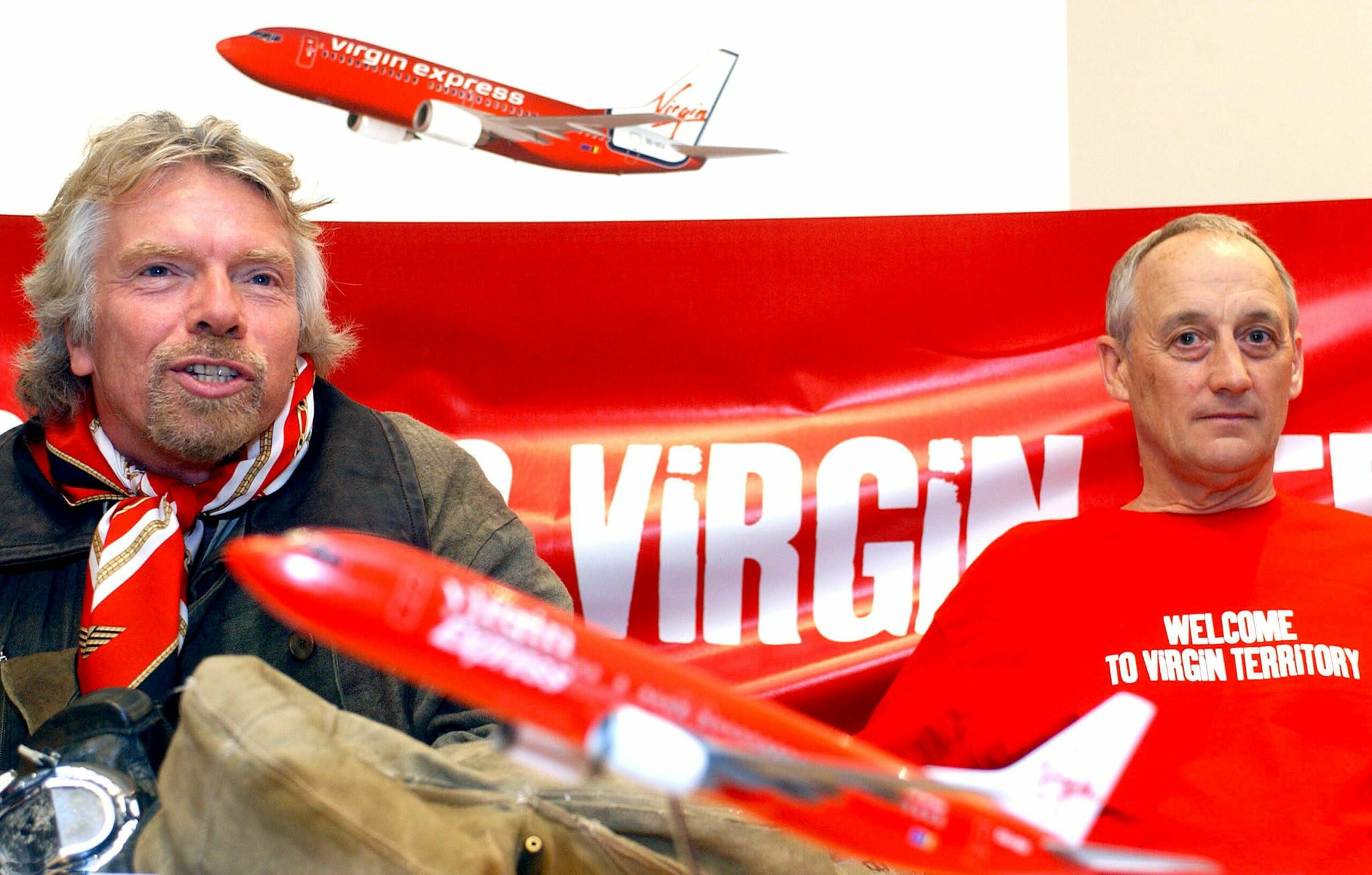
Richard Branson's Virgin Group has a history of seeking to compete across transport modes. Pictured Branson at Zaventem in 2005. Credit: Belga / Benoit Doppagne
But slotting into gaps may not be necessary for Virgin, as processes exist to access rail networks across Europe, which means they could bid to take existing capacity already being used by Eurostar.
"It's not that the current services automatically have priority over the new ones," Pieter Vansteenwegen, professor from the KU Leuven Institute for Mobility, explained to The Brussels Times.
According to him, it could be possible that one Eurostar train an hour could lose the right to use the track at a certain time because the Virgin one will take its place – making it not just a matter of adding a train within the current capacity.
"Given that there are already multiple international operators active on the network, I guess Infrabel has procedures to accommodate those requests," Vansteenwegen said. "So from my perspective, I think that [Virgin] should be well in time to start this process."
"If I had €1 million to invest today, I would not invest in the Virgin project."
Despite things working in Virgin's favour, there are some risks, ranging from regulatory hurdles across four different infrastructure owners to uncertainty of passenger demand and high operational costs.
The trains being bought by Virgin from French manufacturer Alstom are "a heavily customised version of an existing type of train that runs in Italy," explained Worth. Importantly, that type was never granted approval to run in France, Belgium, the Channel Tunnel, or the UK.
Therefore, the most crucial part of Virgin's plans to start operating to Brussels Midi by 2031 is regulatory approval – a need that could introduce delays.
"The railway manufacturing industry delivers late. And a new type of train often has some teething problems. So inherently, there is always a risk in that."
Even if trains are delivered on time, Virgin would need to run at full capacity from the start to make a profit. This may be achieved by the shorter trains they intend to run (half the length compared to Eurostar).
However, as Yves Crozet, Emeritus Professor of the Transport Urban Planning Economics Laboratory at the University of Lyon, explained, "I think there is an optimism bias because they consider that the potential traffic between London and Paris and London to Brussels will grow."
"20 years ago, this traffic was boosted by the business traffic by people going to London for a meeting or to Brussels, but now with video conferencing, the business traffic is declining," he told The Brussels Times.
According to Crozet, you have to reduce the price to increase that demand – which poses a second difficulty. "The rail access charges are very high in France, are very high in the tunnel, and also on High Speed 1."
For this reason, he is not optimistic. "If I had €1 million to invest today, I would not invest in the Virgin project."
Worth explained the significance of the cost through the tunnel. "Not only do you have to pay a cost per train – which is calculated somewhat by the time of day and the type of train – but there is also cost per passenger, which is more than €17 per passenger."
As a result, he believes it is unlikely prices would differ between Virgin and Eurostar. "I expect Virgin to undercut Eurostar a bit and save money in some places. For example, I expect them not to have a bar carriage," he explained.
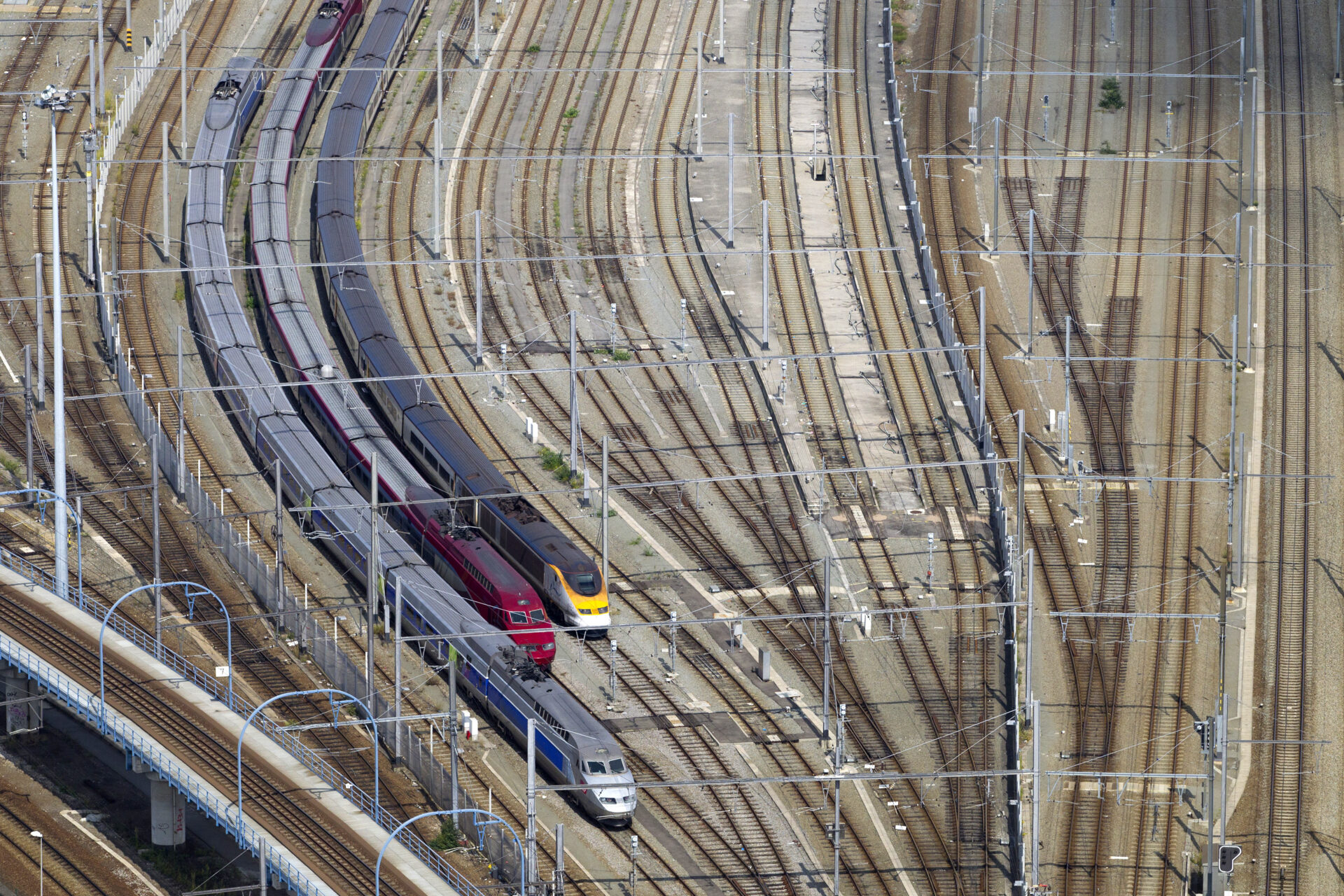
Brussels-Midi. Credit: Belga
For their part, Eurostar welcomes any competition, noting that as an operator they already compete across Europe.
"More operators encourages more people to choose rail, benefiting passengers, the economy and the environment," a Eurostar spokesperson told the Brussels Times.
"International rail has always competed effectively with air travel, and we believe it will continue to do so. Realising growth depends on getting the foundations right. Competition and growth go hand in hand, but both require the right infrastructure, long-term investment and a regulatory framework that treats existing and new operators fairly."
Could the EU subsidise costs?
Some of the costs of commercial high-speed rail could be subsidised separately, for example the EU could step in to subsidise rail access costs, which would benefit all operators.
Crozet explained that after early steps of high-speed rail competition failed in Italy, the country's government stepped in to reduce access charges. They reasoned that competition would be good for passengers on high-speed services.
"The result is that, today, we have a stable duopoly between Italo and TrenItalia. But because the government decided to subsidise a lot of the infrastructure access charges," he said.
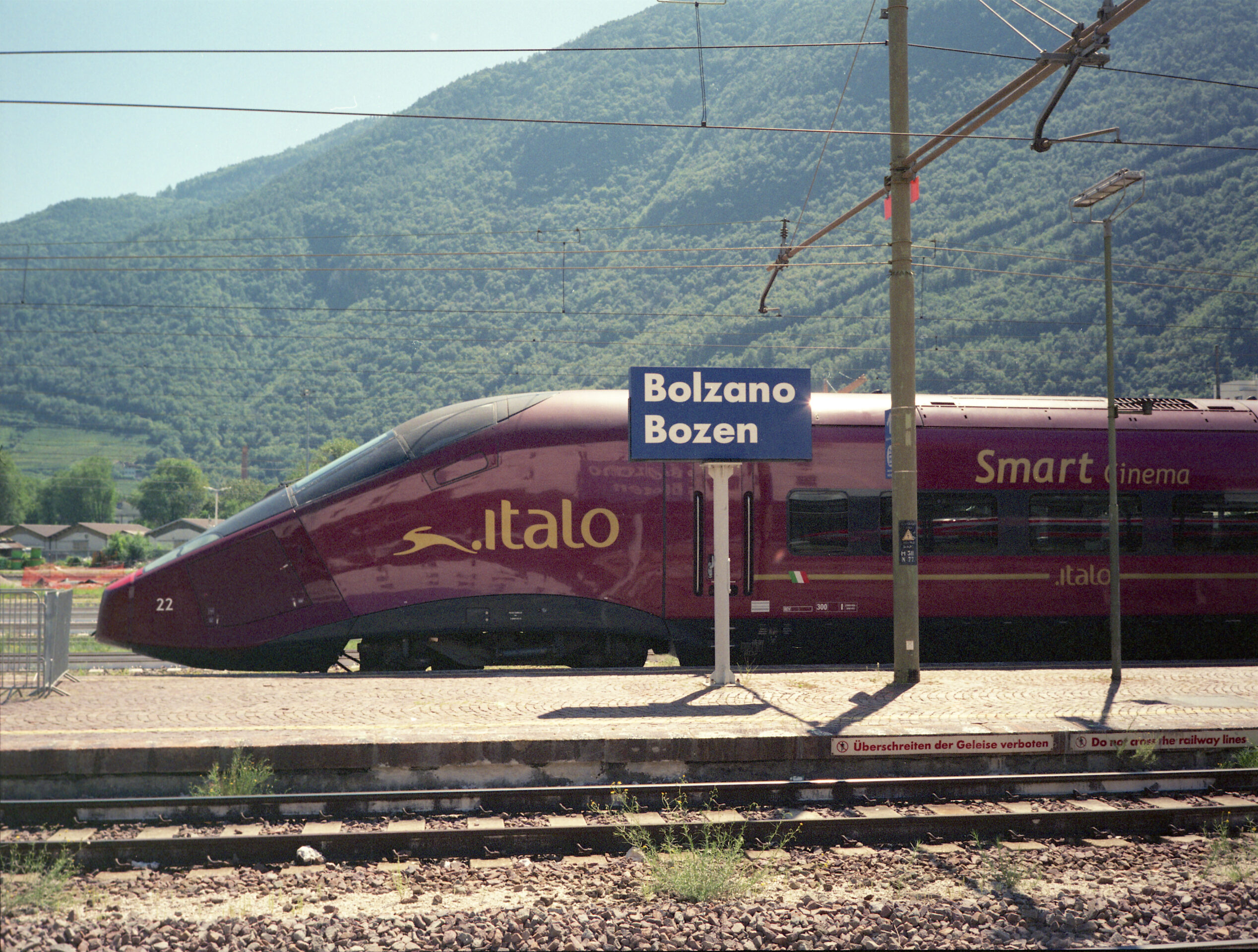
An Italo train at Bolzano, Italy. Credit: Creative Commons / Marcin Bajer (Rrrodrigo)
However, it would be unusual for the EU to step in to encourage passenger services on a route that is already commercially viable and to a non-Member State, without having a clear justification. Existing EU policy only calls for "fair" access charges on high-speed rail.
Without that clear justification, Crozet argued, the EU would be choosing to "subsidise the mobility of rich people, because the people going from London to Paris are not the poor people. We are not talking about daily mobility, it's leisure."
As a result, even if the option to sit in a Virgin red seat rather than a Eurostar blue one arrives at Brussels Midi, passengers are unlikely to see lower prices automatically.
Virgin might be able to negotiate access rights, and get their trains on time to start operating by February 2031 to Brussels. However, without a reduction in access charges the sums might not add up for that operation to be commercially viable over the long-term.
