

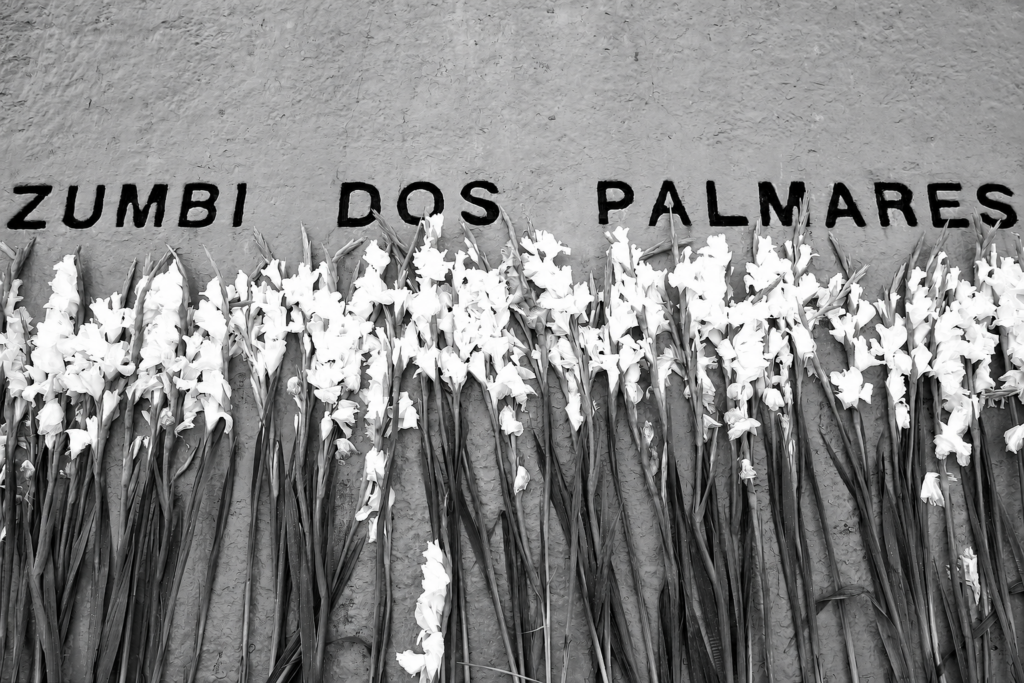
A Brazilian historian once wrote that the soul of Brazil is riddled with colours. We are a society defined by unions, rhythms, arts, sports, aromas, culinary and mixed literatures.
But, in its depths, Brazil is a country shaped by Africa. Among the many peoples and cultures that reached our shores across the centuries it is the African inheritance that most intensely defines the Brazilian soul. It lives in our music and our faith, in the language we speak and the food at our tables.
The origin of that inheritance is a wound — the enslavement of millions of African men, women and children, whose forced labor built the country and whose descendants still carry the marks of that history. To recognise how deeply African Brazil is means holding both truths at once: the richness and the pain.
It reaches far beyond Brazil. The modern world itself was shaped by its contact and exchange with Africa. Howard W. French, in Born in Blackness, argues that modernity was born of the encounter between Africa and Europe — that African labor and African gold underwrote the making of the modern world.
The graver injury, in his telling, is not only that Africa was plundered and discarded, but that it was so badly misread that the continent many still picture today — reduced to crisis and instability — is almost unrecognisable against its own history. Correcting that distortion is itself a form of repair.
From history to responsibility
It is against this background that every 23 August the world pauses to remember. The date, designated by UNESCO, recalls the night of 22 to 23 August 1791 when enslaved people in Saint Domingue — today Haiti — rose against those who claimed to own them and set in motion the unravelling of the transatlantic slave trade.
UNESCO chose it so the tragedy would be "inscribed in the memory of all peoples" — not a day of mourning, but one built around an act of self liberation, the moment the enslaved became authors of their own destiny.
I write these lines from Brussels, at once a European and a diplomatic capital. A few steps from the European Parliament, the House of European History poses, in the very title of its current exhibition, a single question — Postcolonial? — that refuses the comfort of the past tense. Europe cannot afford the luxury of being absent from this reckoning, or from the search for answers.
This year carries weight: the Durban Declaration and Program of Action turns twenty-five. In some quarters it has become fashionable to demonize that conference held in South Africa — almost always for the wrong reasons, reducing a broad and carefully negotiated anti-racist agenda to the controversies that swirled around it. That is a mistake. In 2001, the world was still breathing the last air of the great UN social conferences of the 1990s, when multilateral diplomacy seemed able to widen consensus and project universal agendas.
The climate today is different: politics is more fragmented, nationalisms more assertive, migration is securitised, racism is widespread, disinformation corrodes public trust, and the vocabulary of human rights is often cast by its adversaries as moral intrusion or identity imposition.
From memory to action
Reaffirming Durban now demands lucidity. The task of global diplomacy is to renew its political force without diluting its content, to preserve its memory without sacralizing its formulas. This is why our great anti-racist landmarks serve us best not as monuments but as methods. A monument can be revered without being read, celebrated without consequence.
A method asks harder questions: which inequalities persist, which commitments were toasted and never implemented, which groups were heard only symbolically. Durban is not a relic to be defended but a set of tools for reading the present.
The deepest obstacle has never been language but will. I learned to name that gap during my years on the United Nations Committee on the Elimination of Racial Discrimination (CERD), where state after state would arrive with eloquent condemnations of racism in the abstract, then hesitate before the concrete: action plans with budgets, targets, disaggregated data, real civil-society participation. Condemning racism in the abstract is easy; it grows uncomfortable the moment it means redistributing power, reforming institutions or revising a flattering national story.
One of CERD's most important achievements was characterising racial discrimination as a phenomenon present in all societies worldwide, without exception. There is no atavistic racism inherent in all human beings. Acts of racial discrimination are almost always motivated by specific political and economic projects.
Brazil long consoled itself with the myth of "racial democracy," speaking of harmony with more enthusiasm than evidence. Durban helped move the racial question out of the merely cultural realm and into the domain of rights, public policy and foreign affairs. Brazil's real advances in the fight against racism and the promotion of equality came when state and society abandoned the comfort zone of neutral gradualism and worked, imbued by a balanced sense of urgency, in permanent dialogue — never one without the other.
Reparative justice and the work ahead
The antidote to comfortable memory carries a name that frightens many: reparative justice. It is too often caricatured as an infinite invoice or a hereditary punishment. Understood properly, it is something else — historical truth, education, the opening of archives, the restitution of cultural objects taken during the colonial era, institutional reform and guarantees of non-repetition. Its central question is not only "how much is owed?" but "which structures must change so that a dignity that was denied can be restored?"
Racism is a structured social phenomenon. It adapts to each new instrument of power — algorithms, borders, selective migration, unequal exposure to climate change and environmental harm. Malleable and insidious, it can only be met by strategies that are articulated and cross cutting, with academia, the private sector and civil society alongside states, regional and international organisations. It has never been an easy political goal.
But difficulty is never an argument for cynicism, only for strategy. To remember the slave trade honestly is to refuse the tidy separation between a closed injustice and a supposedly neutral present. Memory that only consoles has failed its purpose. Memory that obliges — that turns remembrance into new, verifiable, shared paths toward justice — keeps faith with the dead by serving the living. That is what this 23 August asks of us all.
