
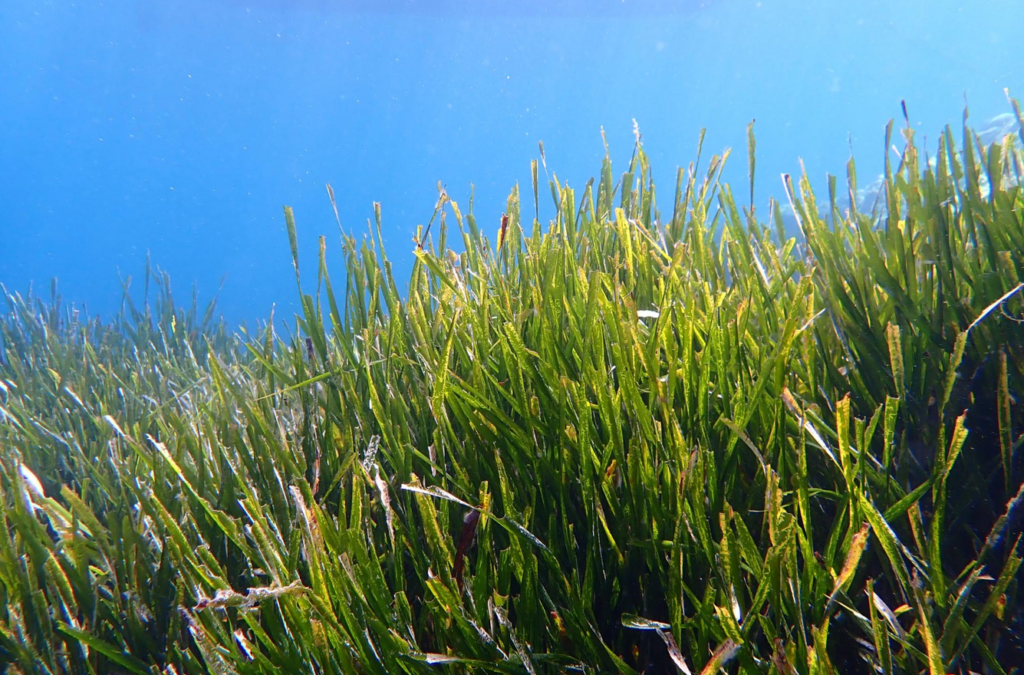
Seagrass meadows store an estimated 24 to 40 megatonnes of carbon in plant biomass worldwide, according to a European Commission environment news alert summarising a new peer-reviewed study.
Seagrass meadows are underwater flowering plants that grow densely in shallow coastal waters, including genera such as "Posidonia," "Zostera" and "Thalassia," the Commission summary said in a release on Friday.
They provide habitat for marine life and also help store carbon — the element that forms CO₂ when released.
The researchers behind the study said net primary productivity (NPP) — the amount of organic carbon plants absorb minus what they use for their own respiration — has received less attention than carbon stored in seabed soils.
They analysed a 2023 dataset on seagrass meadow structure, biomass and NPP drawn from a literature review covering studies from 1975 to 2020, and supplemented it with an additional review of studies containing original data.
The study estimated seagrass meadows fix 83 to 137 megatonnes of carbon annually through NPP, with large variation by area, bioregion and country.
The Mediterranean had the highest seagrass biomass carbon stock per hectare, followed by the Tropical Indo-Pacific and Atlantic, while NPP was highest in the Temperate Southern, North Pacific and North Atlantic East bioregions.
Biggest differences between species and countries
Carbon stored in seagrass biomass differed sharply between genera, with "Posidonia" holding about 50 times more carbon biomass than "Halophila," the study reported.
Long-lived and persistent seagrass genera such as "Posidonia," "Enhalus" and "Thalassia" were linked to higher biomass carbon stocks per hectare in places including the Mediterranean and Tropical Atlantic.
The study also estimated Australia accounts for 52% of global annual CO₂ emissions linked to seagrass loss, followed by Spain, Mexico, Italy and the United States.
In the Temperate North Atlantic East region, net seagrass losses were high but associated emissions were relatively low because the dominant seagrass types store less biomass carbon and cover a smaller extent than in other regions.
Emissions were described as negligible in the Temperate North Pacific and North Atlantic West bioregions because there was no net seagrass meadow loss there.
The researchers said carbon accounting should include biomass from persistent, long-lived seagrasses, while noting challenges in measuring organic carbon stocks because they vary widely between locations and change over time, according to the Commission’s Science for Environment Policy summary of the study published in "Nature Communications."
