
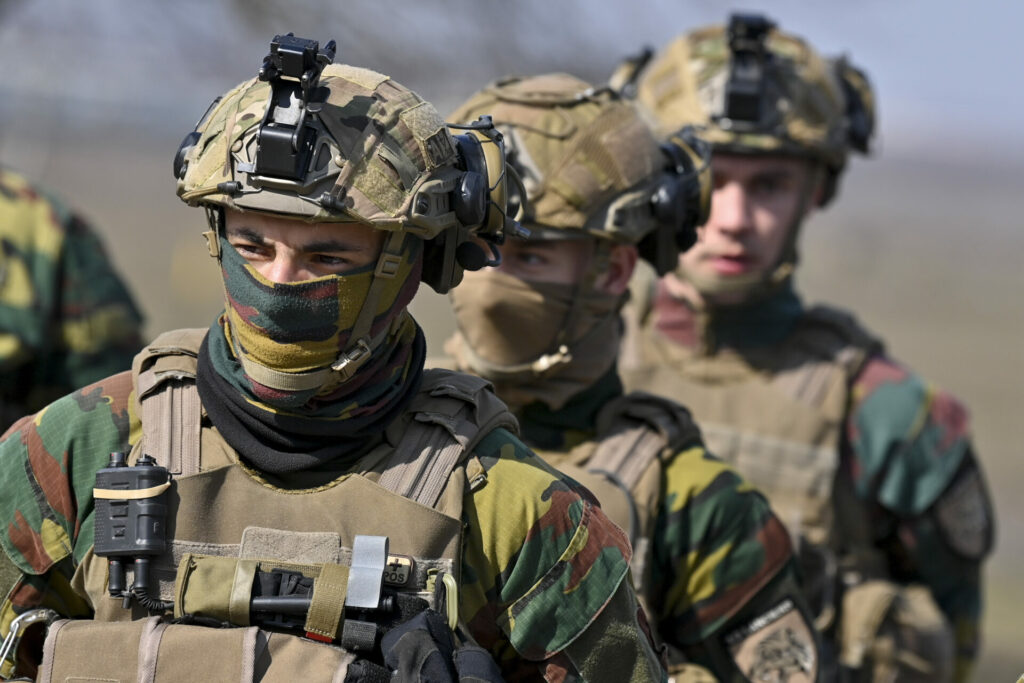
Belgium's voluntary military service officially starts today with 50 young people – aged between 18 and 25 years old – going off for training. Over the coming weeks, a further 450 recruits will follow.
It marks the beginning of a new concept in Belgium: it is not compulsory military service, but young people who voluntarily work full-time for the Ministry of Defence for one year. This strategy, the Belgian Army hopes, will attract more people.
"The year of military service begins. It is a wonderful social and educational project. One of the finest in decades, and one that enjoys broad public support," Defence Minister Theo Francken (N-VA) said on social media on Tuesday.
"Discipline, respect and rules are things that a great many people – both young and old – long for and call for," he added.
Recruitment tool
The first 50 young people will start with the navy. A further 75 young people will join the air force, and 375 the army in September. The Defence Ministry selected a total of 3,248 applications for the voluntary service year.
In essence, the operation is a recruitment tool, as Belgium's forces urgently need more people, both reservists and professional soldiers.
Therefore, the armed forces are banking on a section of these young recruits remaining reservists after their training year or will apply for one of the thousands of vacancies currently open within the ministry. According to the Strategic Vision, the Belgian Ministry of Defence aims to have 12,800 reservists by 2035, almost three times as many as today.
Belgium is not alone in experimenting with new ways of attracting recruits. In countries such as Germany, Sweden and Norway, a similar system has been in place for years.
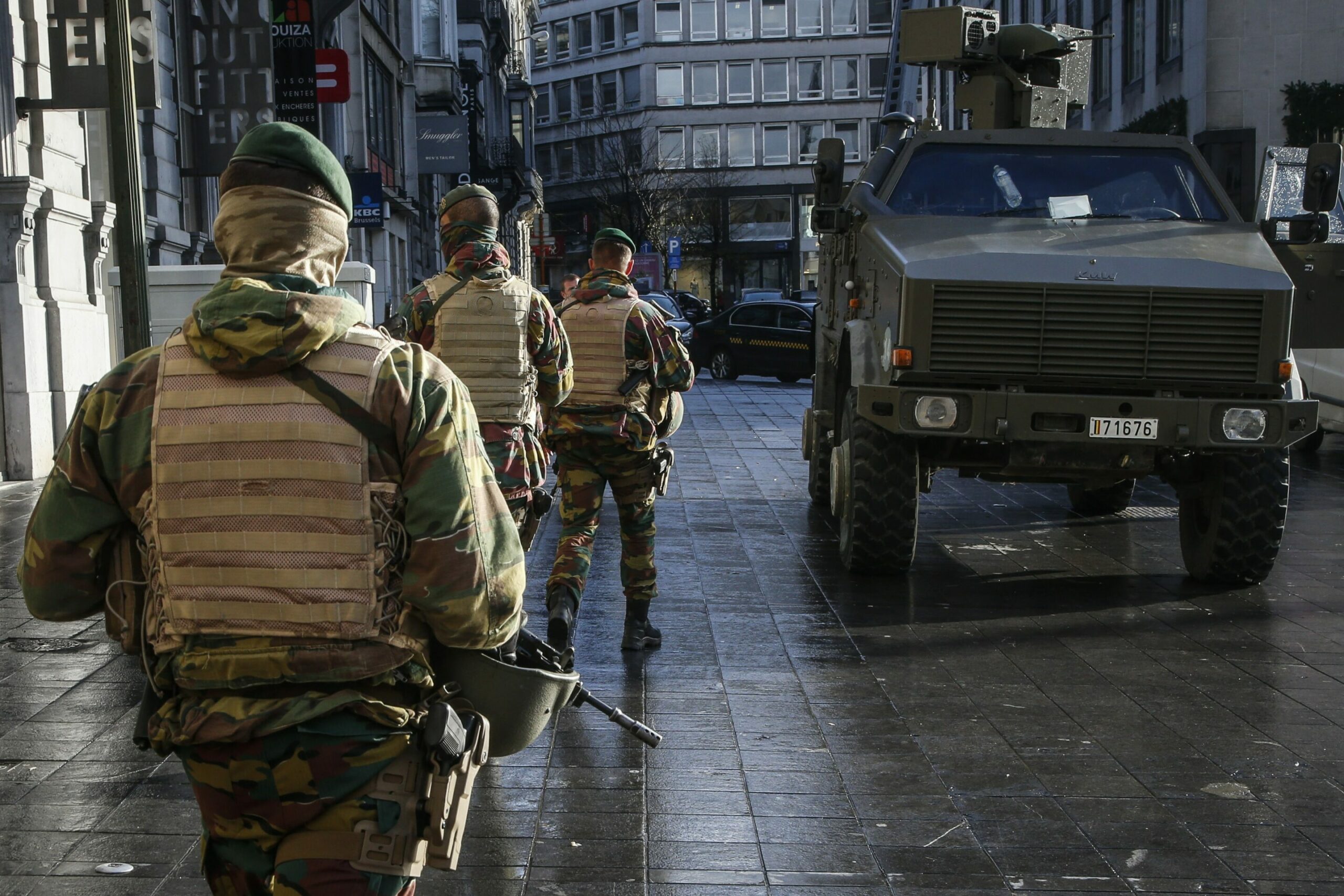
A military armoured vehicle and soldiers at Place Stephanie in Brussels, Wednesday 25 November 2015. Credit: Thierry Roge/Belga
In Germany, a voluntary military service scheme for young people has been in place since 2011, introduced following the suspension of compulsory military service (although the system has since evolved into a form of partial conscription).
Interest proved to be greater than initially expected: between July 2011 and early 2013, around 20,000 young people began at least six months’ service. After less than half a year, however, more than a quarter had already dropped out.
That problem is still evident today, as about a quarter of volunteers end their service prematurely. On the other hand, about a third of those who do complete their service are more likely to go on to a longer military career.
In 2017, Sweden also reintroduced compulsory (selective) military service for both men and women. Interestingly, Sweden does not actually require everyone to serve: young people are called up on a broad basis for selection, after which only a minority (8,000 young people per year) are selected for military training.
Examples of other countries
The Swedish selection process assesses cognitive skills, physical fitness, psychological traits and motivation, among other things. That last factor is important: someone who is suitable but has absolutely no desire to serve is traditionally not selected.
In Norway, which also has selective conscription like Sweden, only 10% of conscripts remain in the armed forces. Most of them were recruited as soldiers or specialists. Others, for example, went on to follow an officer training programme or an apprenticeship.
The Swedish and Norwegian examples suggest that the voluntary nature of the Belgian system may be an advantage: those who consciously choose to serve a year in the armed forces may be more motivated to remain reservists afterwards or to progress to an active military career.
Whether this actually works in practice is something Belgium will have to demonstrate in the coming years.
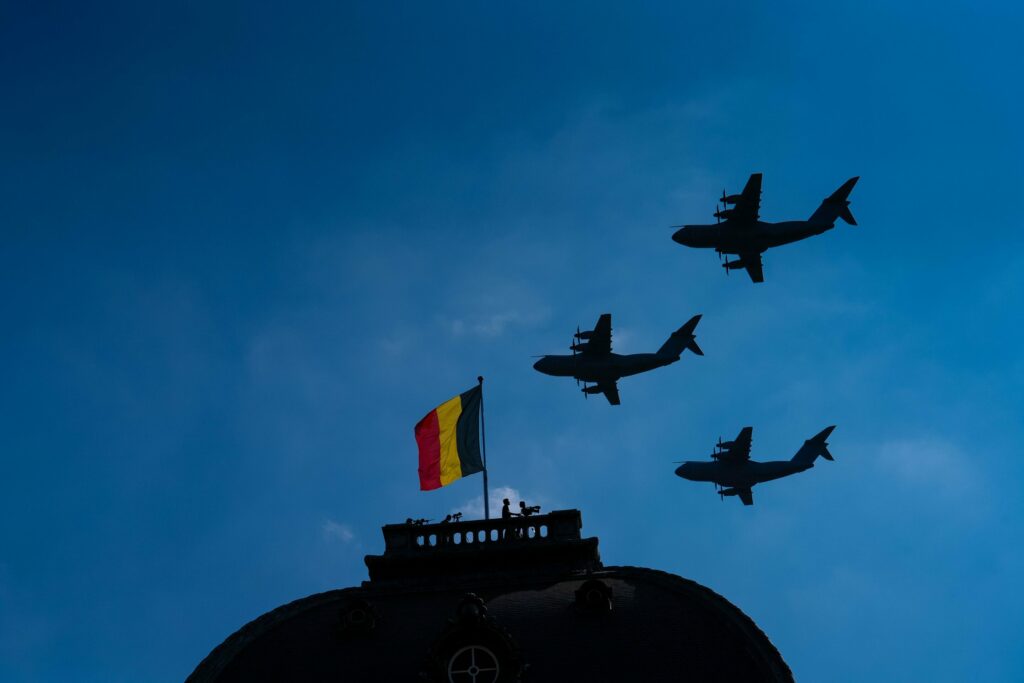
The military and civilian parade on the Belgian National Day, in Brussels, Tuesday 21 July 2026. Credit: Belga/Marius Burgelman
Therefore, the question is whether the investment in such a year of service is worth the return it ultimately yields for the Defence Ministry. It is still too early to have concrete figures on the cost, according to the Defence Ministry.
In a parliamentary response from 2026, the Defence Ministry stated that the first intake will join at the end of August and that the precise budgetary, personnel and logistical requirements are still being finalised.
It is clear, however, that wage costs account for only a portion of the total expenditure. Participants in the voluntary service year receive approximately €2,000 net per month. For 500 participants, this amounts to approximately €12 million in net wages on an annual basis, excluding employer contributions.
On top of this also come the costs for the ten-week basic military training, instructors and supervisors, uniforms and personal equipment, weapons and ammunition, food, accommodation, medical screening and support, VRT reports.
