
The rapid expansion of Atlantic bluefin tuna farming risks threatening the population of one of the ocean’s giants, according to a new report released by Compassion in World Farming (CIWF) on Tuesday.
The report warns that bluefin tuna farming in the Mediterranean Sea by mainly EU Member States causes animal suffering and biodiversity loss, as well as weakening global food security.
The International Union for Conservation of Nature (IUCN) classified the species as endangered in 2011. While populations are recovering, the conditions that led to the species becoming endangered could be back, the NGO says.
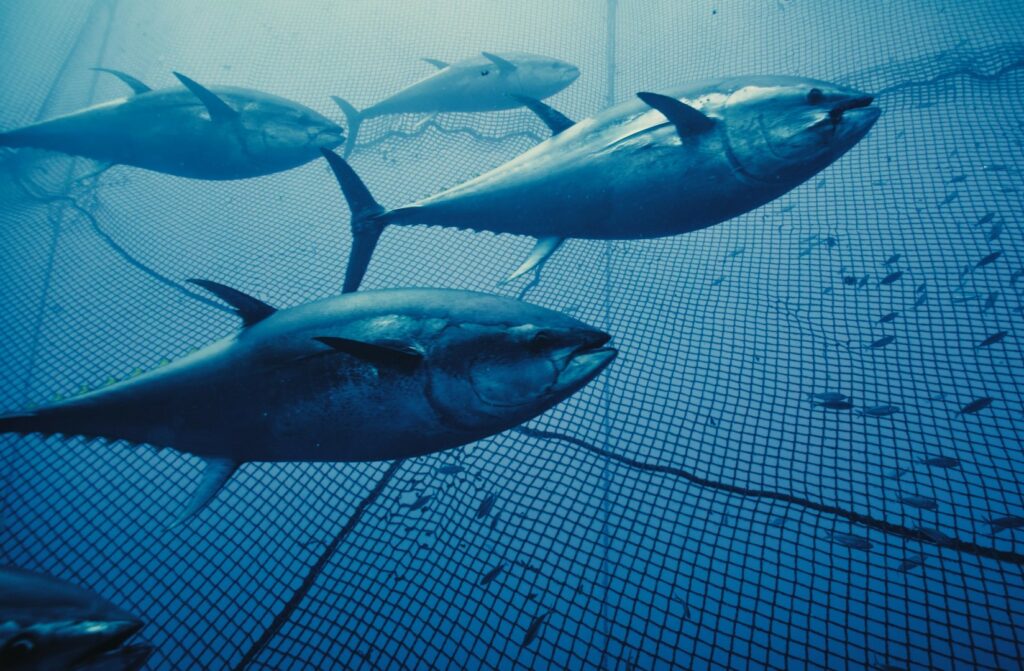
Captured live at a crucial point in their reproductive season, wild Atlantic bluefin tuna are dragged in large nets to farms where they are fattened and confined in sea cages. This puts unique pressure on wild populations. Their need to swim continuously just to breathe - over long distances in the wild - also causes them exceptional distress in confinement.
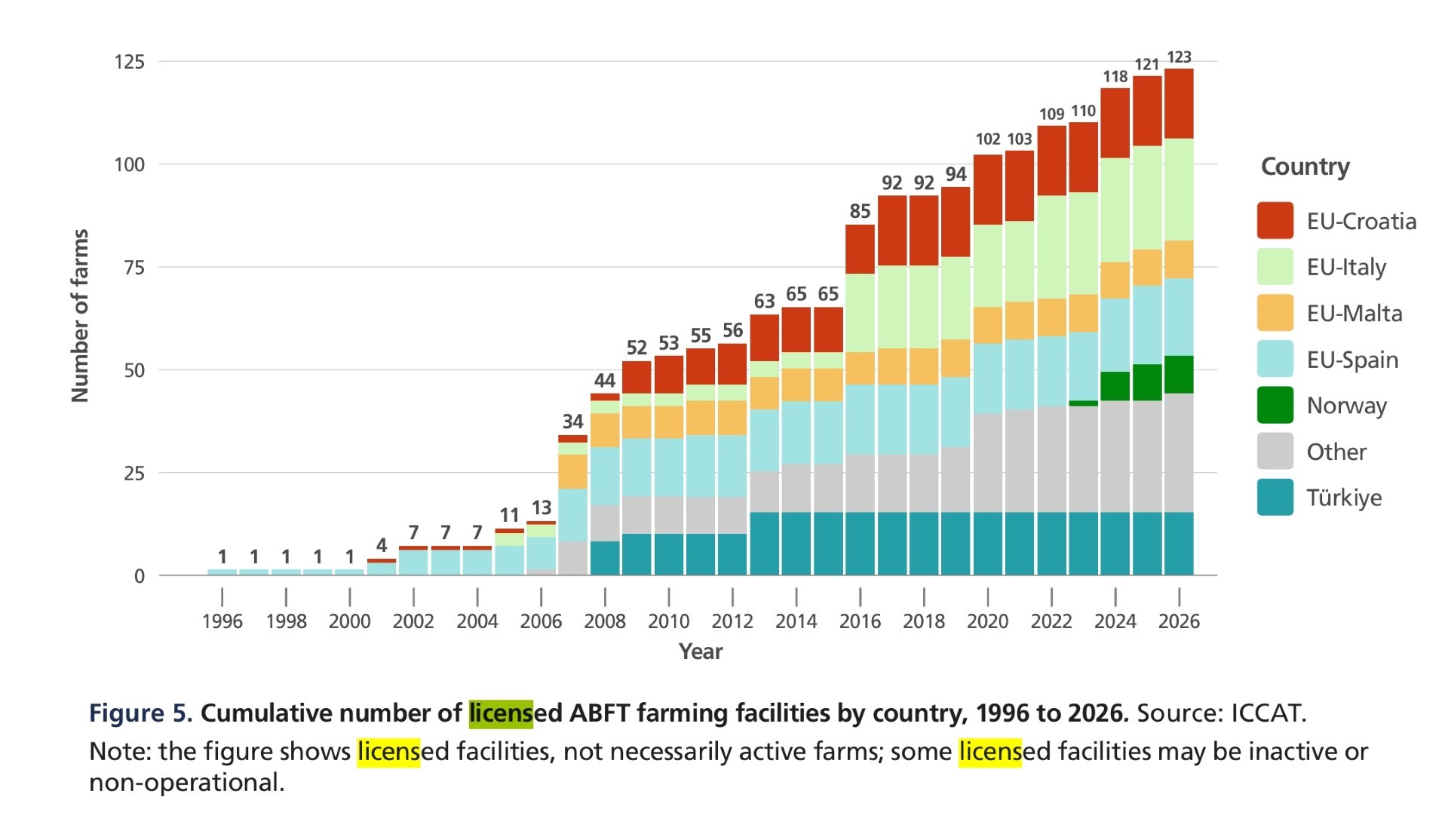
CIWF’s research reveals an industry ‘boom’, as the number of licensed Atlantic bluefin tuna farms has risen from 13 farms in 2006, to 123 in 2024. As a result, the number of farmed tuna has rocketed 19-fold from up to 55,000, to up to one million per year.
Threat to marine life
The report finds that one farmed tuna producing just 200kg of meat could consume up to 3,000kg of wild-caught fish – the equivalent of up to 33,000 sardines, or 166,000 anchovies. Beyond the sustainability concerns of feeding carnivorous species in farms, this system threatens marine life and vulnerable, low-income coastal communities in Africa.
Rather than improving food security, this industry weakens it, due to its colossal use of human edible fish as feed and it primarily being used to meet demand for luxury sushi and sashimi, mainly in Japan, the report finds. Atlantic bluefin tuna is not to be confused with the skipjack and yellowfin species, which are commonly canned.
Footage released by the NGO, shows the animals in close confinement, constantly swimming around cages, and suffering from skin erosion, fin injuries, and eye loss. This reinforces the scientific evidence that the animal welfare impacts are severe, and the species is unsuitable for farming, the NGO says.
“Atlantic bluefin tuna are incredible underwater giants. In the wild, they can swim 260 kilometers every day – so it is completely cruel and unnatural to confine them in sea cages,” commented Vinciane Patelou, Head of EU at Compassion in World Farming.
“This destructive and unsustainable industry takes wild tuna from our oceans to fatten them on huge quantities of wild-caught fish – mainly to supply luxury sushi and sashimi markets. For too long, governments have failed to regulate a sector which is driving environmental harm and severe animal suffering. They must act now to stop tuna farming and commit to keeping tuna wild.”
Need for regulation
Compassion in World Farming is calling for an immediate, international moratorium on new or expanded bluefin tuna farms, an urgent assessment of the species’ conservation status, improvements to industry transparency and monitoring, and animal welfare assessments to be required before new farm permits are granted.
The NGO is also asking the public to change the system by signing a petition calling for a ending tuna farming and keeping them wild. “Consumers have a powerful voice, but meaningful change requires government action, not simply leaving individuals to make better choices at the supermarket,” a spokesperson of CIWF told The Brussels Times.
Atlantic bluefin tuna is sold globally, but Japan is the largest market. Trade data show that the US and China are also significant markets, followed by South Korea, the UK and France.
The recent growth in licensed tuna farms has been primarily in Spain, Croatia, Italy, and Malta. National authorities authorise bluefin tuna farms and allocate farming capacity within the limits established under the ICCAT framework (International Commission for the Conservation of Atlantic Tunas).
ICCAT maintains the official register of authorised bluefin tuna farms, while the European Commission oversees implementation of EU legislation and receives the Member States’ annual farming management plans.
According to CIWF, the European Commission has an indirect regulatory role through the EU legal framework and the oversight of Member States’ farming plans. EU legislation limits Member States’ farming capacity in accordance with ICCAT rules, and farms must be included in the ICCAT record to operate.
During the Cyprus EU Presidency, the EU and Mediterranean countries agreed to a adopt a new MedFish4Ever Declaration in 2027 but bluefin tuna farming was reportedly not discussed. While aquaculture development was highlighted as a core pillar of the region's success and future, the new declaration was not expected to focus on single species.
