

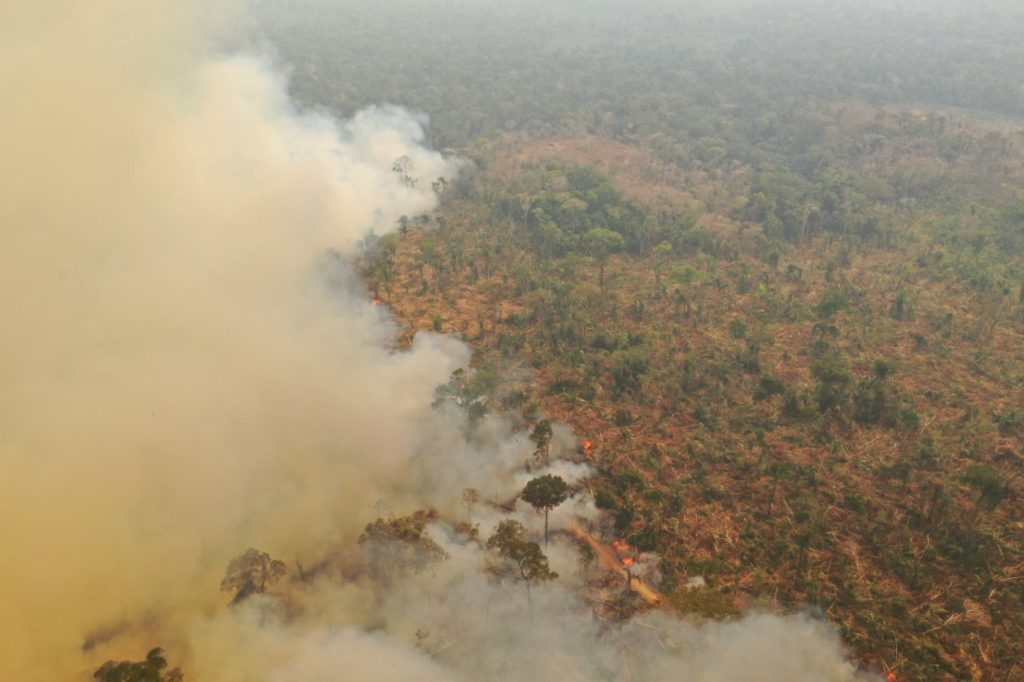
For every dollar spent on conserving nature, around $30 supports activities that degrade it.
Nowhere is that imbalance more consequential than in tropical forests, which regulate rainfall, stabilise the climate, store vast amounts of carbon and help reduce the risks of the increasingly extreme weather now affecting countries far beyond the tropics.
That contradiction is becoming increasingly costly. In 2025, the tropics lost 4.3 million hectares of primary forest, 46% more than a decade earlier. Even as some ecosystems like the Amazon edge closer to irreversible tipping points, public budgets for climate, conservation and restoration are tightening and traditional funding models are struggling to keep pace.
If tropical forests are to remain standing and continue to provide critical services to the global climate and economy, the world needs financing mechanisms capable of attracting capital at scale.
Nature needs a new kind of finance
The Tropical Forest Forever Facility (TFFF) is one of the most ambitious responses to that challenge. The TFFF starts from a simple proposition: tropical forests provide indispensable services to the global economy, yet there is no financial system that’s capable of paying for them at scale.
Officially launched in Belém during the UN Climate COP30, and hosted by the World Bank, it aims to reshape how the world finances standing forests, creating benefits both for tropical forest countries and for those investing in their protection. It seeks to align economic incentives with conservation outcomes, creating a long-term financial value proposition around standing forests.
Rather than relying on repeated grant replenishments, the TFFF is designed as a self-sustaining investment fund - sponsor countries invest capital with the expectation that it will be repaid with interest over time.
By blending capital from governments, philanthropies and institutional investors, the fund would borrow at low interest rates and invest in higher-yielding bonds. The returns would then be used to pay tropical forest countries and forest stewards for maintaining standing forests.
Built for scale
When fully capitalised, the TFFF would become the largest-ever financial vehicle for tropical forest conservation. Critically, it could also become the largest international source of direct forest finance for Indigenous Peoples, Afro-descendant peoples and local communities, with at least 20% of country payments intended to reach the people who have long protected and stewarded these forests.
For any new mechanism seeking to bring sovereign governments, tropical forest countries and institutional investors into a common global structure, the pace of the TFFF’s development – and the positive signals in the form of investments and a statement of support from major global asset managers – inspires confidence in those of us who believe in its potential as a game changer for nature finance.
Europe has an important role to play in ensuring the success of TFFF. What is urgently needed is for countries to join Brazil, Indonesia, Norway, France and Germany to invest in this game-changing mechanism and for more private investors to lend their support.
In an increasingly interconnected world, the economic consequences of tropical forest loss are not confined to forest countries themselves. The destruction of these forests increases the likelihood of the extreme heat, drought and fire conditions that governments are increasingly struggling to manage.
A case for resilience
Protecting them is not only an environmental objective but a strategic investment in resilience, and the risks of not doing so extend far beyond biodiversity loss. The collapse of critical ecosystems can undermine food systems, increase water scarcity and fuel geopolitical instability.
For the EU, supporting the TFFF would not mean starting from scratch. Europe is already seeking to mobilise public and private capital for climate resilience through Global Gateway and its sustainable finance instruments, while Team Europe initiatives are supporting forest protection and sustainable investment in regions, including the Amazon. The TFFF offers European governments and investors an opportunity to take this ambition to a bigger scale.
Simultaneously, efforts to halt deforestation need to be matched by measures that reduce the EU’s own impact on, and role in, global forest loss. The implementation of the EU Deforestation Regulation at the end of 2026 is a crucial part of that effort and should not be put into question. It will require key commodities placed on the EU market to be deforestation-free, helping address the demand that drives forest loss.
As governments gather in New York for the UN General Assembly and Climate Week NYC in September, the stage is set for governments to demonstrate that they understand this shift. More EU Member States should join Norway, Germany, France and Luxembourg in backing the TFFF, and move away from paying for climate failure to investing in climate resilience.
