
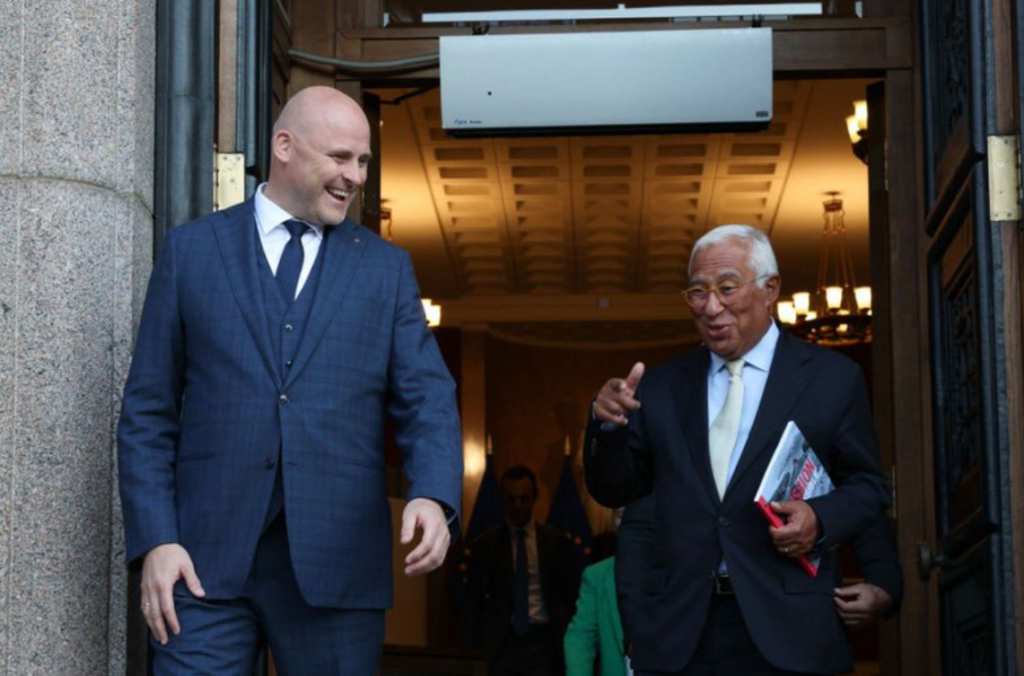
European Council President António Costa said the EU needed to agree its next long-term budget for 2028 — 2034 by the end of this year to avoid a funding gap from 2028 after meeting Latvia’s Prime Minister Andris Kulbergs in Riga.
Costa said the upcoming negotiations would cover a budget intended to support priorities including defence and security, competitiveness, innovation and “strategic resilience”, while continuing funding for agriculture and cohesion policies, which are designed to reduce economic and social disparities between regions, according to a release by the European Council.
He said the structure of the next budget would need to differ from previous ones because the EU must set priorities within “finite resources”, with most funding coming from contributions paid by member states.
New “own resources” — EU revenue streams separate from national contributions — would need to be part of any overall agreement to keep member state contributions “within reasonable limits.”
Costa said agreement was needed before the end of the year so funding for farmers, businesses, students, researchers and innovators was not interrupted in 2028, and he thanked Latvia for what he described as a constructive approach.
Security concerns on the EU’s eastern border
Costa said Latvia, on the EU’s eastern flank, faced security challenges including Russian “hybrid threats” and recent incidents involving drones and concerns about airspace security.
He declared that the EU needed to strengthen preparedness and border protection, and called for a “360-degree approach” to border security, arguing Europe’s borders would only be secure if all external borders were secure.
Costa also criticised the “instrumentalisation of migration” on the EU’s external borders, calling it unacceptable whether in Ceuta or in the Baltic region, and said it required a joint European response to support affected member states.
He thanked Latvia for its support for Ukraine and said the EU should work “harder and faster” with candidate countries — including the Western Balkans, Moldova and Ukraine — through what he described as a merit-based enlargement process.
