
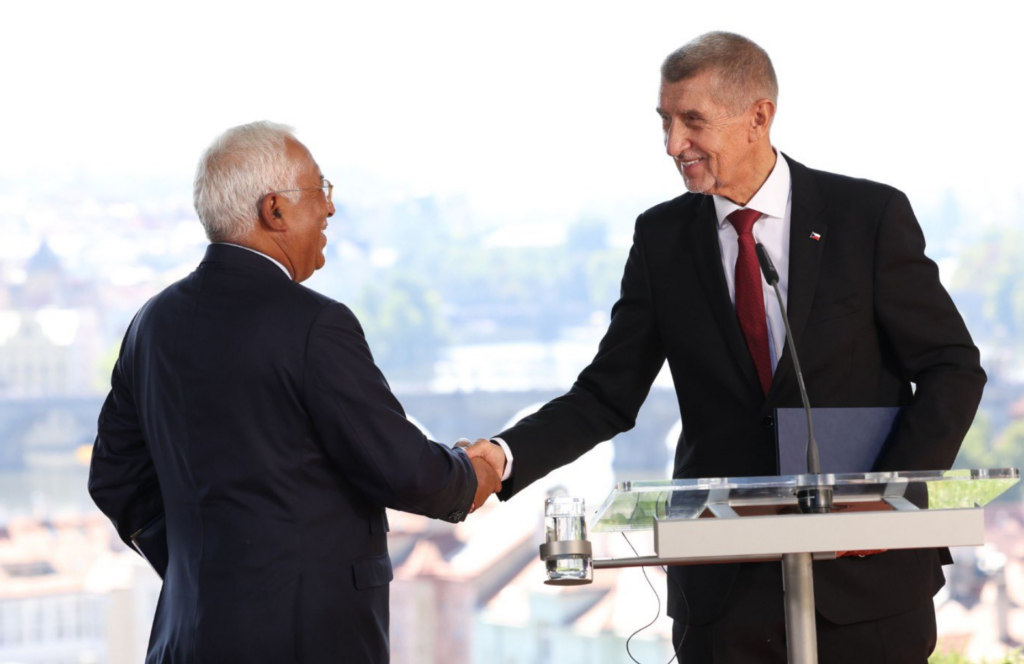
European Council President Antonio Costa said he wanted EU leaders to agree the bloc’s next long-term budget by the end of this year, after meeting Czech Prime Minister Andrej Babiš in Prague.
Costa said negotiations were reaching “a decisive moment” on the EU’s budget for 2028 to 2034, adding that the geopolitical situation had changed since the current spending plan was approved in 2020, according a statement by the European Council.
He said the EU needed to invest more in defence and security, competitiveness and innovation, and what he called “strategic resilience”, while maintaining funding pillars including cohesion policy and agricultural policy, which support regions and farmers.
He said the EU budget, like national budgets, had to work within “finite resources”, and noted that most EU spending is financed by national contributions from member states.
New “own resources” — EU-level revenue streams — would be “a crucial element” of the overall package, he said, adding that they would help reduce national contributions and support investment.
Costa said an agreement was needed by the end of the year to avoid “any interruption” in EU funding for projects and policies in 2028.
Energy prices and enlargement also discussed
Affordable energy was “fundamental” for Europe’s competitiveness, especially for industry, and the Czech Republic was “an industrial leader in Europe”, Costa said.
He added that the EU needed to accelerate work to reduce energy costs while continuing efforts on the clean transition and cutting emissions in a “technology-neutral” way — which he described as including nuclear power or renewables.
Costa also referred to the EU’s “One Europe, One Market” agenda, saying completing the single market was part of a “responsible and balanced approach” to strengthening security and protecting industry.
On EU enlargement, Costa said supporting Ukraine, Moldova and the Western Balkans in their “European paths” was an “investment” in Europe’s security and prosperity, and he welcomed what he described as the Czech Republic’s “constructive and coherent engagement”.
The process should be “fair, transparent and merit-based”, he added.
