
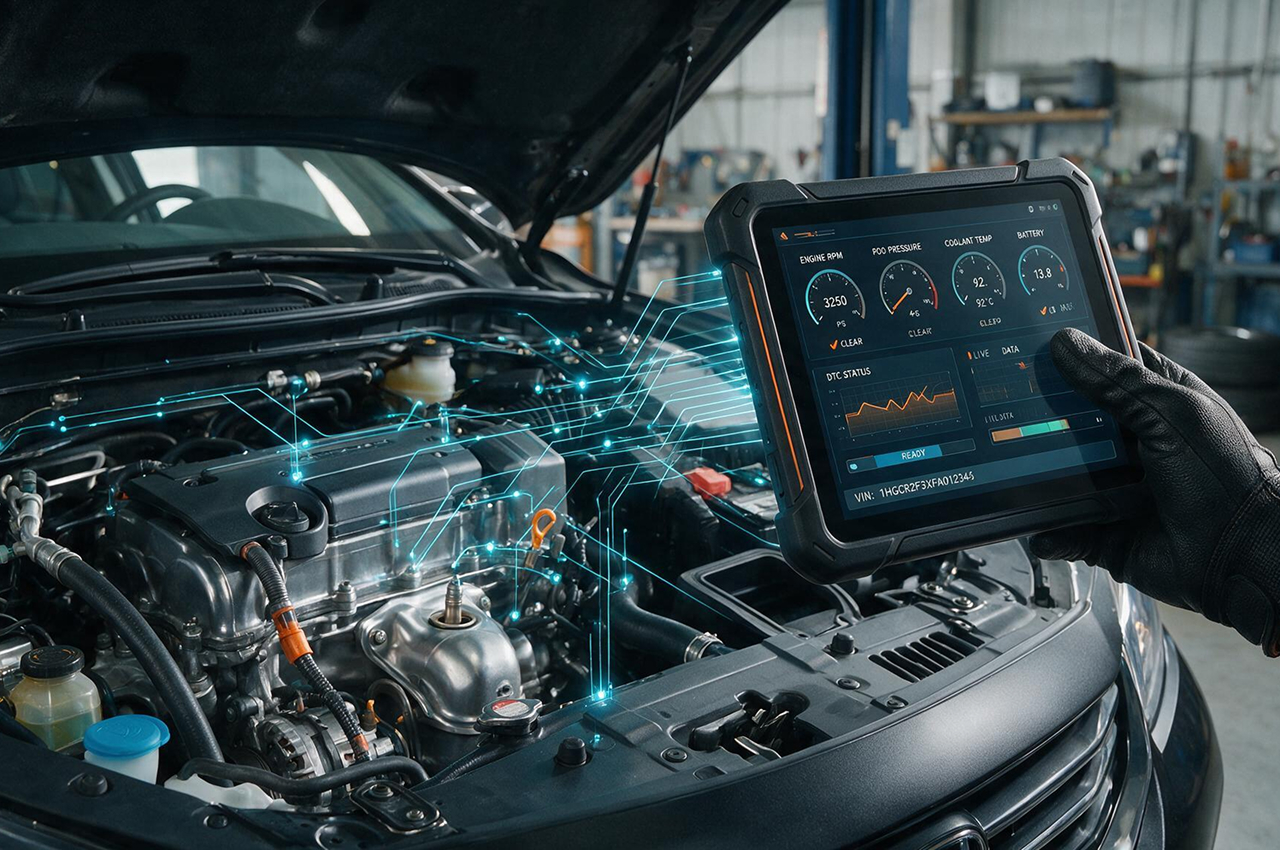
Across the continent, there are around 370 million vehicles on the road. They carry workers to their jobs, deliver goods to businesses, and connect communities from major cities to the most remote regions. Behind this daily reality lies a vast and often unnoticed ecosystem: the Automotive Aftermarket.
It is the system that ensures vehicles continue to function from the very moment they leave the factory until the end of their lifecycle — through repair, maintenance, replacement parts, technical services or insurance. And yet, despite its scale and importance, it remains largely underrepresented in public debates.
At a time when Europe is redefining its industrial strategy and mobility model, this lack of spotlight is no longer sustainable.
Europe’s competitiveness is built on mobility
Europe’s automotive industry has long been recognised as one of the continent’s success stories and a true cornerstone of our economy. Ensuring this sector remains competitive is one of the most important tasks for European policymakers. Yet, current policy discussions mostly focus on vehicle manufacturing. It’s time to take a more comprehensive approach. This starts with recognising that a competitive automotive sector depends on what happens throughout a vehicle’s entire lifecycle.
Europe’s vehicle fleet evolves gradually, over decades. Today, Europe’s average passenger cars are almost 13 years old and rely on regular servicing to remain safe, efficient, and roadworthy.
This is where the Automotive Aftermarket becomes indispensable.
Without it, the promise of mobility would not extend beyond the point of sale. Vehicles would quickly lose value, reliability, and safety. They would emit more pollutants and require more fuel. Supply chains would falter. Consumers would face higher costs and fewer choices. In other words, innovation would stall without the system that ensures continuity.

A decentralised network powering Europe’s economy
The Automotive Aftermarket is everywhere. It is made up of 900.000 enterprises/European businesses, the vast majority of which are small and medium-sized enterprises and 3.2 million local jobs. They bring together parts producers, parts distributors, workshops, roadside assistances, publishers of technical information, tools manufacturers, technical inspection centres and many more — all embedded in local economies across Europe. These businesses provide not only goods and services, but also jobs, skills, and economic activity in both urban and rural areas.
This decentralised structure is one of the sector’s greatest strengths.
It ensures that mobility services remain accessible across the continent, throughout major cities but also in remote regions where alternatives are limited. It supports territorial cohesion and empowers local entrepreneurship, making it a key contributor to Europe’s social and economic fabric.
At a time when the EU is seeking to strengthen its competitiveness while maintaining inclusiveness, this local dimension should not be underestimated.
Resilience through diversity and scale
Recent global disruptions — from the pandemic to geopolitical tensions — have highlighted vulnerabilities in supply chains. In this context, resilience has become a central concern for European policymakers.
The Automotive Aftermarket offers a practical example of resilience in action.
Its strength lies in its diversity: a complex network of product and service providers capable of adapting quickly to changing conditions. Components are sourced, stocked, and delivered through highly flexible systems designed to meet demand efficiently across a wide range of vehicles.
This ability to keep vehicles and road-based mobility running — from emergency services to logistics fleets — is not simply a technical function. It is a critical pillar of societal stability.
Sustainability starts with making things last
Europe's climate and environmental ambitions require a fundamental transformation of mobility. Achieving this goal is not only about developing new technologies; it is also about making better use of the resources already embedded in the vehicles on Europe's roads.
Extending vehicle lifespans through maintenance, repair, reuse, remanufacturing and recycling is one of the fastest and most effective ways to reduce environmental impact. Keeping vehicles and components in productive use for longer reduces demand for new raw materials, avoids unnecessary waste, and lowers the emissions associated with manufacturing new parts. These benefits are increasingly recognised in European initiatives on circular economy, vehicle design and end-of-life management.
The Automotive Aftermarket has been putting these principles into practice for decades. Circularity is not a future ambition here; it is an established business reality. Through repair, remanufacturing, refurbishment, parts reuse, reverse logistics, and component recovery, value is preserved rather than prematurely replaced. The Automotive Aftermarket is where this principle becomes tangible every day, turning sustainability from a policy objective into a practical reality for millions of European consumers and businesses.
Mobility must remain accessible
Mobility is not only an economic issue; it is also a social one. Most Europeans already spend 1€ out of 8 on mobility, and the use of their vehicle is the main budget line within their mobility budget – even before the purchasing price of new vehicles.
For millions of Europeans, particularly outside major metropolitan areas, vehicle-based mobility remains essential for work, education, and daily life. Limiting this access — whether through high costs or reduced availability of services — would have direct consequences for social cohesion and economic participation.
The Automotive Aftermarket plays a key role in keeping this mobility affordable.
By ensuring a wide range of competing parts and tools and repair and maintenance services, it helps keeping costs under control and preserves freedom of choice. What is more, a well-maintained vehicle contributes to road safety.
In a context of rising living expenses and economic uncertainty, this contribution is more relevant than ever.

Bringing the Aftermarket into Europe’s policy conversation
Despite its importance, the Automotive Aftermarket is still too often treated as a secondary element in policy discussions. This is precisely what the “We Drive EU” campaign seeks to change.
By bringing together stakeholders across the value chain, the initiative aims to highlight the sector’s role in shaping a mobility system that innovative, resilient, sustainable, and inclusive.
Europe’s automotive future will not only depend on the industrial capacities for new manufacturing of new vehicles, but also on how effectively the entire vehicle lifecycle is managed.
And in that lifecycle, the Automotive Aftermarket is not an afterthought - it is the system that keeps everything moving.
Promoted by the Automotive Coalition for Europe (ACE)
