
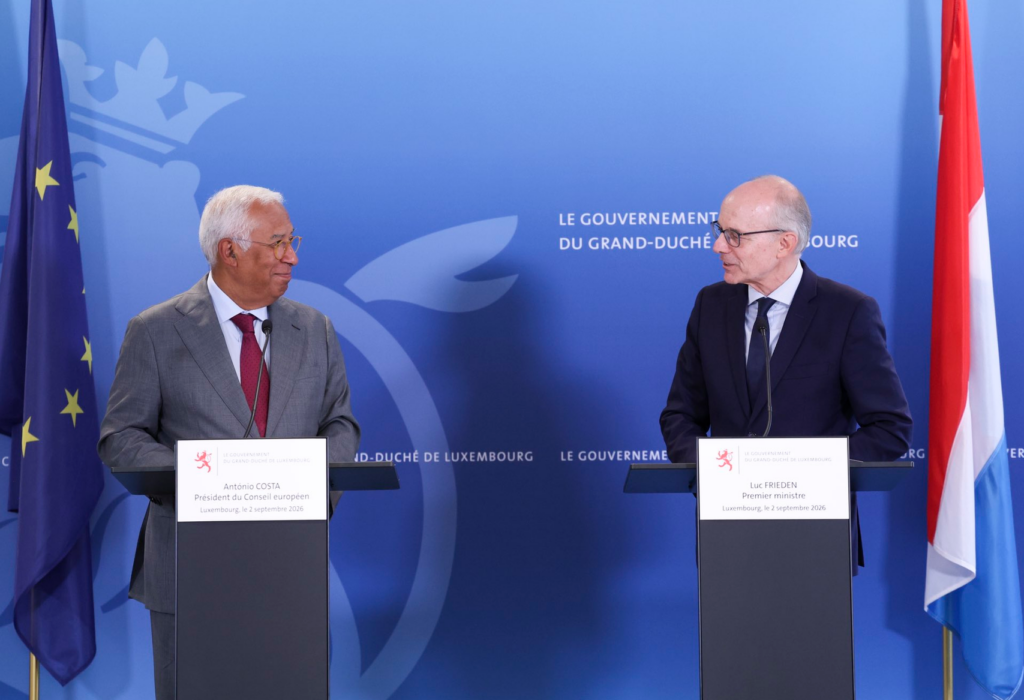
European Council President Antonio Costa said the EU wants to agree its next long-term budget — covering 2028 to 2034 — by the end of this year after meeting Luxembourg Prime Minister Luc Frieden in Luxembourg.
Costa said he was holding regular meetings with leaders in their national capitals to prepare for upcoming European Council summits, according to a statement from the European Council released n Wednesday.
He said the next budget should provide funding for “new priorities” including defence, security, competitiveness, research, innovation and “strategic resilience”, while also preserving spending on cohesion policy and agricultural policy.
Costa stated the next financial framework would have a “very different” structure and mechanism from the current EU budget, which he said was designed for a different context.
Funding and single market agenda
The EU budget is primarily funded by contributions from member states, and those contributions should remain “at a reasonable level”, Costa said.
He added that an “ambitious” approach to new EU “own resources” — a term used for revenues raised directly at EU level — was needed to help reduce national contributions while supporting new investment.
Costa also referred to a “One Europe, One Market” agenda, with objectives to be achieved by the end of 2027 to complete the EU single market, including cutting administrative burdens, improving the business environment and mobilising more private investment.
He said completing the Capital Markets Union — an EU plan to make it easier for investment to flow across member states — was “essential”, and highlighted Luxembourg’s role in Europe’s financial sector.
Costa also thanked Luxembourg for supporting Ukraine and said he and Frieden had travelled together on a train linking Poland and Kyiv last week before visiting Kyiv.
He declared that the EU remained committed to supporting Ukraine, Moldova and the Western Balkans on their path towards EU membership through a “merit-based process” rooted in the rule of law, while also considering changes needed for the EU to function effectively if it expands.
