

But this year’s summer break has taken place against a backdrop of continued geo-political tension and turbulence. Unprecedented in recent times, it is disrupting and threatening to overturn much of what we used to take for granted.
This summer has also brought home, once again, that all is not well when it comes to our climate. Record-breaking temperatures. Dried-out rivers. And a direct impact on people, animals and agricultural production.
As we return, it is right that Europe takes a good, hard look at where we are and what we need to do to adapt and mitigate the effects.
Strengthening Europe’s industrial base, increasing our climate and economic resilience, securing supply chains and protecting strategic interests are prioritised, as they should be. But the answer to how we achieve them requires more nuance than the current debate sometimes allows. This is certainly true for the spirits sector. Ours is a European success story which is deeply rooted in the continent's agriculture system, our culture and heritage, our communities, and our tourism and hospitality.
Taken together, our sector supports 1.2 million jobs across the EU in all corners of our continent with many of them in rural communities, small towns and local businesses where distilleries, farms, cafés, bars and restaurants are an important part of the economic and social fabric.
Indeed, spirits have long been part of that social fabric: enjoyed responsibly, shared in moderation and closely connected to many of the important moments in people’s lives.
We take this responsibility extremely seriously and are deeply engaged in ensuring that enjoyment and responsibility and moderation go well together. The future for our sector depends on this.
The same is true when it comes to sustainability. Ours is a sector deeply dependent on the land. This is where our farmers grow the high-quality raw materials we need to produce our spirits. It’s why we work closely with partners up to and beyond the farm gate, right across the agri-food value chain, to help ensure the environmental, social and economic sustainability of our sector.
In other words, we are an old, well-established, sector, which is part of Europe’s long heritage, but that also continues to support and create significant jobs and growth. We’re here to stay, but to do so successfully, we cannot stand still.
The regulatory and political choices Europe makes in the months and years ahead will help determine whether sectors such as ours can continue to invest, innovate and contribute to Europe's future.
Competitiveness is high on the European agenda. We feed right into it. European spirits are valuable exports - true ambassadors for Europe's agri-food heritage, craftsmanship and culture. More than 55% of EU spirits exports by value are already destined for markets outside the EU, carrying with them the essence of what it is to be European. And the good news is that there is potential for much more across both established and new, high-growth markets around the world.
Most crucially, for European spirits producers, the future prosperity of the EU does not lie in closing doors to the rest of the world. Rather, it lies in being more strategic about which doors we open, and how. Because open doors, and thus open markets, are a condition for growth, resilience and continued investment in Europe. International markets are fundamental to the sustained success of our member companies, their businesses and the value chains that sit behind them.
That is why we encourage Europe to continue to look outwards. And to create a truly enabling framework - one that equips European companies with the right conditions to invest, innovate, export and compete successfully around the world.
There is an urgency about this: many of our sector’s companies, big and small, expressed concern in our recent survey about whether the EU can provide a regulatory, business and trading environment that enables our sector to remain competitive in Europe and globally.
Most of the 50 companies that responded to our survey said that in the future, regulation must be simpler, better designed and faster to implement. Rules need to be coherent, predictable and proportionate, particularly for the many small and medium-sized companies that make up our sector as well as being woven into the fabric of the wider of the European economy.
For them, it also means building strong relationships across a broad range of partner countries and markets: securing long-term access to historically strong markets like the U.S. and China as well as building stronger ties and ambitious trade agreements with potential high-growth markets like India and others across South-East Asia.
At a time when Europe is asking how to strengthen its economic security, competitiveness and global influence, it is key to recognise and support the businesses and sectors that are already delivering, so we can continue to do so. Ours is one of them.
Europe is our home, but the world is our market. And Europe's future prosperity depends on ensuring that we can continue to thrive in both.
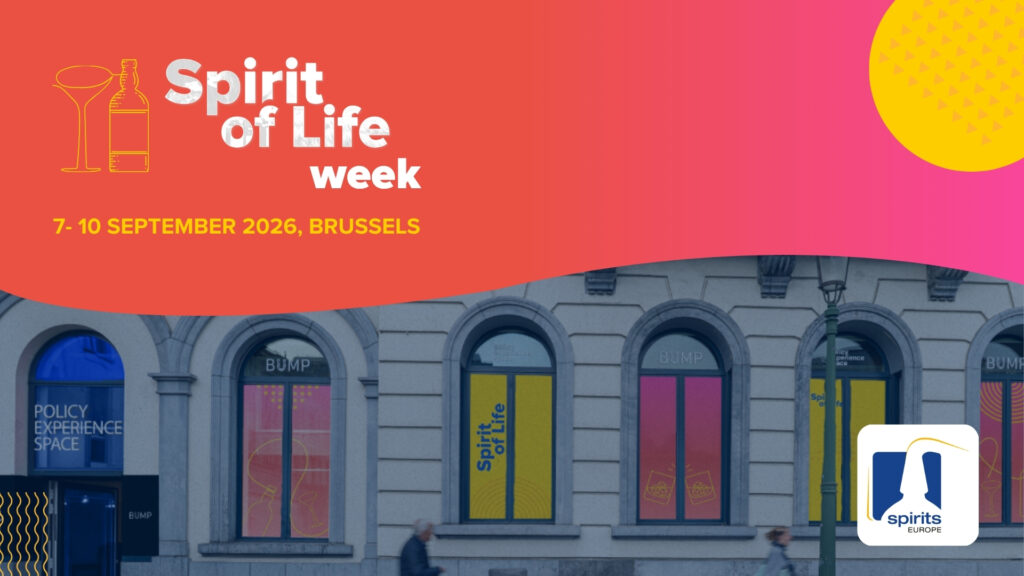
To discuss and exchange on the spirit sector´s role in doing so, we are kicking off our “Spirit of Life” campaign in Brussels this week. Only by working together can we ensure a sustainable Europe of tomorrow.
By Mark Titterington, Director General, spiritsEUROPE
