
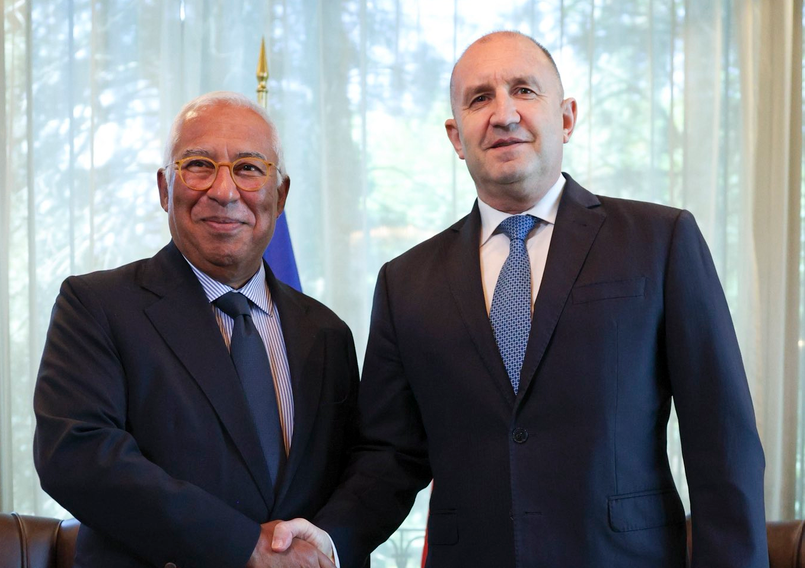
European Council President Antonio Costa said the European Union must agree its next long-term budget by the end of 2026, during talks in Sofia with Bulgarian Prime Minister Rumen Radev.
Costa declared that meetings in EU capitals were part of preparations for upcoming European Council work, and noted that Bulgaria joined the euro in 2026, a year after becoming a full member of the Schengen border-free area, according to his statement released by the Council on Thursday.
He said the EU’s next long-term budget — covering 2028 to 2034 — needs to provide funding for priorities including defence and security, competitiveness, innovation and “strategic resilience”, while continuing to support agriculture and regional development policies.
Costa stated the budget would have a “completely new architecture” compared with the current plan agreed in 2020, and argued that new EU revenue streams, known as “own resources”, would be crucial because most EU funding comes from national contributions.
Energy prices and EU enlargement
Costa said affordable energy prices were needed for citizens and industry, and called for faster work to reduce energy costs by strengthening market integration and interconnections between EU countries, adding that Bulgaria could play a “decisive and strategic role” in that effort.
He also stressed that EU security was linked to enlargement, stating that Ukraine, Moldova and the Western Balkans “belong inside” the EU, with each country progressing on its own merits and being treated equally.
Costa said candidate countries must carry out reforms and respect previous commitments, while the EU should engage in constructive dialogue and recognise progress when it is made.
On Ukraine, Costa said the EU’s determination to support the country “as it defends itself and works towards a just and lasting peace” had not wavered, and described Russia as engaging in hostile actions beyond Ukraine, including drones at borders, cyber-attacks, disruption of critical infrastructure and attempts to undermine democracies.
He emphasised that it was time for Russia to stop the war, agree a ceasefire and open peace negotiations, and that the EU would intensify pressure on Russia until it ends the killing and shows a genuine commitment to peace.
