
It begins with what looks like an impossible trick.
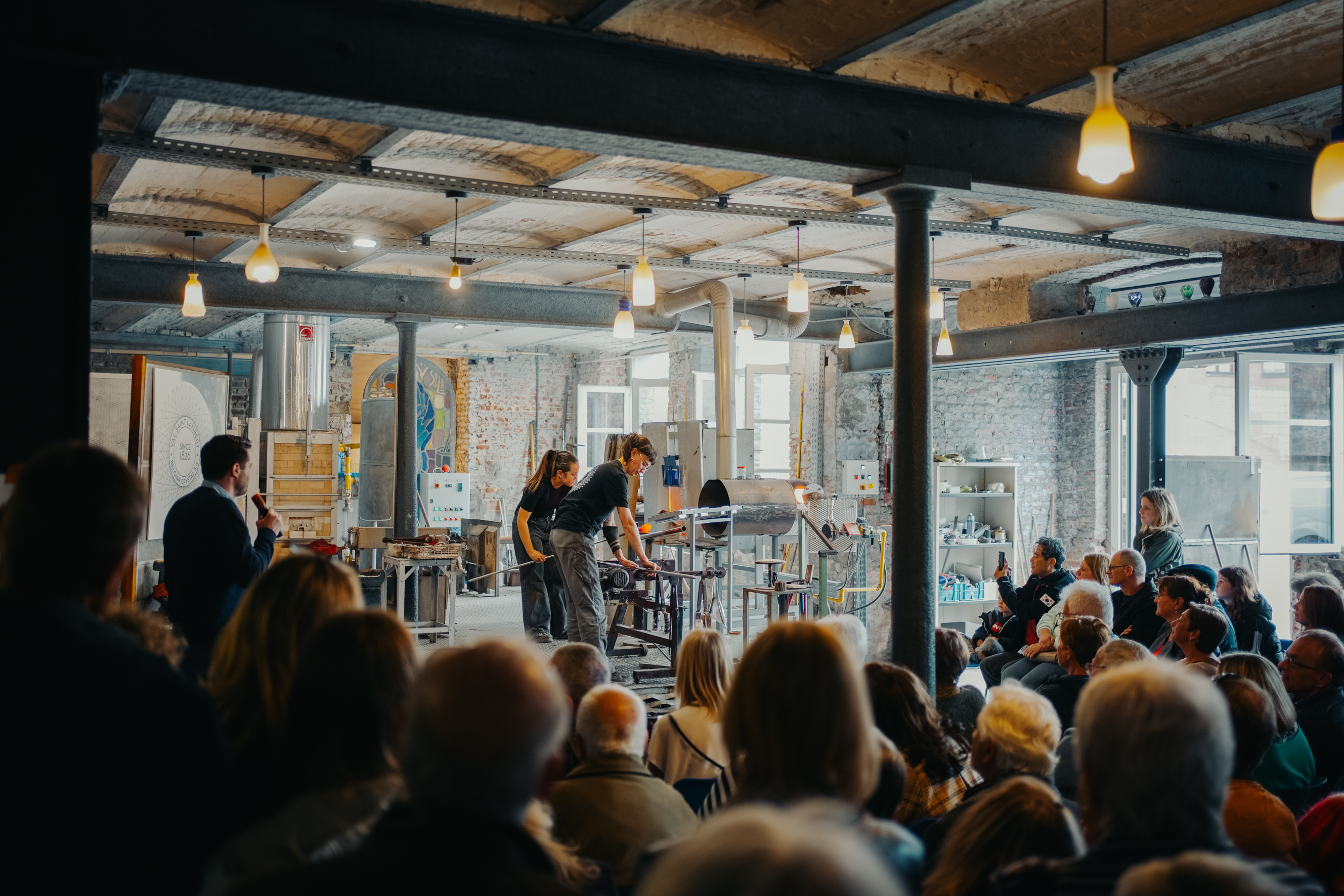
At the end of a long metal blowpipe hangs a glowing blob of molten crystal, orange at its core and almost liquid enough to drip onto the workshop floor. One young artisan twirls the pipe while another waits beside an open mould. They barely speak. A quick puff of breath. A precise twist of the wrists. Another visit to the furnace. Moments later, what had resembled a lump of lava has become the beginnings of an elegant vase.
Watching the demonstration at the Val Saint Lambert Museum in Seraing, it is difficult to decide which is more impressive: the speed, the choreography or the sheer confidence of two glassblowers who make an extraordinarily difficult process look almost effortless.
The two are still in their twenties. They are apprentices, learning a craft that takes years to master. Around them stands the legacy of a company celebrating its celebrating its 200th anniversary this year – four years older than Belgium itself.
Val Saint Lambert blends Belgian innovation, artistry and enterprise in one endeavour: creating sparkling, elegant crystalware. Yet the workforce that once numbered almost 5,000 has dwindled to just 15, each carrying some of the responsibility for ensuring that two centuries of accumulated knowledge do not disappear.
No fewer than four exhibitions are being held across Belgium to mark the bicentenary.
The Design Museum Brussels has Val Saint-Lambert & Design; the Charleroi Museum of Fine Arts, Art Déco and modernism at Val Saint-Lambert; and Liège’s Grand Curtius Museum features the company in its exhibition, Japonism and Art Nouveau.
At the company’s own museum in Seraing, housed in the former abbey where Val Saint Lambert was born, Exposition Cristal Vivant does more than display magnificent crystal. It explains how chemistry became beauty, engineering became art, and an industrial giant became one of Belgium’s most enduring symbols of craftsmanship.
The museum begins not with crystal, but with glass itself.
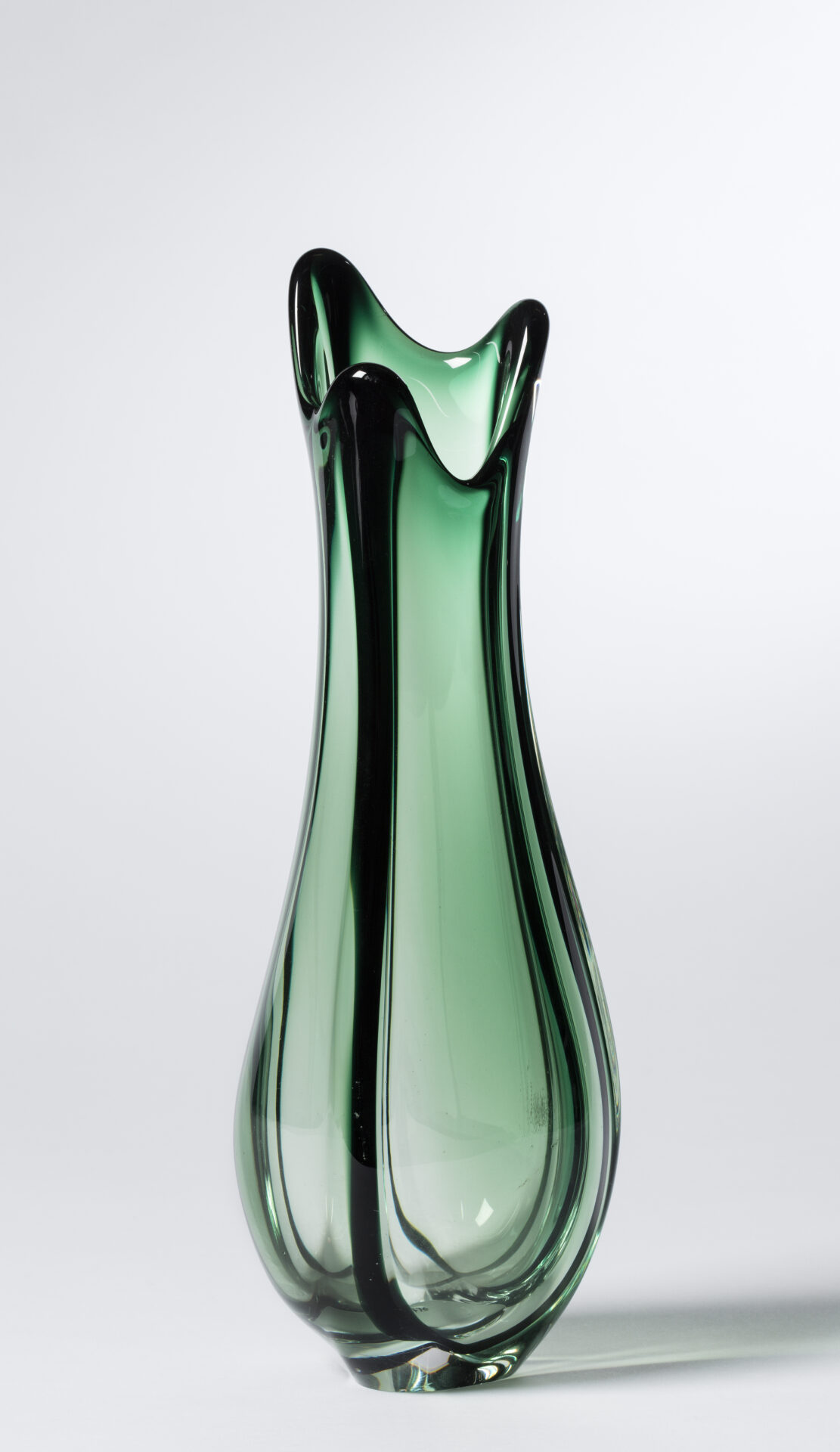
Vase de René Delvenne, 1958, cristal clair. Credit: IRPA
Visitors are taken through four millennia of experimentation, beginning with tiny Mesopotamian glass beads before the revolutionary invention of glassblowing transformed what craftsmen could create. Medieval stained glass followed, coloured not by paint but by minerals added directly to molten glass. Scientists, astronomers and doctors all pushed glassmaking forward, demanding better lenses, stronger materials and greater optical precision.
Only then does the story reach crystal.
The distinction sounds deceptively simple. Add lead to glass and something extraordinary happens. The material becomes denser, heavier and, above all, capable of refracting and reflecting light with exceptional brilliance. Every engraved facet catches the light differently, producing a sparkle that ordinary glass can never quite match. It is a piece of chemistry that transformed an everyday material into a luxury one.
Standing before a display explaining the process, it is hard not to marvel at the trial and error behind the discovery. Someone, centuries ago, decided to experiment by adding lead to molten glass. Whether through genius or accident, the consequences still shimmer today.
The proportion of lead varies between manufacturers, including France’s Baccarat and Ireland’s Waterford; Val Saint Lambert fixes it at 24%.
My guide smiles.
“The expensive part isn’t the material,” she explains. “It’s the craftsmanship.”
It is an observation that quietly explains the entire history of Val Saint Lambert.
The company was founded in 1826 by François Kemlin and Auguste Lelièvre, who left the illustrious Vonêche crystalworks to set up a new factory in the remains of a former Cistercian abbey overlooking the Meuse. The location was inspired. Coal lay nearby to fuel the furnaces. The river connected the works to European markets. Later, Belgium’s rapidly expanding railway network would help transform the factory into an export powerhouse.
The museum brings this world to life.
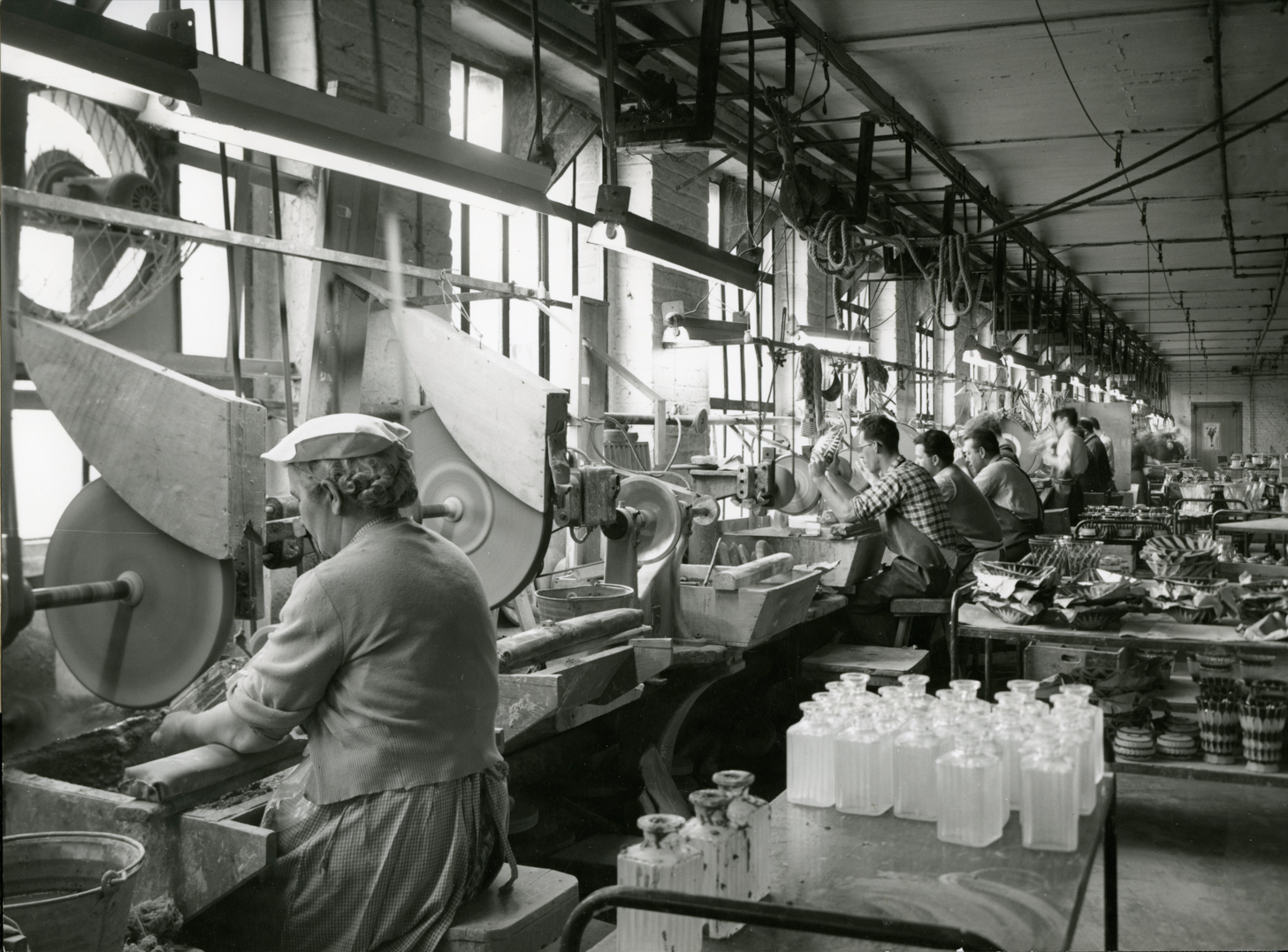
Archive image. Credit: VSL
A recreated workers’ sitting room evokes the lives of families whose cupboards often contained the company’s own crystal. A vast map shows what was effectively a self-contained town. Workers lived on site. There was housing, a bakery, butcher, football field, washhouse, clinic and shops. At its height, Val Saint Lambert was not simply a factory. It was a community.
The numbers are almost impossible to comprehend today.
Before the First World War, around 5,000 people worked here. The factory produced approximately 120,000 pieces every day – almost 50 million a year – with around 90% destined for export across Europe and far beyond. The arrival of the railways proved transformative, allowing barrels of straw-packed crystal to leave Seraing for ports and markets around the globe.
That international ambition was matched by relentless technical innovation.
Steam engines modernised production. Furnaces became more sophisticated. Workshops were electrified. The company pioneered new cutting techniques and increasingly complex coloured crystal, while its designers continually tested the limits of what molten crystal could become. Throughout the late 19th century and into the 20th, Val Saint Lambert established itself as one of Europe’s great luxury manufacturers, exhibiting spectacular works at World’s Fairs and becoming synonymous with Belgian excellence.
Engineering, however, never stood still.
One of the museum’s most fascinating displays examines the humble mould.
Thousands survive beneath the site, many carved from pear wood. The choice was anything but accidental. Pear wood resisted heat and expansion while remaining relatively inexpensive, making it ideal for limited production runs or bespoke commissions. Metal moulds, by contrast, were reserved for mass production: more costly to manufacture, but able to withstand repeated use. More than 20 specialist craftsmen once worked solely on making moulds, a reminder that even the tools behind the crystal demanded extraordinary expertise.
Back in the workshop, those principles come alive.
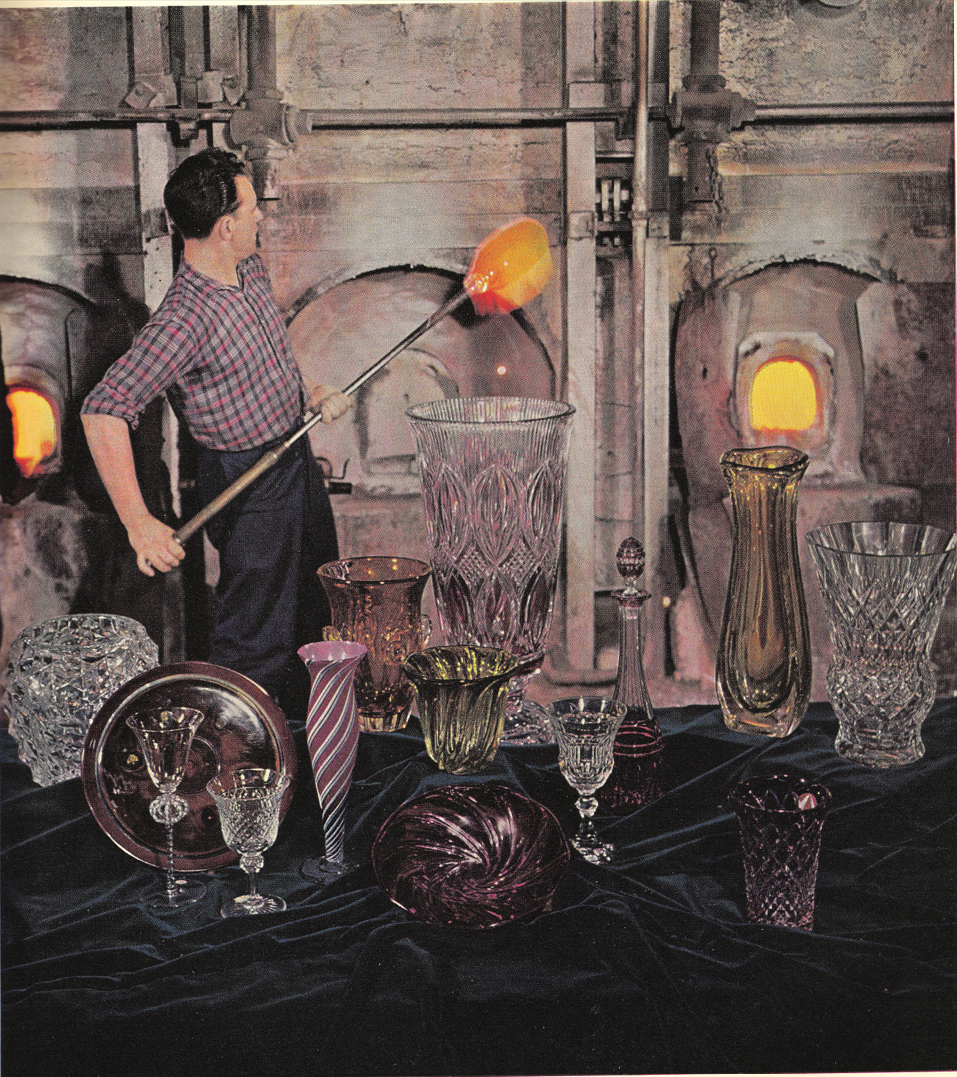
Page de Garde catalogue VSL 1962. Credit: VSL
The apprentices prepare the mould by constantly wetting it. The water instantly turns to steam when the molten crystal enters, creating a thin cushion that allows the crystal to expand smoothly rather than sticking to the mould. It is a tiny piece of engineering hidden inside every finished object.
Watching the process is hypnotic.
One apprentice gathers another glowing layer of crystal from the furnace while the other gently blows through the pipe, trapping air with a thumb to create the first bubble that will eventually define the vessel’s shape. Silver oxide is added to create decorative effects whose final colours are almost impossible for an outsider to predict while the crystal is still glowing orange.
The artisans explain that blowing itself is not necessarily the hardest part. Consistency is. Every breath must be controlled. Every movement has to anticipate how the material will respond. Learning those instincts can take five years or more, and even then, master glassmakers insist they never truly stop learning.
That spirit of experimentation has sustained Val Saint Lambert through repeated reinventions.
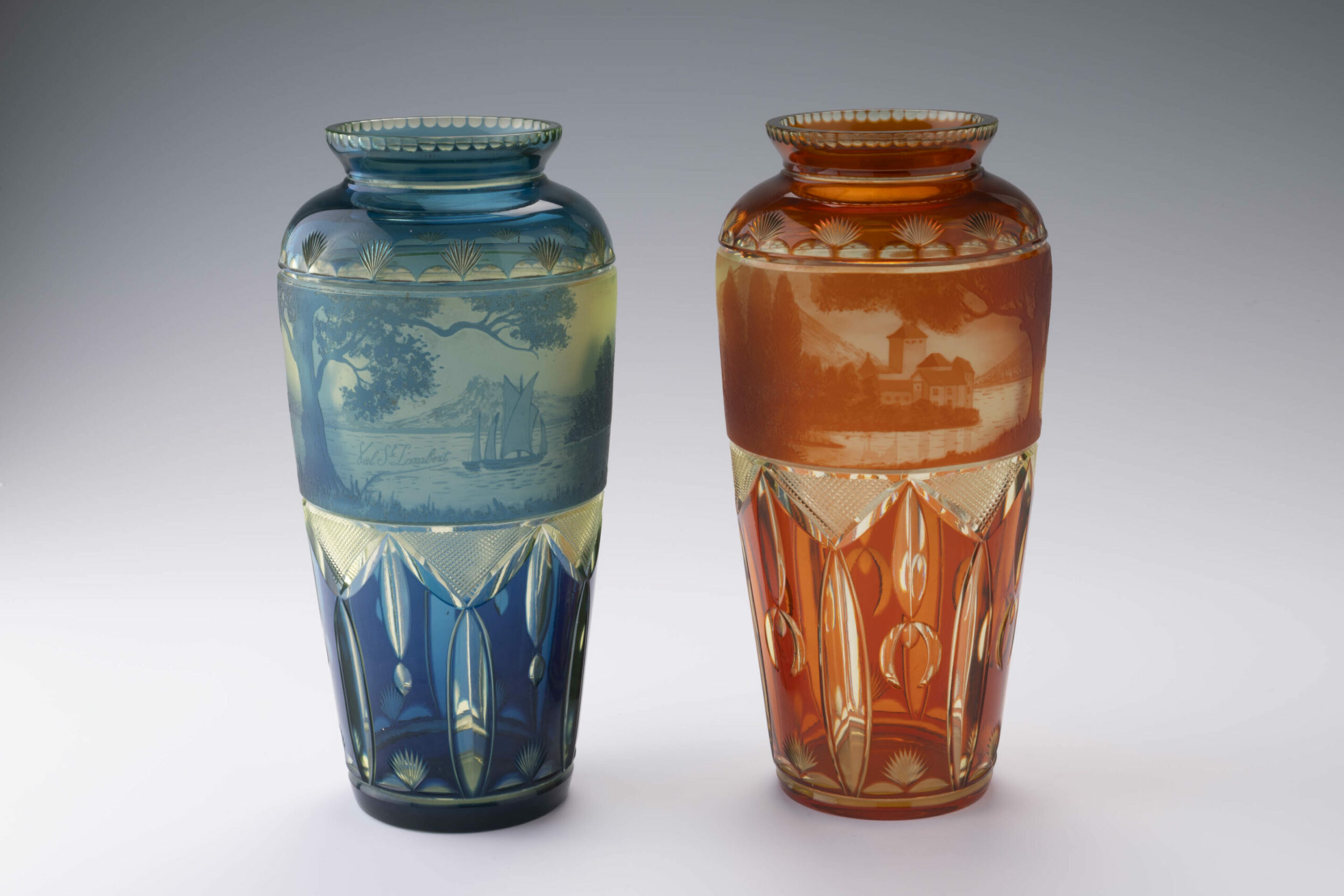
Credit: VSL
The elegant curves of Art Nouveau gave way to the geometry of Art Deco. After the economic crash of 1929, the company introduced the more affordable Luxval range while continuing to innovate technically. Post-war designers embraced new forms and collaborations. Later came Studio Cristal and partnerships with internationally renowned designers, demonstrating that tradition and modernity need not be opponents.
The exhibitions in Charleroi, Liège and Brussels reveal a company that has adapted to changing tastes while preserving its identity.
The Seraing site is evolving too. The city has acquired much of the estate, transforming parts of it into a business centre and planning new attractions, including an abbey brewery, while preserving the historic heart of the complex. The vast industrial city that once required dozens of furnaces and thousands of workers will never return, but neither has it been abandoned. It is finding a new purpose.
Before leaving, it is impossible to resist one last look at the apprentices.
Their demonstration lasts only 20 minutes. The result will cool for hours before it can be cut, polished and finished. What appears effortless is in fact the product of countless hours of practice, repeated failures and patient instruction from older craftsmen who still return to guide the next generation. There is no longer a formal school for crystal making in Belgium. Young artisans travel abroad, particularly to France, to continue their training before bringing those skills back to Seraing.
That may ultimately be the most moving aspect of Val Saint Lambert’s bicentenary. Its future now depends not on machinery or raw materials, but on whether enough young people are willing to devote years to mastering a craft that cannot be rushed or automated.
