
Belgian consumers are increasingly switching between payment methods, with mobile payment apps gaining ground as physical cards gradually lose prominence, a new survey published on Monday shows.
According to the third European Payments Initiative barometer, the shift towards digital payments is already well established in everyday life in Belgium.
The survey found that 72% of Belgians now use a digital payment method to send money to friends and family.
Among them, 44% specifically use mobile payment apps for these transfers. More than half of app users, 56%, also use them for online shopping.
Contactless card payments nevertheless remain the most common payment method in Belgium. Some 66% of consumers use them weekly in physical shops, although this is slightly down from 70% in 2025.
Consumers are not turning away from contactless payments themselves, but are gradually moving away from the physical card in favour of smartphones and connected devices. Digital wallets such as Apple Pay and Google Pay are also becoming part of daily habits.
The European Payments Initiative said this flexibility is also evident in online shopping. It attributed the trend in part to Belgians’ openness to new technology and their search for faster, simpler and more suitable payment options depending on the moment of purchase.
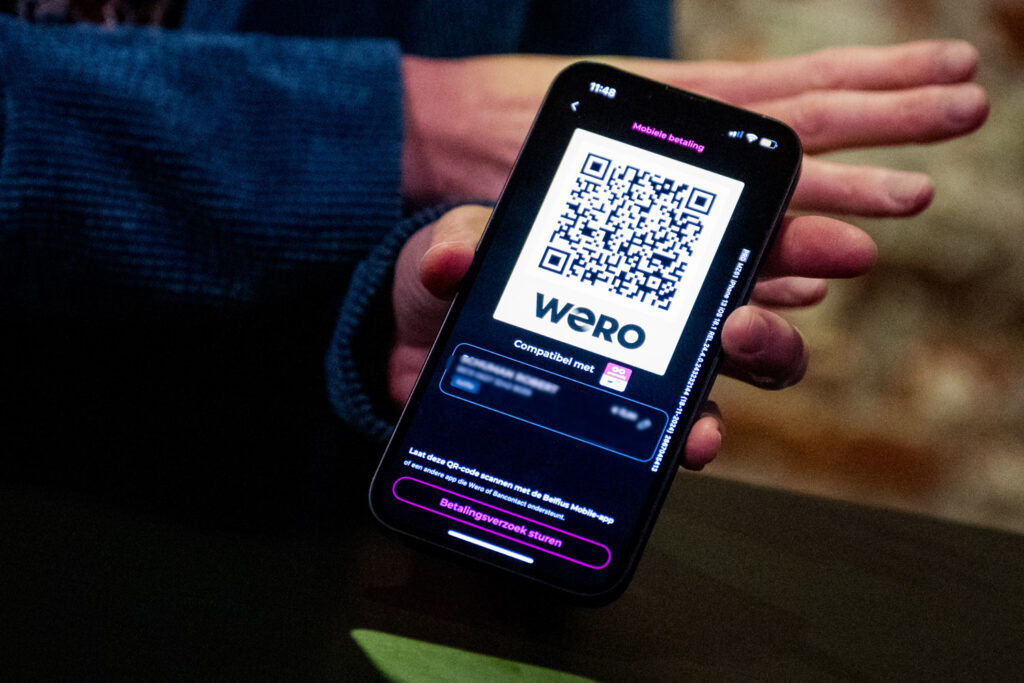
EPI said its mobile payment solution, Wero, is intended to establish itself as a complement to existing payment methods and help speed up the move towards digital payments.
According to the barometer, 67% of respondents are aware of Wero and 28% already use it actively. EPI described that as a satisfactory result given the fact that the service has only been available since 2024.
It added, however, that there was still significant room for further adoption.
Wero has around 60 million users across the five countries where it is available: Belgium, France, Germany, Luxembourg and the Netherlands.
