
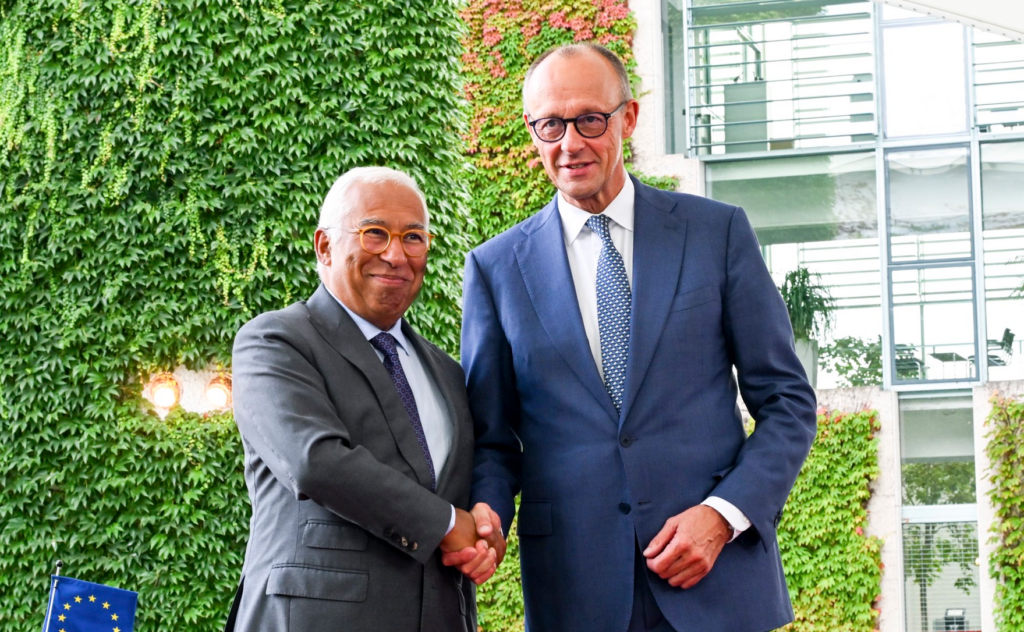
European Council President Antonio Costa said the European Union would continue supporting Ukraine “for as long as it is needed” after meeting Germany’s Chancellor Friedrich Merz in Berlin.
Costa said he was visiting EU leaders in their capitals as part of a “Tour des Capitales”, describing the aim as strengthening unity as Europe faces “a stark new geopolitical reality”, the European Council reported on Wednesday night.
He cited “hybrid” activity including drones, sabotage, cut cables and attacks on infrastructure, and said Germany had been “at the front line”, referring to what he described as an attempted Russian drone attack in Leipzig and other foiled attempts.
The EU’s stance on “Russia’s war of aggression against Ukraine” would not change because of such threats, Costa said.
He declared the EU would back Ukraine during the war, in any negotiations, in reconstruction and on its path towards EU membership.
Push for defence and a revamped EU budget
Costa thanked Germany for what he called “historical investments” in security and defence, saying Berlin plays a “fundamental part” in Europe’s efforts to strengthen common defence, according to the European Council.
He said member states should pursue that work jointly to meet what he described as a goal of new European defence readiness.
He also called for a “new approach” to the EU’s next long-term budget, saying it needed a new structure and a new way of allocating resources.
Costa said the budget should be “more efficient” and more focused on areas including defence and security, as well as competitiveness, innovation and resilience.
Cohesion policy and agricultural policy would remain “essential” for regional development and food security, Costa said, while also calling for a modernised budget focused on boosting industry, supporting innovators, protecting citizens and defending borders.
He said EU countries would need to make choices within “limited and finite resources” and that national contributions should be kept at a “reasonable level.”
Costa stated that an agreement was needed by the end of 2026, and said finding new “own resources” — EU-level revenue streams — would be an essential part of an overall deal.
He also pointed to a “One Europe, One Market” agenda, listing measures including simplifying rules, completing the single market, ensuring affordable energy, supporting innovation and reducing strategic dependencies.
The European Council would return to the issue of competitiveness in October.
