
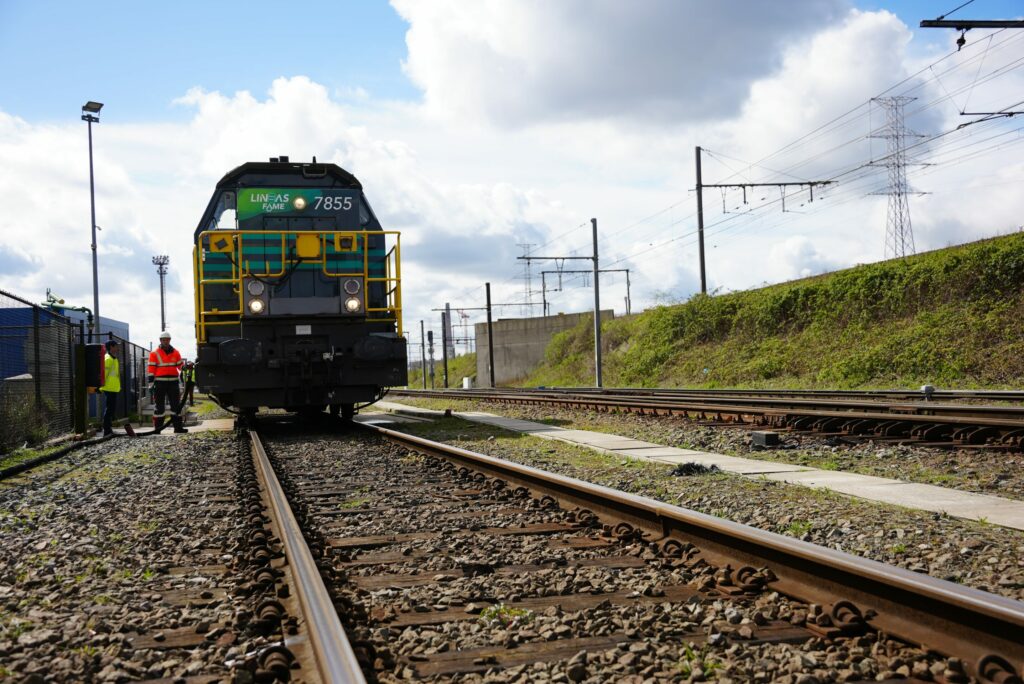
The private rail freight company Lineas has won the European tender for the so-called marshalling yard in the port of Antwerp, also known as "Belgium-Central", announced infrastructure manager Infrabel on Wednesday.
Three years ago, it was announced with great fanfare that the "Belgium-Central" marshalling yard would be operated by a neutral operator. Freight trains are sorted there, much like a sort office, so to speak.
"For the first time, that yard is now to be operated by a neutral operator: a European first," stated Lineas, Europe’s largest private rail freight operator, headquartered in Belgium, at the time.
The neutral operation of the marshalling yard was intended to ensure that trains were formed "more quickly, more efficiently and more cost-effectively".
"The rail infrastructure at this, Belgium’s largest and busiest freight station, is now open to all railway undertakings on equal terms," they said.
However, that period was merely an interim step: a public tender was subsequently issued, to which two candidates submitted bids: Deutsche Bahn and Lineas – Belga News Agency learned from a reliable source.
Infrabel has now awarded the operating contract to Lineas. This is intended to provide a "new impetus to get more freight onto the railways". The Germans have come up empty-handed.
Despite the work carried out in recent years, the infrastructure manager admits that the station’s potential is not yet being fully utilised. "We want to change this by taking on the neutral operation of this strategic rail facility ourselves from 1 January 2027," Infrabel said on Wednesday.
"The new approach is intended to make rail freight transport more accessible and attractive to all railway undertakings," the company said. "As part of these preparations, we have awarded the contract for part of the operational activities to Lineas."
Around half of all freight trains in Belgium pass through this national hub, nicknamed "Belgium-Central".
However, even three years ago, the marshalling yard was underutilised. For many domestic and foreign railway companies, using it simply required too great an investment. This was because they needed shunting locomotives and specialist staff.
The marshalling yard in Antwerp North forms part of Europe’s largest marshalling yard. Every day, freight wagons from various customers are sorted and consolidated into new freight trains. The trains then continue on to destinations across Europe.
The facility plays a major role for sectors such as the chemical and steel industries. The marshalling yard, officially known as Antwerp North, is the busiest freight station in the country, handling 258,000 train movements per year.
'Technically complex'
From 1 January 2027, Infrabel will take over its neutral operation. As an independent infrastructure manager, it states that it will be responsible for capacity management, the terms of use and access, the tariff structure and the neutrality of the service.
"The aim is to provide better support to users and to further enhance the attractiveness of rail freight transport," they said.
Lineas will carry out the work at the station on behalf of Infrabel for a period of three years, which may be extended.
At the same time, Infrabel will take charge of operational planning and management, and staff will be "integrated" to "ensure continuity of service".
"The future of rail freight transport lies in smart collaboration and a more efficient use of the infrastructure," said Benoît Gilson, CEO of Infrabel.
"By operating the sorting yard in a neutral manner, we can better consolidate freight flows, organise trains more efficiently and make optimal use of the available track capacity," he said.
Belgium aims to double the share of rail transport by 2030. It remains to be seen whether this will be achieved at the current pace. Meanwhile, the port is still struggling with the renovation of the Lillo Bridge.
Large companies are complaining bitterly because the repairs are dragging on and rail transport is bearing the brunt of it. The port authority recently stated that the renovation of the Lillo Bridge is "a technically complex project".
"That is why a two-stage tender procedure via a competitive dialogue was chosen," said Gilson.
