
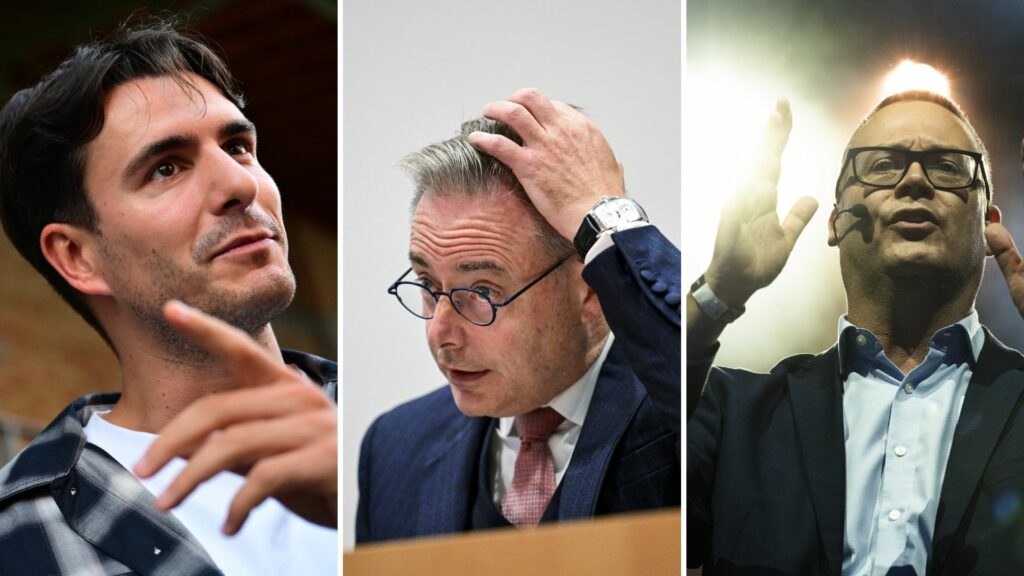
If Belgians could directly elect their head of government like their French counterparts, who would they choose?
The answer to that question is what French-speaking TV channel LN24 discovered following an opinion poll, with help from the independent market research and opinion polling institute Dedicated.
Unlike neighbouring France, Belgium is a partocracy, meaning Belgian voters do not directly elect their Prime Minister. Instead, elections are held, and then political parties decide the position through negotiations to form a federal government.
But the new survey asked respondents to imagine a different system: a direct election for Prime Minister, modelled on the French presidential vote. LN24 present the results as part of its Le grand choix des Belges programme.
Under that hypothetical scenario, Belgium's current Prime Minister Bart De Wever (N-VA) would receive the most support nationally.
Regional differences
De Wever, who is also the leader of the Flemish nationalist N-VA party, would also finish first in Flanders, where 30% of respondents chose him. Far-right Vlaams Belang leader Tom Van Grieken followed with 17%, while Vooruit (Flemish socialists) leader Conner Rousseau received 9%.
De Wever also led in Brussels, though by a much narrower margin. He received 16% of support in the capital, followed by radical left PTB-PVDA president Raoul Hedebouw on 14% and PS (Francophone socialists) leader Paul Magnette on 13%.

Prime Minister Bart De Wever (N-VA). Credit: Belga/Julien Warnand
The picture is different in Wallonia. Magnette came first with 16%, followed by Hedebouw with 13% and Les Engagés (Francophone centrists) leader Yvan Verrougstraete. De Wever finished fourth.
Across Belgium as a whole, De Wever nevertheless received the most support, followed by Van Grieken and Hedebouw.
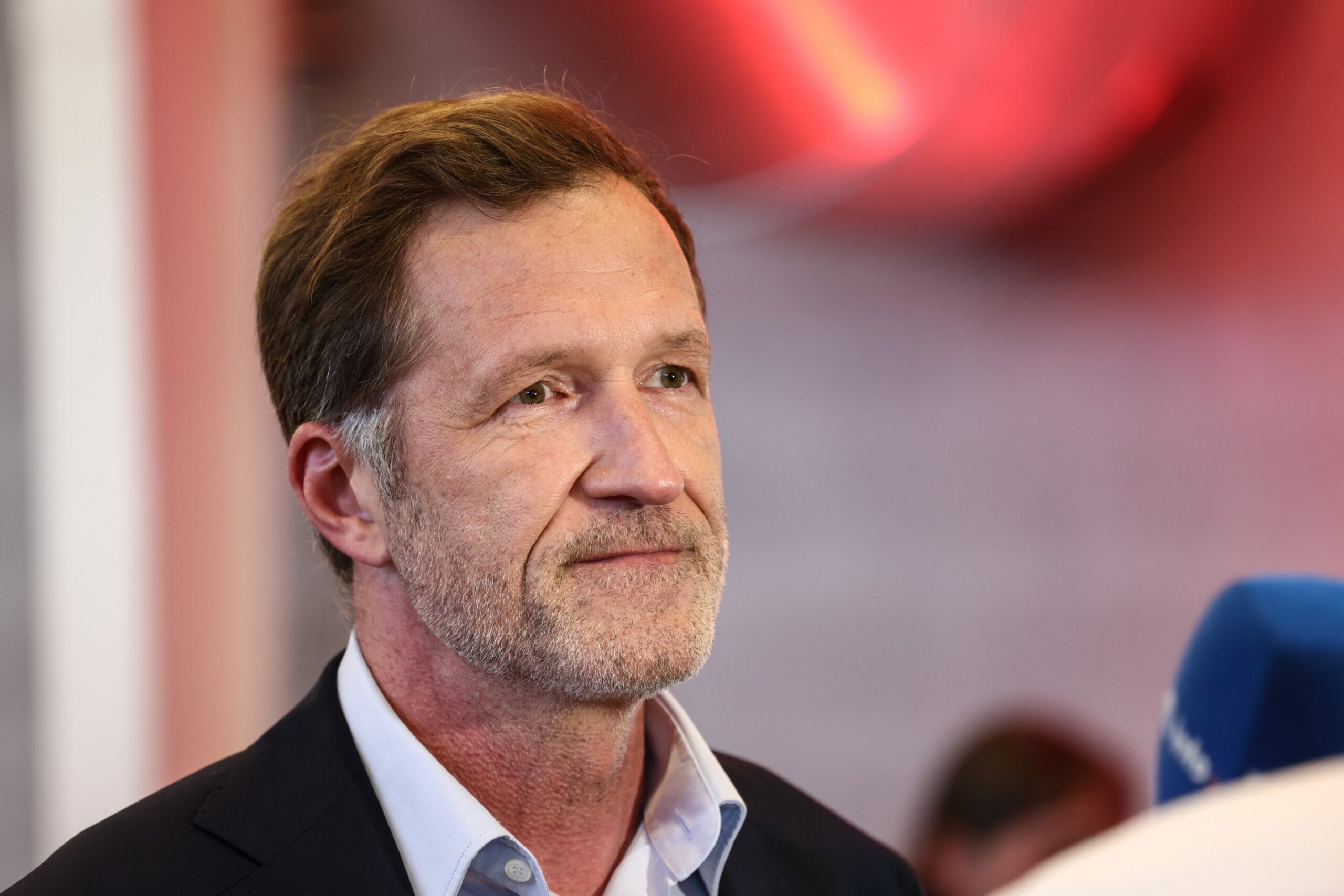
PS chairman Paul Magnette talks to the press ahead of a meeting of PS, Wednesday 30 April 2025, in Wangenies, Fleurus. Credit: Belga
Wilmès ahead in hypothetical run-off
Dedicated also tested several hypothetical second-round contests, pitching De Wever against individual political figures.
According to the poll, De Wever would receive more support than Francophone liberal leader Georges-Louis Bouchez (MR), Raoul Hedebouw (PTB/PVDA) and Paul Magnette (PS) in the respective scenarios tested.
Former Prime Minister Sophie Wilmès (MR) was the exception: she received more support than De Wever in a hypothetical head-to-head contest across Belgium.
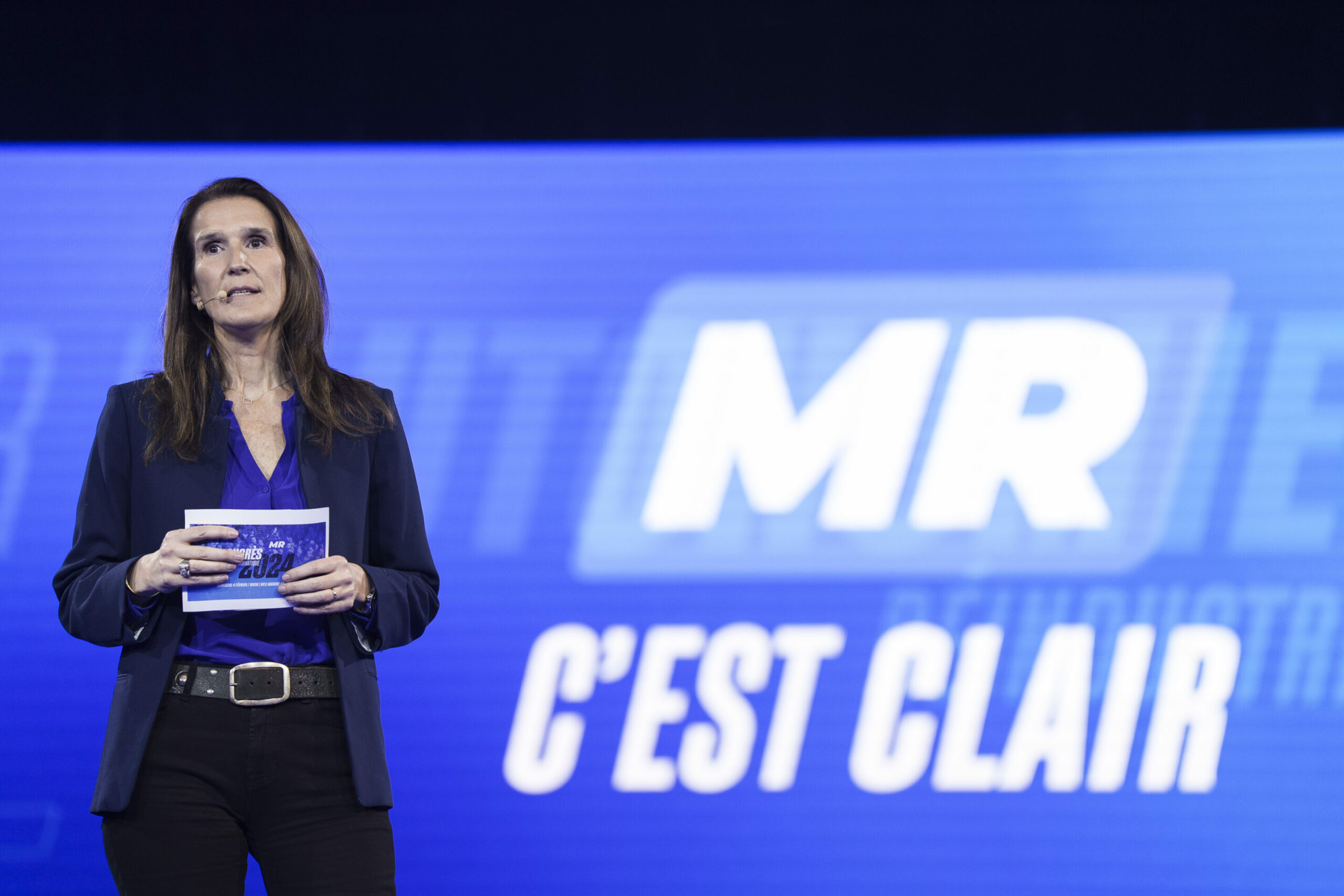
MR's Sophie Wilmès delivers a speech at the program congress of French-speaking liberal party MR (Mouvement Réformateur), Sunday 04 February 2024, in Marche-en-Famenne. Credit: Belga / Anthony Dehez
The survey also produced weaker results for Bouchez. He placed fifth among the personalities tested in both Brussels and Wallonia and ninth in Flanders.
The same survey also asked respondents how they would vote in France's next presidential election if given the opportunity. Marine Le Pen (far-right National Rally) came first among those tested, followed by former French president François Hollande (Socialist Party) and National Rally president Jordan Bardella.
The exercise does not reflect Belgium's actual electoral system and therefore cannot be read as a voting-intention poll for a real direct election of the Prime Minister.
